UNANIMOUS RULING
5-0
CASE DURATION
~9 YRS
MAX PRISON TERM
5 YRS
CARIBBEAN NATIONS · SIMILAR BANS
4+
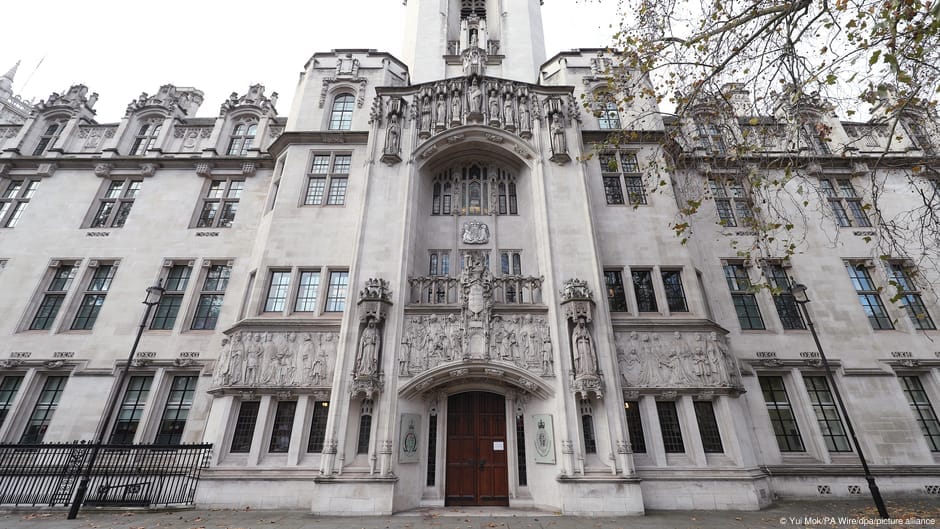
Jason Jones, a 61-year-old gay man from Trinidad and Tobago, won a unanimous ruling from the UK Privy Council on Tuesday striking down two sections of the country's Sexual Offences Act 1986 that criminalized consensual sex between adult males. The five-judge panel found the laws violated Jones' fundamental rights to private and family life under Trinidad's 1976 constitution. The case took nearly a decade to resolve, winding through Trinidad's High Court (which ruled in his favor in 2018), a local appeals court (which partially reversed in 2025), and finally to London.
Extraction Map
The legal architecture here is worth pausing on. The Privy Council serves as the final court of appeal for several Commonwealth nations including Trinidad and Tobago — a vestige of colonial governance that many in the region already viewed with unease before this ruling. The laws being struck down are themselves colonial vestiges, descended from British "buggery" statutes first introduced under Henry VIII more than four centuries ago. Britain itself didn't decriminalize gay sex until 1967. The former imperial power is now using its retained judicial authority to undo damage its own legal system originally exported. Trinidad's government, joined by the Council of Evangelical Churches and the Hindu organization Sanatan Dharm Maha Sabha, argued the 1986 laws qualified as "existing law" predating the constitution, passed with a supermajority, and should override individual constitutional rights. The Privy Council rejected this, finding the proviso requiring such laws to be "reasonably justifiable in a society that has proper respect for the rights and freedoms of the individual" had not been met. Judge Philip Sales stated plainly: "laws which seek to criminalize such activities cannot be justified." Jones, openly gay since 16, fled Trinidad in 1996 due to homophobic violence. He credits meeting Nina Simone during a 1984 tour of the island as a defining moment — she told him to leave and see the world. His former lawyer, Anand Ramlogan, a former attorney general of Trinidad, framed the constitutional principle directly: "Constitutional rights exist precisely because majorities are not always right." The ruling carries regional weight. Similar colonial-era anti-gay laws remain on the books in Grenada, Jamaica, and St. Vincent and the Grenadines. Judges in Barbados, Dominica, St. Lucia, and Antigua and Barbuda have recently struck down comparable statutes. The Bahamas decriminalized homosexuality in 1991, and the UK repealed laws in its overseas territories in 2001. Trinidad's law carried up to five years' imprisonment, though it had not been actively enforced in recent history — a fact critics argue did not diminish its chilling effect. The structural question this case exposes is whether colonial-era legal architecture — both the laws and the courts that adjudicate them — serves the sovereignty of the nations still bound by it. Jones won because the Privy Council exists. That same institutional arrangement means a court sitting in London decided the constitutional rights of Trinidadian citizens. The ruling is generative for individual rights, but it lands in a governance framework that many Caribbean nations have already questioned and some have moved to exit. For Jones personally, the vindication is concrete. "Society has treated me worse than a criminal," he said. "There is a real sense of vindication with this judgment. Finally, the courts are seeing that they need to step up because our politicians are so toothless." That last sentence captures the dynamic precisely: where elected officials refuse to act, courts become the only venue — and in this case, the court of last resort sits in the capital of the former colonial power.
Worth reading?
RECOMMENDED
Score
60
/100
Generative — expands fundamental rights for LGBTQ+ citizens and sets regional precedent, but delivered through an extractive colonial governance channel that concentrates judicial authority outside the nation.
What Is GRIN?
GRIN stands for Generativity, Resilience, Innovation efficiency, and Novelty openness. These four dimensions capture the essential characteristics of any memetic intelligence — whether a nation, a corporation, a religion, or a movement.
About GRINGenerativity
4/5
Resilience
3/5
Efficiency
2/5
Novelty
3/5
Extractive
2/5
Inverted
Does this create new capability or just redistribute existing value?
Creates real new legal capability: constitutional protection for same-sex relationships in Trinidad, with strong demonstration effects across the Caribbean. Individual rights meaningfully expanded.
Verified Facts (12)
Jason Jones is a 61-year-old born in Trinidad and Tobago, openly gay since the age of 16
He fled the country in 1996 because of homophobic violence and discrimination
A panel of five judges unanimously allowed Jones' appeal
Two sections of the country's Sexual Offenses Act 1986, criminalizing 'buggery' and 'serious indecency'
In 2018, Trinidad's High Court found the laws unconstitutional
In 2025, a local appeals court partially reversed the ruling
Anti-gay laws call for up to five years in prison
The Bahamas decriminalized homosexuality in 1991
The UK repealed laws in overseas territories Anguilla, the British Virgin Islands, the Cayman Islands, Montserrat and the Turks and Caicos Islands in 2001
The UK only decriminalized gay sex in 1967
Anand Ramlogan is a former attorney general of Trinidad and Tobago
Jones said he met Nina Simone when she toured the island nation for three weeks in 1984
More latest news
Read all