KILLED · AMIA 1994
85
IRAN RECIPROCITY LAW
2019
ARG BRANCHES DESIGNATED
2/3
BLOCS DESIGNATE IRGC
3+
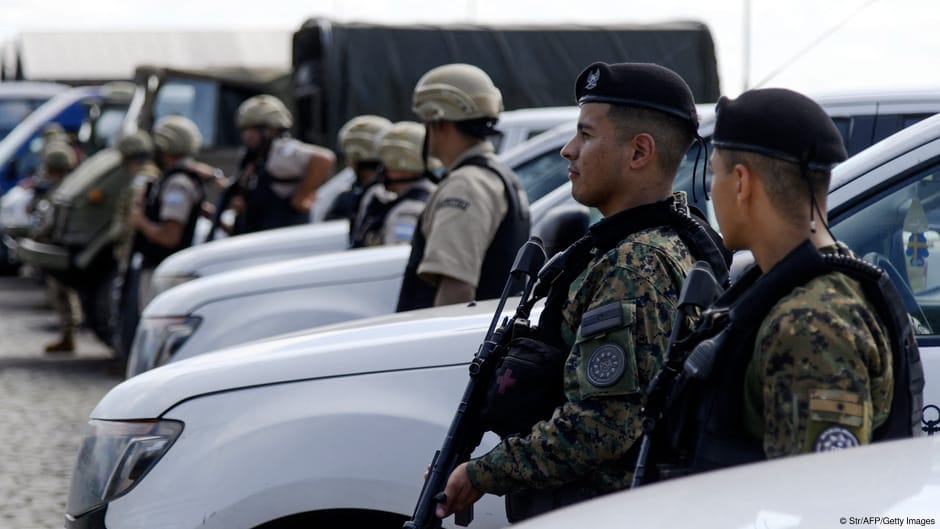
Iran's Foreign Ministry designated Argentina's navy and air force as "terrorist organizations" on Wednesday, invoking what it called "the principle of reciprocity." The move is a direct response to Argentina's April designation of Iran's Islamic Revolutionary Guard Corps (IRGC) as a terrorist organization — a step Buenos Aires took under pressure from Washington following the US-Iran war.
Extraction Map
The legal framework is not improvised. Iran passed legislation in 2019 granting itself retaliatory measures against any state that designates its military as a terrorist group. Tehran is now executing that statute, though notably it excluded Argentina's army from the designation — a calibrated signal that this is political theater with guardrails, not a prelude to kinetic action. Argentina's original designation cited the IRGC's support for Hezbollah, the Lebanon-based militant group that Buenos Aires holds responsible for the 1994 bombing of the AMIA Jewish community center in Buenos Aires, which killed 85 people. That attack remains one of the deadliest terrorist incidents in Latin American history and a foundational grievance in Argentine politics. The IRGC connection to Hezbollah is the causal thread linking a 30-year-old atrocity to today's diplomatic escalation. The broader pattern is one of cascading alignment pressure. The United States, the European Union, and the United Kingdom already classify the IRGC as a terrorist organization. Trump's post-war push for allied states to follow suit has turned the designation into a loyalty signal — a diplomatic sorting mechanism that forces middle powers to declare sides. Argentina complied; Iran responded on schedule. What this creates is not new capability but new friction. Terrorist designations carry legal consequences — asset freezes, travel bans, financial restrictions — but their practical bite depends entirely on enforcement infrastructure. Iran's ability to enforce sanctions against Argentina's navy is effectively zero. Argentina's ability to disrupt IRGC finances is marginally greater but still limited. The real cost is diplomatic: each designation narrows the space for future dialogue and makes de-escalation more expensive. Iran's Foreign Ministry statement carried a warning — "the responsibility for all consequences arising from this matter will lie with the Argentine government" — that is boilerplate escalatory language. It signals that Tehran views the exchange as open-ended, not settled. The IRGC, established after Iran's 1979 Islamic Revolution as a regime-protection force, has since become a vast economic and political empire answering directly to the supreme leader, not the elected president. Designating it is not designating a military unit — it is designating a state within a state. The 20-year trajectory here is one of diplomatic calcification. Each reciprocal designation makes the next one cheaper politically and the reversal more costly. If this pattern continues across more US allies, Iran becomes progressively more isolated in formal diplomatic channels while its informal networks — Hezbollah, Houthis, Iraqi militias — become the only available instruments of influence. That is not a stabilizing outcome for anyone.
Worth reading?
SKIP
Score
24
/100
Extractive. Both sides are spending diplomatic capital on symbolic designations that produce no security gains, narrow future options, and serve primarily as loyalty signals to their respective patrons.
What Is GRIN?
GRIN stands for Generativity, Resilience, Innovation efficiency, and Novelty openness. These four dimensions capture the essential characteristics of any memetic intelligence — whether a nation, a corporation, a religion, or a movement.
About GRINGenerativity
1/5
Resilience
1/5
Efficiency
1/5
Novelty
1/5
Extractive
3/5
Inverted
Does this create new capability or just redistribute existing value?
Zero-sum signaling. No new security, trade, or institutional capability is created. Both governments burn diplomatic flexibility to produce domestic and alliance optics.
Verified Facts (8)
Iran's Foreign Ministry classified Argentina's navy and air force as 'terrorist organizations' on Wednesday
Argentina designated Iran's Islamic Revolutionary Guard Corps (IRGC) as a 'terrorist organization' in early April
Iran passed legislation in 2019 granting retaliatory measures against states that designate its military as a terrorist group
Buenos Aires holds Hezbollah responsible for the 1994 bombing of the AMIA Jewish community center, which killed 85 people
The IRGC was established at the end of Iran's 1979 Islamic Revolution
The United States, the European Union, and the United Kingdom classify the IRGC as a terrorist organization
Iran's designation did not include Argentina's army
The IRGC answers directly to Iran's supreme leader, not the elected president
More latest news
Read all