WORKERS PER RETIREE
2.1:1
ANNUAL PENSION SUBSIDY
€118B
LOW-INCOME RENT BURDEN
36%
TEACHER SHORTFALL · 2035
27,000
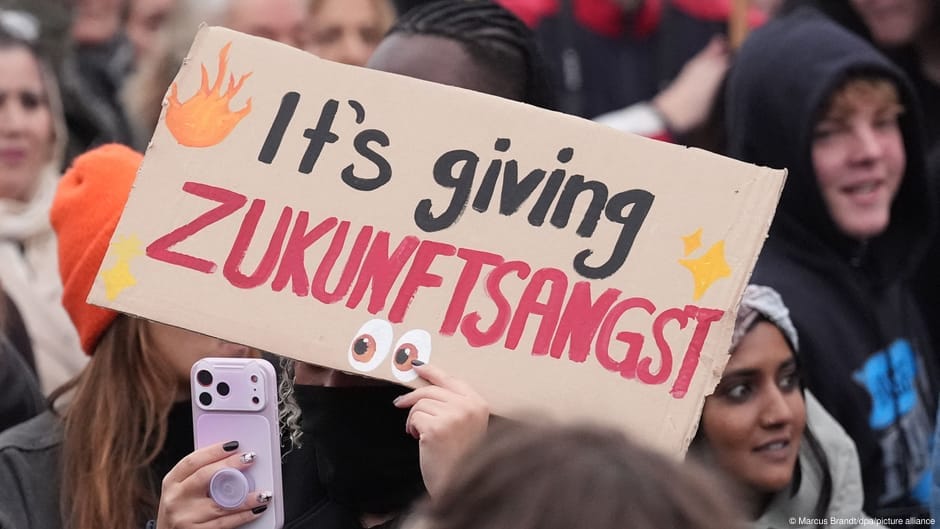
Germany's youth protests are drawing attention to a generational contract that the numbers say is already in default. In 1957, 3.73 workers funded each retiree. By 2025, that ratio has collapsed to 2.1, and projections put it at 1.73 by 2045. The pension system now requires €118 billion in annual federal subsidies — roughly a quarter of the entire national budget — just to stay solvent. The number of retirees on basic income support has nearly tripled since 2003, from 257,000 to 738,000.
Extraction Map
Housing compounds the squeeze. Low-income households spent 24% of income on rent in 1990; by 2021 that figure hit 36%. Across the population, 11% now spend more than 40% of disposable income on housing, and among those at poverty risk the figure is 35%. The one structural relief valve: Boomers own roughly 4.8 million properties expected to change hands through sale, assisted-living transitions, or inheritance in the coming decades, potentially softening prices in some regions. Education spending per person under 30 has doubled since 2011 — from €4,000 to €8,000 annually — but Germany still lands at 4.6% of GDP, below the 4.7% OECD average. The money cannot outrun a demographic wall: an estimated 27,000-teacher shortage by 2035 driven by Boomer retirements and declining birth rates. More euros chasing fewer people is a declining-returns problem, not a progress story. Climate exposure adds a dimension the Boomers never faced at this scale. The UN projects 2.6°C of warming by century's end under current policies. A 2025 Vrije University study found today's six-year-olds could experience heat waves two to seven times more frequently than Boomers did. Germany's Robert Koch Institute estimated 16,000 heat-related deaths by mid-September 2026 — over 14,000 of them among people over 65. Climate harm hits both ends of the age spectrum. Youth researcher Simon Schnetzer frames the question sharply: have young people been given the conditions to live, work, and fund the system with confidence? His answer is no. But he also insists this is not a zero-sum generational war. Both cohorts are trapped in the same structural failure — a pension system approaching insolvency, a housing market that punishes the poorest, an education pipeline that cannot replace the workforce it is losing, and a climate trajectory that will kill the old and impoverish the young. The extraction pattern is clear: current fiscal structures transfer wealth upward in age and backward in time, borrowing from future productivity to fund present obligations. The €118 billion pension subsidy is the single largest line item in this transfer. Every year the ratio worsens, the subsidy grows, and the remaining workers bear more weight. This is not a policy choice being debated — it is a structural fact already in motion. Schnetzer's prescription — intergenerational solidarity and shared sacrifice — is the right diagnosis but lacks a mechanism. The protests signal that young Germans understand the math. Whether the political system can respond with structural reform rather than symbolic gestures is the question that matters now.
Worth reading?
SKIP
Score
20
/100
Extractive — current fiscal architecture systematically transfers value from a shrinking working-age base to a growing retiree population, with costs deferred to future taxpayers and no structural mechanism to reverse the flow.
What Is GRIN?
GRIN stands for Generativity, Resilience, Innovation efficiency, and Novelty openness. These four dimensions capture the essential characteristics of any memetic intelligence — whether a nation, a corporation, a religion, or a movement.
About GRINGenerativity
1/5
Resilience
1/5
Efficiency
1/5
Novelty
1/5
Extractive
4/5
Inverted
Does this create new capability or just redistribute existing value?
Near-zero generativity. Doubling education spend produced no OECD advantage. Pension subsidies consume a quarter of the federal budget without creating new capacity — pure maintenance of a deteriorating system.
Verified Facts (13)
3.73 contributors per retiree in 1957, fallen to 2.1 by 2025
Projected 1.73 contributors per retiree by 2045 — 35.35 million contributors financing 16.82 million retirees
Pension system receives around €118 billion in annual government subsidies — roughly 25% of the federal budget
Retirees on basic income support rose from 257,000 in 2003 to 738,000 in 2024
Low-income household rent burden rose from 24% in 1990 to nearly 36% in 2021
In 2025, 11% of population spent more than 40% of disposable income on housing; 35% among those at poverty risk
Boomers own around 4.8 million owner-occupied houses and apartments
Public education spending per person under 30 doubled from €4,000 to approximately €8,000 since 2011
Germany education spending: 4.6% of GDP vs OECD average of 4.7% in 2022
Estimated 27,000 teacher shortage by 2035
UN projects 2.6°C of warming by end of century under current policies
Children age six today could experience heat waves 2-7 times as often as Boomers (2025 Vrije University study)
RKI estimated 16,000 heat-related deaths in Germany by mid-September 2026 — over 14,000 among those over 65
More latest news
Read all