KENYA CASES
9
CONTACTS TRACED
135
DRC CASES
11,000
DRC DEATHS
5,387
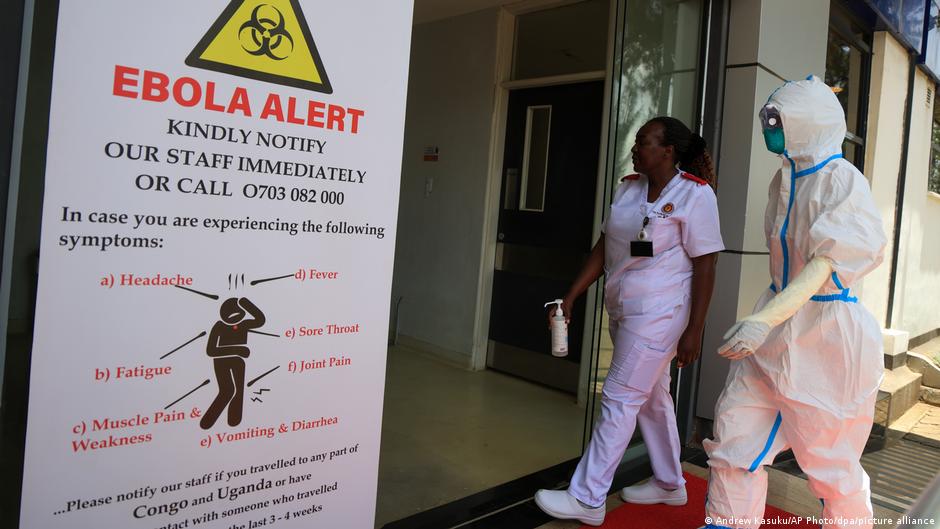
Kenya discharged its last Ebola patient from a Nairobi hospital on Wednesday, placing the country on track for an official Ebola-free declaration on December 23 if no new cases emerge. Health Minister Aden Duale confirmed the final patient's 11 contact cases will complete 21 days of quarantine.
Extraction Map
The outbreak in Kenya was textbook containment. All nine confirmed cases traced back to a single index case — a Kenyan man who returned from the Democratic Republic of Congo on October 6. The health ministry successfully traced and monitored all 135 contacts linked to that case, keeping the virus confined to one transmission cluster with no community spread recorded. Seven patients recovered. Two died. That disciplined response stands in sharp contrast to the catastrophe still unfolding in the DRC. The source outbreak, which began in May, has become Congo's deadliest Ebola event on record, with 11,000 cases and 5,387 deaths reported as of Wednesday. The numbers are still climbing. Nigeria has also reported one case, from a patient who had recently travelled from Uganda, which itself experienced a small cluster. The regional geography of infection tracks predictably along travel corridors from eastern DRC outward. Kenya's containment demonstrates what functional surveillance infrastructure looks like when it works: rapid identification of the index case, aggressive contact tracing of all 135 contacts, isolation protocols that held, and transparent public communication. None of this is cheap, and none of it is automatic. The 21-day quarantine clock for the final patient's contacts is the last remaining gate. If it closes cleanly on December 23, Kenya will have turned a potentially devastating import into a nine-case footnote. The DRC, lacking equivalent capacity, continues to absorb the full weight of the virus. The broader question is whether the surveillance and response muscle Kenya demonstrated can be sustained and replicated across the region, particularly in countries along DRC's travel corridors that lack Kenya's institutional capacity.
Worth reading?
RECOMMENDED
Score
68
/100
Generative. Kenya's contact-tracing and containment response created real public health value — lives saved, community transmission prevented — using institutional capacity rather than extracting from populations.
What Is GRIN?
GRIN stands for Generativity, Resilience, Innovation efficiency, and Novelty openness. These four dimensions capture the essential characteristics of any memetic intelligence — whether a nation, a corporation, a religion, or a movement.
About GRINGenerativity
4/5
Resilience
3/5
Efficiency
4/5
Novelty
2/5
Extractive
1/5
Inverted
Does this create new capability or just redistribute existing value?
Real capability demonstrated. Tracing 135 contacts and confining Ebola to a single cluster is operational proof that Kenya's surveillance infrastructure generates tangible health security value.
Verified Facts (10)
Kenyan Health Minister Aden Duale said the last remaining Ebola patient was discharged from a Nairobi hospital on Wednesday.
The final patient had 11 contact cases who will undergo 21 days of quarantine.
Kenya will be declared Ebola-free on December 23 if no one else exhibits symptoms until then.
All 135 contacts linked to the index case were successfully traced and monitored.
All nine confirmed cases remained within a single transmission cluster, with no community transmission recorded.
The first of its nine cases, reported on October 6, came from a Kenyan man who had recently travelled back from the Democratic Republic of Congo.
Seven patients recovered, and two passed away.
DR Congo on Wednesday reported 11,000 cases of the disease.
This current outbreak, which began in May, has become Congo's deadliest, claiming 5,387 lives so far.
There has also been one case reported in Nigeria, from a patient who had recently travelled from Uganda, which saw a small cluster of the disease.
More latest news
Read all