ANC VOTE SHARE
<31%
YEARS IN POWER
30+
MK PARTY LAUNCHED
2023
COALITION ERA
1st
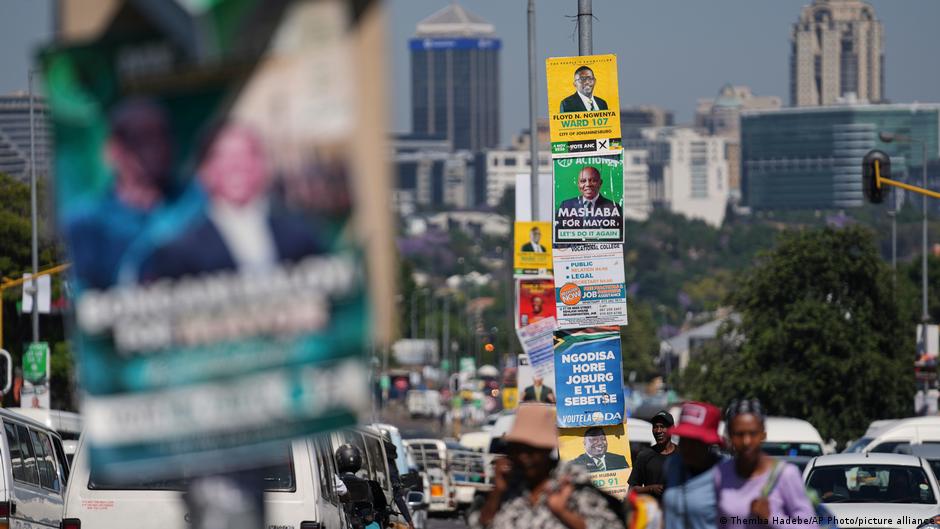
The African National Congress secured less than 31% of the vote in South Africa's local government elections, a result the party itself called "catastrophic." This is not a blip. It is the logical terminus of a trajectory that began years ago, as the gap between the ANC's liberation-era promise and its governance record widened into a chasm voters could no longer ignore.
Extraction Map
The grievances are concrete: water, electricity, housing, public services at the municipal level — none delivered reliably. Unemployment has climbed relentlessly. Corruption has metastasized from local councils to the highest levels of government. Researcher Tasnim Essop of the University of the Witwatersrand's Society, Work and Politics Institute (SWOP) frames it plainly: this outcome did not happen overnight. It reflects a slow erosion of public confidence over a long period. DW correspondent Dianne Hawker-Kalubi reported the same from polling stations — voters expressing deep frustration about basic services not delivered for years. The opposition made significant gains. The Democratic Alliance strengthened its position across major urban centers. The uMkhonto weSizwe (MK) party, launched by former President Jacob Zuma in late 2023, performed strongly in KwaZulu-Natal despite its recent entry. Smaller civic organizations and community-based movements also recorded notable local successes. Essop describes the emerging pattern as "vote fluidity" — South Africans increasingly willing to move their support between parties rather than remaining loyal to a single political organization. The ANC's response follows a familiar institutional script. The National Executive Committee announced a special meeting to "listen to the people, confront its shortcomings and provide leadership." President Cyril Ramaphosa framed the results as a challenge for all political parties to "come together and perform better for citizens." The party must simultaneously prepare for coalition negotiations — often with its biggest rivals, as happened after the 2024 general elections. DA chairwoman Helen Zille has agreed to coalition talks. Essop cautions against declaring liberation politics dead: many parties, including breakaways from the ANC, still draw legitimacy from that history. The shift is not a wholesale rejection of the liberation narrative but a demand that the narrative produce results. The political landscape has fragmented, not along ideological lines but along a performance axis — voters punishing incumbents who fail to deliver and rewarding anyone who plausibly promises they can. The structural question is whether coalition governance can deliver what single-party dominance could not. South Africa's municipalities are where service delivery lives and dies, and coalition politics at the local level is messy, slow, and vulnerable to horse-trading that prioritizes party survival over public interest. The ANC retains national plurality, but plurality without performance is a shrinking asset. Whether this moment becomes generative — forcing genuine competition and accountability — or merely redistributive, shuffling the same dysfunction across more parties, depends on whether the fragmented opposition can govern rather than merely campaign. The voters have done their part. The question is whether anyone is listening.
Worth reading?
SKIP
Score
36
/100
Extractive. Three decades of ANC dominance converted liberation legitimacy into a rent-extraction machine — patronage, corruption, and service failure — with citizens bearing the full cost. The election result is a correction, but the extraction damage is structural.
What Is GRIN?
GRIN stands for Generativity, Resilience, Innovation efficiency, and Novelty openness. These four dimensions capture the essential characteristics of any memetic intelligence — whether a nation, a corporation, a religion, or a movement.
About GRINGenerativity
2/5
Resilience
1/5
Efficiency
1/5
Novelty
4/5
Extractive
4/5
Inverted
Does this create new capability or just redistribute existing value?
Low generativity so far. The election punished failure but hasn't yet produced credible alternative governance capacity. Coalition politics may fragment accountability further rather than create it.
Verified Facts (12)
ANC secured under 31% of the vote in South Africa's local government elections
ANC party leaders described the result as 'catastrophic'
The ANC led South Africa's liberation struggle and dominated since the end of apartheid in 1994
Tasnim Essop is a researcher at the Society, Work and Politics Institute (SWOP) at the University of the Witwatersrand in Johannesburg
uMkhonto weSizwe (MK) party launched by former President Jacob Zuma in late 2023
MK party performed strongly in the KwaZulu-Natal province
Democratic Alliance (DA) strengthened its position across several major urban centers
Helen Zille, chairwoman of the DA, agreed to coalition talks with the ANC
ANC National Executive Committee announced a special meeting to deal with 'serious political responsibility to listen to the people, confront its shortcomings and provide leadership'
Ramaphosa said 'Those who have been elected to councils now need to prove themselves worthy of the trust placed in them by the South African people'
Mokhiri Phooko, a Cape Town resident, said 'people are losing hope'
Essop describes the trend as 'vote fluidity'
More latest news
Read all