CEASEFIRE ODDS
19%
UA PUBLIC FOR CONCESSIONS
5%
PROPOSED SWAP
1,000-1,500
SWAP TIMELINE
2-3 WKS
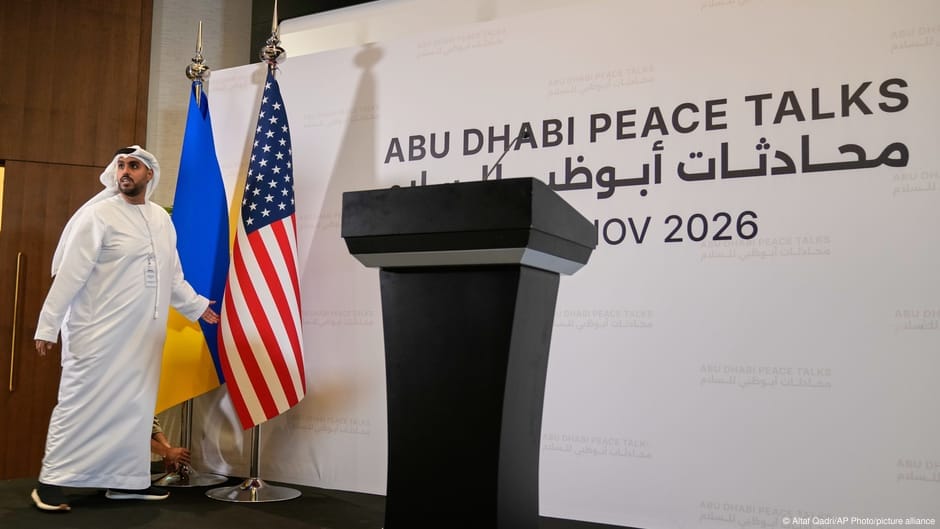
The Abu Dhabi trilateral talks between Ukraine, the US, and Russia on November 10-11 ended exactly where most analysts expected: with a humanitarian gesture dressed up as diplomatic progress. The agreement on what Jared Kushner called 'the largest humanitarian release of prisoners' is real and meaningful for the families involved. Zelenskyy had proposed exchanging 1,000 or 1,500 prisoners per side; Russia indicated the swap could happen within two to three weeks. As Pavlo Lakiychuk of Strategy XXI put it, 'getting our people back is already a major success.'
Extraction Map
But the prisoner exchange is also the ceiling of what these talks achieved, not the floor. No ceasefire was agreed. No framework for territorial resolution emerged. A joint assessment by 71 Ukrainian security and defense experts published by GLOBSEC puts the probability of a peace agreement or ceasefire this year or next at just 19%. Iuliia Osmolovska of GLOBSEC's Kyiv office was blunt: 'What we are seeing now is more of a farce, an attempt by all sides to put a brave face on things and create the impression that something is moving forward.' The territorial question remains the structural impasse. Western media reported ahead of the talks on US proposals to redraw the administrative boundaries of Donetsk and Luhansk — a move that would effectively hand Russia a political victory without a military one. A Ukrainian delegation member denied any discussion of concessions on occupied territories. But Russia's chief negotiator Vladimir Medinsky declared that 'every inch of our land will be returned to Russia one way or another,' referring to the four Ukrainian regions Putin claims in their entirety plus Crimea — territory Russia does not fully control militarily. The pattern emerging is one of asymmetric concession extraction. Lakiychuk argues US negotiators are seeking 'unilateral concessions from Ukraine step by step without demanding anything in return from Russia.' The early 2026 proposal that Ukraine withdraw from its portion of Donbas and establish a free economic zone there — which analyst Bronzhukov warns 'would very quickly become a Russian-controlled area' — illustrates the mechanism. Each round of talks normalizes the idea that Ukraine must give ground; no equivalent pressure falls on Moscow. Russia's strategic calculus is straightforward: use the appearance of negotiation to extract real concessions from Washington (such as the lifting of sanctions on Russian diesel) while conceding nothing substantive. Bronzhukov describes the Russian delegation under Medinsky as engaged in 'nothing more than an attempt to stall and sell empty promises to the US administration.' The diplomatic process itself becomes the product Russia is selling. The domestic constraint on Ukraine's side is severe. Following a brutal winter of electricity and heating shortages caused by Russian attacks on energy infrastructure, only 5% of Ukrainians said they would accept concessions to Russia in exchange for an end to energy strikes. Any territorial deal would need to survive public scrutiny in a country where the population has hardened, not softened, under bombardment. Kushner and Witkoff traveled to Moscow after the talks to meet Putin. Zelenskyy said he wants to 'coordinate positions with the Americans once again.' No further trilateral meetings have been announced. Osmolovska expects the parties will eventually admit the negotiations have reached a dead end and return to military action. The talks continue not because they are producing results, but because stopping them would require admitting nobody has a plan.
Worth reading?
SKIP
Score
20
/100
Extractive. The talks function as a mechanism for Russia to buy time and extract US concessions (sanctions relief) while offering nothing beyond prisoner swaps. Ukraine bears the cost of a process structured to normalize unilateral territorial concessions.
What Is GRIN?
GRIN stands for Generativity, Resilience, Innovation efficiency, and Novelty openness. These four dimensions capture the essential characteristics of any memetic intelligence — whether a nation, a corporation, a religion, or a movement.
About GRINGenerativity
1/5
Resilience
1/5
Efficiency
1/5
Novelty
1/5
Extractive
4/5
Inverted
Does this create new capability or just redistribute existing value?
Near-zero generativity. A prisoner swap is humanitarian, not structural. No new security architecture, ceasefire mechanism, or enforcement framework was created — just the appearance of diplomatic motion.
Verified Facts (9)
Two-day talks between delegations from Ukraine, the US and Russia in Abu Dhabi on November 10 and 11 ended without a ceasefire agreement
Jared Kushner announced agreement on 'the largest humanitarian release of prisoners'
Zelenskyy suggested an exchange of '1,000 for 1,000' prisoners, or '1,500 for 1,500'
Russia said a large-scale prisoner exchange could take place within the next two to three weeks
Joint assessment by 71 Ukrainian security and defense experts published by GLOBSEC: chances of peace agreement or ceasefire this year or next stand at just 19%
Only 5% of Ukrainians were willing to make concessions to Russia in exchange for an end to attacks on the energy sector
Vladimir Medinsky declared 'every inch of our land will be returned to Russia one way or another'
Ukraine was asked in early 2026 to withdraw its troops from the part of the Donbas it controls and turn the area into a free economic zone
Putin claims Donetsk, Luhansk, Zaporizhzhia and Kherson in their entirety as Russian territory plus Crimean Peninsula annexed in 2014
More latest news
Read all