IRAN-LINKED ARRESTS · 1 YR
50+
STATE THREATS · DECADE
4×
PLOTS VS IRAN INTL
4
MAX SENTENCE · IRGC
14 yrs
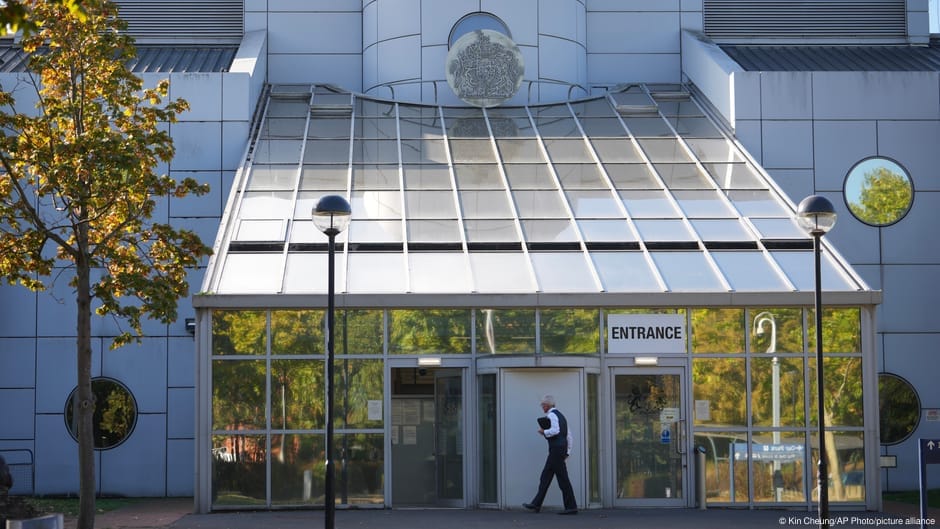
A London court has convicted two Iranian men of spying on journalists at Iran International, the Persian-language dissident TV channel, on behalf of Iran's Islamic Revolutionary Guard Corps. One was also found guilty of plotting a violent attack against his targets. The verdicts land inside an escalating pattern of Iranian state-directed operations on British soil that now includes alleged plots against military infrastructure, assassination planning, and systematic surveillance of regime critics.
Extraction Map
The mechanics are worth understanding. The two men — both in their 40s, arrested last year — conducted physical surveillance of journalists' addresses, took photos and video, and used tools including ChatGPT to research targets online. One claimed duress after family threats; the other claimed ignorance. A third defendant was acquitted. Sentencing is scheduled for December 17 at the Old Bailey, with the IRGC's formal designation as a national security threat in July 2024 meaning penalties can reach 14 years. This is the fourth known operation targeting Iran International since late 2023. In July, two Romanian men were jailed for stabbing a journalist outside his home. The broadcaster's parent company, Volant Media, noted bluntly that the verdicts "don't make the lives of our journalists any safer" while Iran continues its campaign. A British barrister was also reportedly among the targets — a signal that the net extends beyond media figures. The broader picture is what matters structurally. MI5 chief Ken McCallum said in October that Iran-linked operations had produced more than 50 arrests in the past year alone. Known state threat cases have more than quadrupled over a decade. Counter-terrorism chief Vicki Evans expects the trend to continue. This is not episodic — it is an operational tempo. The RAF Fairford case illustrates the escalation ladder. The UK accused Iran of involvement in a suspected plot against the US Air Force's major European operational base. Three men were indicted in the US this week; two face charges in Britain. The plot was serious enough that Trump withdrew long-range bombers from the site. When a state actor's operations force changes to military posture at a NATO facility, the threshold has shifted. France this week accused Iran of a cyberattack targeting refrigeration units at hundreds of supermarkets — a low-cost, hard-to-attribute hybrid warfare tactic. European governments are now on heightened alert for such operations from both Iran and Russia. New technologies — cheap drones, AI-assisted research, commercial surveillance tools — are compressing the cost curve for state-sponsored harassment, making operations cheaper to run, harder to trace, and easier to scale. The structural question is whether the UK's legal and security apparatus can scale its response faster than Iran can scale its operations. The IRGC designation was a legal tool upgrade. But the conviction rate tells you about cases that reached court — not about the operations that didn't. Fifty arrests in one year, state threats quadrupled in a decade, and a counter-terrorism chief publicly saying she expects acceleration: the trend line is the story.
Worth reading?
SKIP
Score
24
/100
Extractive. Iran's intelligence operations systematically extract safety, freedom of expression, and operational sovereignty from diaspora communities, journalists, and allied military infrastructure — imposing costs on the UK public while generating zero shared value.
What Is GRIN?
GRIN stands for Generativity, Resilience, Innovation efficiency, and Novelty openness. These four dimensions capture the essential characteristics of any memetic intelligence — whether a nation, a corporation, a religion, or a movement.
About GRINGenerativity
0/5
Resilience
2/5
Efficiency
1/5
Novelty
3/5
Extractive
5/5
Inverted
Does this create new capability or just redistribute existing value?
Net destroyer. Every operation chills diaspora press freedom, forces security spending, and produces nothing generative. The only 'capability' created is coercive — silencing critics through fear.
Verified Facts (16)
Two Iranian men convicted at Woolwich Crown Court in London of spying on journalists at Iran International for the IRGC
One convicted of plotting a violent attack; the second convicted only of spying
A third defendant, a 57-year-old Iranian man, was acquitted of all charges
One defendant claimed duress after family was threatened; the other claimed he did not know his actions assisted Iranian intelligence
UK formally designated the IRGC as a threat to national security in July, penalties up to 14 years in prison
Sentencing scheduled for mid-December at the Old Bailey
Four cases targeting Iran International since late 2023
In July, two Romanian men were jailed for stabbing a journalist outside his home in 2024
MI5 chief Ken McCallum said Iran-linked operations led to more than 50 arrests in the last year
Known state threat cases more than quadrupled in a decade
UK accused Iran of being behind a suspected plot targeting RAF Fairford base in September
Trump withdrew some long-range bombers from RAF Fairford
Three men indicted in US this week related to RAF Fairford plot; two face charges in UK
France accused Iran of cyberattack targeting refrigeration units at hundreds of supermarkets in October
Defendants used ChatGPT to research targets online
Iran's Foreign Minister Abbas Araghchi said he was 'disturbed' by the trio's arrests last May
More latest news
Read all