KILLED · EASTER 2019
270
PRISON · SOCIAL MEDIA
15 yrs
INJURED · 2019
500+
EU TRADE AT RISK
GSP+
Sri Lanka's governing National People's Power faction, led by President Anura Kumara Dissanayake, campaigned in 2024 on repealing the Prevention of Terrorism Act — a law that has enabled arbitrary detention and torture for decades. The replacement, the Protection of the State from Terrorism Act (PSTA), is now drawing fire from domestic lawyers, international rights bodies, and the country's own Supreme Court for reproducing the core pathologies of the law it claims to retire.
Extraction Map
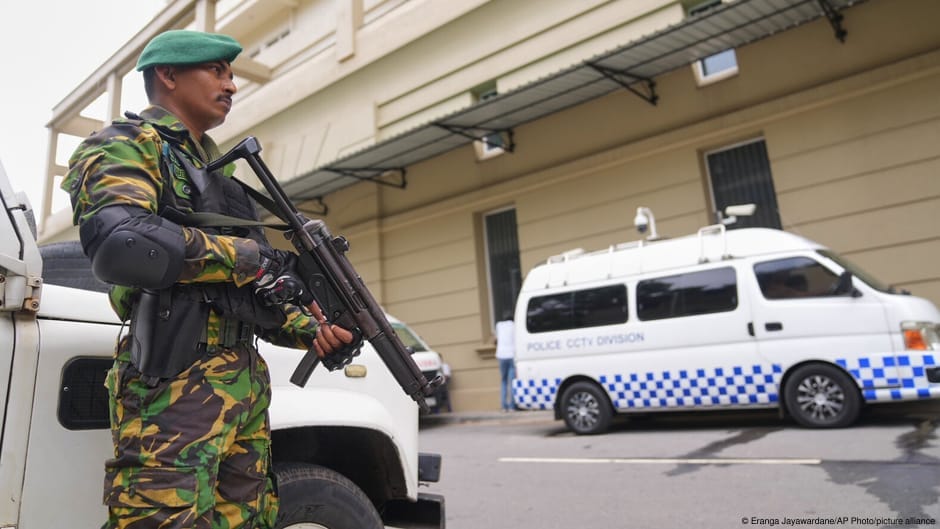
The structural problem is definitional. The bill's definition of terrorism is so broad that human rights lawyer Visakesa Chandrasekaram calls it "highly problematic" and "unclear." That vagueness is not a drafting oversight — it is a feature that lets the executive decide, after the fact, what counts as terrorism. Section 9 extends this reach to social media, where sharing content deemed a terrorism offense carries up to 15 years of rigorous imprisonment. Lawyer Dhanushka Silva is blunt: the PSTA is "a replica of the PTA." The bill's most alarming structural innovation is conferring police powers on the military. Chandrasekaram warns this amounts to militarizing law enforcement, handing investigation and detention authority to an institution neither trained for criminal procedure nor equipped to protect the rights of suspects. Security forces would be empowered to stop, search, question, enter premises, and seize items on the basis of "reasonable suspicion" — a threshold that, combined with the vague terrorism definition, creates an almost limitless mandate. The 2019 Easter Sunday attacks, which killed 270 people and injured over 500 in coordinated bombings of churches and hotels, remain the emotional anchor for the government's case. The attacks were Sri Lanka's deadliest violence since the civil war ended in 2009. But even survivors like Ganesan from Batticaloa — who lost his two-year-old daughter at Zion Church — express skepticism, drawing a clear line between genuine security needs and laws that "target the innocent or suppress human rights." The international leverage is real and immediate. The EU's Generalized Scheme of Preferences Plus (GSP+) grants Sri Lanka preferential market access contingent on human rights compliance. The UN has repeatedly urged Colombo to repeal the PTA, and the OHCHR has called for robust safeguards against torture, enforced disappearance, and coercive interrogation in any replacement. Failure to meet these conditions could trigger suspension of GSP+ preferences — a significant economic penalty for a country still recovering from its 2022 debt crisis. The bill's domestic legal trajectory is already contested. Speaker Jagath Wickramaratne flagged constitutional inconsistencies during a November 12 parliamentary debate. The Supreme Court has outlined required amendments before passage. Parliament has not scheduled a vote. Government spokesperson Nalinda Jayatissa insists civil liberties and press freedom are protected, but offers no structural mechanism to enforce that claim. The pattern is familiar across post-conflict states: a government elected on reform promises discovers that the security apparatus it inherited is too convenient to dismantle. The PTA's replacement reproduces its worst features — vague definitions, military policing, speech suppression — while adding a fresh coat of legislative paint. The question is whether the EU trade lever and Supreme Court pushback are strong enough to force real amendments, or whether Sri Lanka's reform moment has already passed.
Worth reading?
SKIP
Score
20
/100
Extractive. The PSTA concentrates coercive power in the executive and military at the expense of civil liberties, press freedom, and democratic accountability, while risking the EU trade access that benefits the broader economy.
What Is GRIN?
GRIN stands for Generativity, Resilience, Innovation efficiency, and Novelty openness. These four dimensions capture the essential characteristics of any memetic intelligence — whether a nation, a corporation, a religion, or a movement.
About GRINGenerativity
1/5
Resilience
1/5
Efficiency
1/5
Novelty
1/5
Extractive
4/5
Inverted
Does this create new capability or just redistribute existing value?
Zero new capability created. The bill redistributes coercive power upward while threatening GSP+ trade access worth far more than any security gain the vague statute could deliver.
Verified Facts (8)
270 people lost their lives in the 2019 Easter Sunday attacks
More than 500 people were injured
Attacks targeted three churches and three luxury hotels
Section 9 of the PSTA: individuals who share content deemed a terrorism offense could face up to 15 years of rigorous imprisonment
Speaker Jagath Wickramaratne said some provisions were inconsistent with the constitution during a November 12 parliamentary debate
The Supreme Court outlined several amendments and said Parliament could pass the measure once the changes were made
The EU's GSP+ grants preferential access to the EU market to eligible developing countries
Government spokesperson Nalinda Jayatissa rejected allegations that the new law would compromise civil liberties and press freedom
More latest news
Read all