S. AMERICA ARRIVALS YOY
7%
MACHU PICCHU / DAY
5,600
GALÁPAGOS ENTRY FEE
$200
TRAVELERS WANT SUSTAINABLE
93%
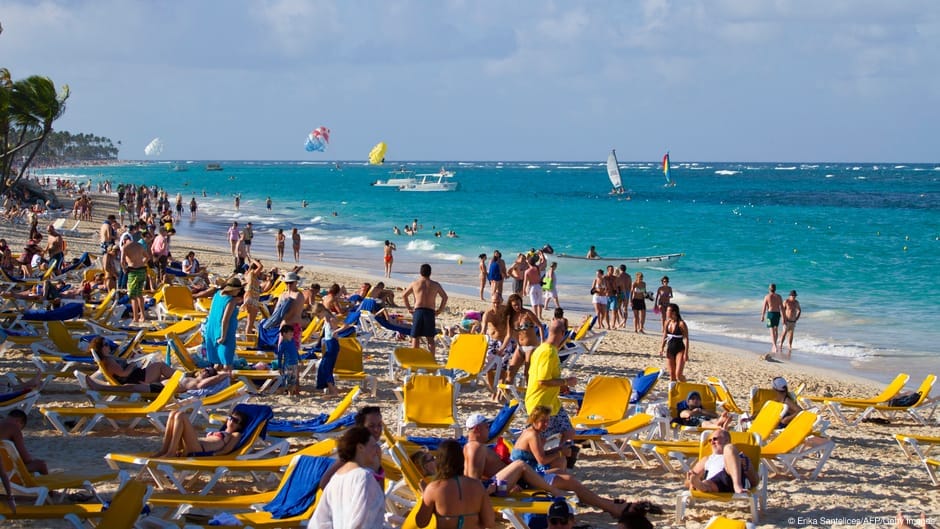
International arrivals in South America grew 7% last year and 5% in Central America, both above the global average, according to UN Tourism. The boom has turned destinations like Machu Picchu, the Galápagos, and Mexico City's Roma and Condesa neighborhoods into pressure zones — sites where environmental degradation, cultural displacement, and rent inflation are the cost of someone else's revenue.
Extraction Map
The extraction pattern is structural, not incidental. As Sarah Payne of the Reset Tourism Fund puts it plainly: in the traditional model, most of the money generated never reaches local communities. The people who live with the noise, the waste, the rising rents, and the crowded streets capture almost none of the surplus. Financing is expensive and inflexible because tourism is classified as high-risk, which means the communities least equipped to absorb shocks are also the least likely to get capital on fair terms. The countervailing trend is real but early-stage. Planeterra's Richard Bazan describes shrinking group sizes — from 20 to four or five — and growing demand for "nature-positive" programs that fund reforestation or ecosystem restoration. Booking.com's 2025 survey of 32,000 travelers across 34 countries found 93% wanted more sustainable choices, and for the first time, more than half (53%) were aware of tourism's community impact, not just its environmental footprint. Peru's Machu Picchu case is a useful microcosm. The site draws up to 5,600 visitors a day, and Peru's official watchdog warned in 2025 that more tickets were being sold than permitted, risking placement on UNESCO's List of World Heritage in Danger. Ecuador doubled Galápagos entrance fees for foreign visitors to $200 in 2024, but development pressure for new hotels and apartments continues to mount. These are demand-management tools, not structural reforms — they slow the extraction without redirecting the flow. The most interesting model discussed is community ownership of the tourism product itself. Rutopia co-founder Sebastian Munoz argues tours must be designed in partnership with communities so they hold genuine ownership rather than serving as scenery for externally designed packages. Munoz cites an Indigenous Mixtec community in Mexico where tourist interest in the local language prompted children — who spoke only Spanish — to start learning from their grandparents. That is generativity: new cultural capital created, not just existing value redistributed. But the scale mismatch is enormous. The UnTours Foundation's low-interest loan fund and platforms like Rutopia are operating at micro-scale against a global industry generating trillions. All-inclusive resorts offering "authentic experiences" is a branding adjustment, not a structural shift. The question is whether demand signals — that 93% survey figure — translate into willingness to pay more, accept fewer amenities, or tolerate less convenience. History suggests consumer preference surveys overstate behavioral change by a wide margin. The experts are honest that change is slow. The real test is whether community-based models can grow without reproducing the extraction dynamics they were designed to replace — and whether the financing infrastructure can scale to match. Without capital access on fair terms, community ownership remains an aspiration rather than a market force.
Worth reading?
OPTIONAL
Score
40
/100
Extractive — the dominant tourism model concentrates revenue with international operators, hotel chains, and platform intermediaries while communities bear environmental degradation, cultural displacement, and inflated living costs.
What Is GRIN?
GRIN stands for Generativity, Resilience, Innovation efficiency, and Novelty openness. These four dimensions capture the essential characteristics of any memetic intelligence — whether a nation, a corporation, a religion, or a movement.
About GRINGenerativity
2/5
Resilience
2/5
Efficiency
2/5
Novelty
3/5
Extractive
4/5
Inverted
Does this create new capability or just redistribute existing value?
Community-based models create genuine new value — cultural revival, ecosystem restoration, local ownership — but operate at micro-scale against a trillion-dollar extractive mainstream. Demand signals are strong; structural change is not.
Verified Facts (9)
International arrivals in South America grew by 7% last year, while Central America saw a 5% increase
Machu Picchu lures up to 5,600 visitors a day
In 2025, Peru's official watchdog warned that more tickets were being sold than permitted
Ecuador doubled the entrance fee for foreign visitors to $200 in 2024
Booking.com's 2025 annual survey polled 32,000 people in 34 countries
93% said they wanted to make more sustainable travel choices
More than half (53%) were aware of tourism's impact on local communities
Where groups of 20 used to travel together, now it's four or five — Richard Bazan, Planeterra
Indigenous Mixtec community in Mexico receives tourists interested in learning the local language
More latest news
Read all