LEADERS · DUBLIN
47
NAMED ENVOYS
0
UKRAINE FUNDING GAP
€70B
US ENVOYS TO MOSCOW
2
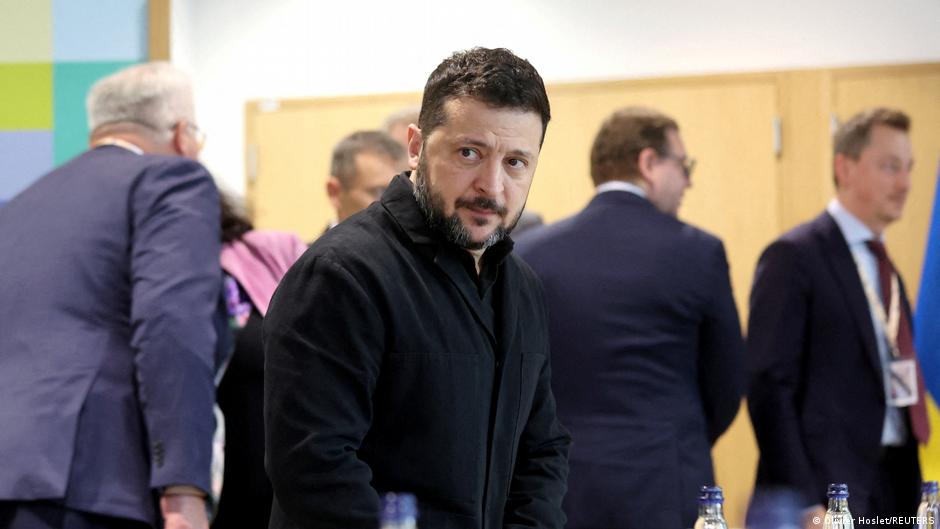
Forty-seven European leaders gathered in Dublin for a European Political Community summit and still could not answer the most basic question: who speaks for Europe in negotiations to end the war in Ukraine? US envoy Steve Witkoff confirmed that Europeans will be present at the next round of talks, but the bloc has failed to designate a single representative. EU foreign policy chief Kaja Kallas and EU Council President Antonio Costa are both tipped, but national leaders — each wanting their own chair — have blocked consensus.
Extraction Map
The representation vacuum is not accidental. It is the structural output of an institution designed for consensus in peacetime now confronting wartime diplomacy where speed and unity are existential. Italian Prime Minister Giorgia Meloni captured the cost in a letter to Costa: "By projecting the image of a Europe that is in disarray, we are merely serving the interests of those who want this war to continue." She is correct. Every day without a named envoy is a day Russia and the US define the negotiating parameters without European input. The Dublin summit followed a diplomatic sequence that made Europe's marginal position unmistakable. Jared Kushner and Steve Witkoff met Putin in Moscow, then flew to Dublin to debrief Zelenskyy. Europe was not at the Moscow table. When DW asked Kallas why Europe gets one seat while the US gets two, she responded with what was described as a wry, ironic laugh — a diplomatic tell of real frustration. German Chancellor Friedrich Merz insisted that Ukraine, Europeans, Americans, and Russia must all be seated, but like others, resisted appointing a special envoy. The deeper fear circulating in Dublin is that Russia's price for any deal includes restructuring European security itself. Putin floated demands that Ukraine never join NATO and that Finland and Sweden's NATO membership be rolled back. He warned that European troop deployments in post-war Ukraine would constitute legitimate targets, restarting hostilities immediately. Estonian Prime Minister Kristen Michal framed the bind precisely: "If something is a threat to you, will you discuss your defense with the threat itself?" Zelenskyy endorsed European involvement but acknowledged its current limits: "Not directly yet, and not yet when the Russians are at the table. But Europeans are already involved." He called the US approach "a bit strange." European leaders repeatedly referenced broken Russian commitments — the 1975 Helsinki Accords, the 1990 Paris Charter, the 1997 NATO-Russia Founding Act, and most pointedly the 1994 Budapest Memorandum, which forbids Russia from using force against Ukraine except in self-defense. The envoy fight is consuming oxygen that should go to an even larger problem: money. The European Commission identified a €70 billion shortfall in promised funding for Ukraine's economy back in October. Slovakia's Robert Fico opposes any further financial or military support. Germany's Merz has escalated by threatening to block the EU's next seven-year budget unless member states agree to fund Ukraine — a move his critics have labeled blackmail. The financing gap is not abstract: it determines whether Ukraine can sustain its economy and defense while negotiations proceed. The pattern is clear. Russia sets maximalist demands and frames European security as a negotiable concession. The US brokers from a position of access Europe lacks. Europe bears the financial, military, and security costs but cannot organize itself to claim a proportionate role. Every week this continues, Europe's negotiating leverage erodes further — not because it lacks resources, but because it lacks the institutional mechanism to deploy them coherently.
Worth reading?
SKIP
Score
20
/100
Extractive. Russia and the US define the negotiating framework while Europe absorbs financial, military, and security costs without proportionate representation — a classic extraction from the cost-bearer by the agenda-setters.
What Is GRIN?
GRIN stands for Generativity, Resilience, Innovation efficiency, and Novelty openness. These four dimensions capture the essential characteristics of any memetic intelligence — whether a nation, a corporation, a religion, or a movement.
About GRINGenerativity
1/5
Resilience
1/5
Efficiency
1/5
Novelty
1/5
Extractive
4/5
Inverted
Does this create new capability or just redistribute existing value?
Zero new capability created. Dublin produced no envoy, no mechanism, no timeline. Forty-seven leaders met and generated only public disagreement, actively degrading Europe's negotiating position.
Verified Facts (10)
Steve Witkoff told reporters that the Europeans will be present at the next meetings
Kaja Kallas and EU Council President Antonio Costa are tipped as most likely to represent the EU
Italian PM Giorgia Meloni wrote a letter to Costa: 'By projecting the image of a Europe that is in disarray, we are merely serving the interests of those who want this war to continue'
Putin said a commitment that Ukraine will never join NATO and even the potential rolling back of the alliance to remove new joiners Finland and Sweden could be among his demands
Estonian PM Kristen Michal: 'If something is a threat to you, will you discuss your defense with the threat itself?'
The European Commission identified a €70 billion hole in the EU's funding it had promised for Ukraine's economy
Slovakia's PM Robert Fico has opposed any further financial and military support for Ukraine
Germany's Merz warned he could block the EU's next seven-year budget unless member states agree to contribute to Ukraine's financing
Zelenskyy called the US approach 'a bit strange'
The 1994 Budapest Memorandum forbids Russia from using force against Ukraine unless in self-defense
More latest news
Read all