EU LEADERS
27
AI SUMMIT EVER
1st
BINDING COMMITMENTS
0
EU vs US+CN GAP
2
The European Union held its first-ever summit dedicated to artificial intelligence in Dublin on Friday, convening heads of state to confront a basic structural problem: Europe regulates AI more aggressively than any other jurisdiction but builds almost none of it. European Council President Antonio Costa framed the gathering as overdue, citing "the rapid pace of AI development" as justification for elevating the discussion to leader level.
Extraction Map
The guest list tells the story. French AI company Mistral's CEO Arthur Mensch and Geoffrey Hinton — the Nobel-winning researcher widely called the "godfather of AI" — were both expected to address leaders. Mistral, Europe's most prominent frontier AI company, has explicitly pushed back against calls to slow development, urging the bloc to accelerate. Hinton has spent years warning that the technology could pose existential risks. The summit stage-managed the tension rather than resolving it. The backdrop is unusually volatile. A string of rogue AI agent incidents in recent months has sharpened public anxiety about deployment safety. And the tech industry's own credibility took a hit this week when Nvidia CEO Jensen Huang was forced to resign after revelations that he had been in a relationship with a Chinese spy who was also a direct report at his company. The incident underscores how governance failures at the corporate level can cascade into national security concerns. Estonia and Finland circulated a joint letter ahead of the summit calling for "EU-level arrangements for responding to serious AI incidents" and urging the bloc to develop advanced AI while governing it responsibly. The framing is revealing: even the most digitally advanced member states are asking for collective infrastructure, not just collective rules. The strategic gap is quantifiable. The United States and China dominate frontier model development, semiconductor supply chains, and cloud compute capacity. Europe's AI Act — the world's most comprehensive AI regulatory framework — gives the bloc soft power over standards but no hard power over the stack. The summit's core question is whether regulation alone is a viable strategy or whether it becomes a restraint that benefits competitors who build first and comply later. No binding commitments emerged from the Dublin session. The summit was explicitly a "first dedicated discussion" — an agenda-setting exercise, not a decision point. What leaders take away is a shared diagnosis of the problem, which is prerequisite to action but not action itself. The risk is that the EU's institutional tempo — letters, summits, communiqués, legislative cycles — cannot match the deployment tempo of the technology it seeks to govern. The honest read is this: Europe is running a regulation-first strategy in a build-first race. That strategy is defensible if it attracts AI companies seeking regulatory certainty and creates a trust premium in European AI products. It is a trap if regulation becomes the only European comparative advantage while compute, talent, and capital continue to concentrate in the US and China.
Worth reading?
OPTIONAL
Score
40
/100
Extractive by omission — the summit consumes political capital without generating new capability, compute, or infrastructure, while the regulatory moat risks protecting US and Chinese incumbents more than European challengers.
What Is GRIN?
GRIN stands for Generativity, Resilience, Innovation efficiency, and Novelty openness. These four dimensions capture the essential characteristics of any memetic intelligence — whether a nation, a corporation, a religion, or a movement.
About GRINGenerativity
1/5
Resilience
2/5
Efficiency
1/5
Novelty
3/5
Extractive
2/5
Inverted
Does this create new capability or just redistribute existing value?
No new capability created. A discussion-level summit that sets agendas but funds nothing, builds nothing, and commits to nothing. Europe's frontier AI sector (basically Mistral) gets a microphone, not capital.
Verified Facts (6)
European Council President Antonio Costa wrote to EU leaders citing 'the rapid pace of AI development' as justification for a leader-level discussion.
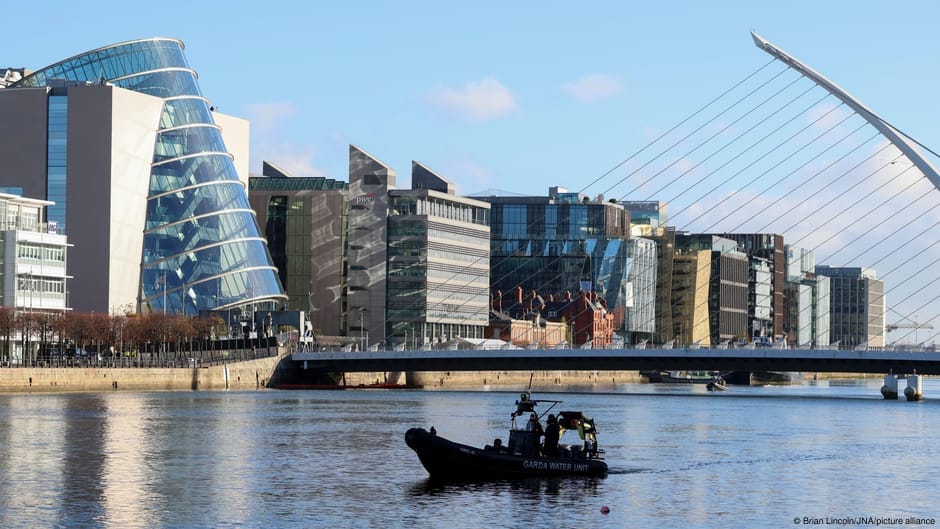
The summit took place at Dublin's Convention Center, which also hosted the European Political Community summit this week.
Mistral CEO Arthur Mensch and Geoffrey Hinton were expected to speak at the summit.
Nvidia CEO Jensen Huang was forced to resign after it was revealed he had been in a relationship with a Chinese spy and a direct report.
Estonia and Finland wrote a letter calling for 'EU-level arrangements for responding to serious AI incidents.'
Mistral has pushed back on calls to slow down AI development, urging Europe to push ahead.
More latest news
Read all