XI-PUTIN MEETINGS
~40
YEARS OF WAR
3+
AGENDA ITEMS CONFIRMED
0
POWERS · NO UKRAINE SEAT
3
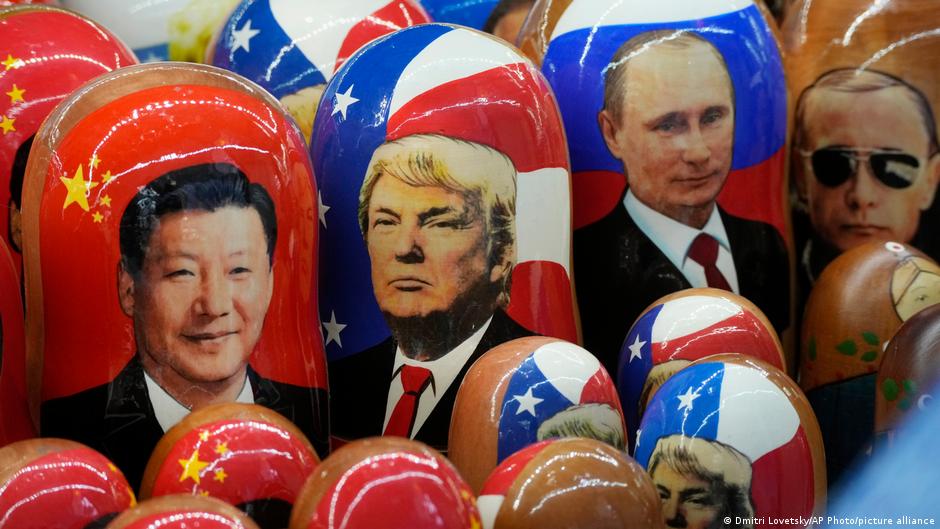
The prospect of an unprecedented Xi-Trump-Putin trilateral meeting at next week's APEC summit in Shenzhen has placed Beijing in a diplomatic bind of its own making. China has neither confirmed nor denied the meeting, offering only that it is "in communication" with relevant parties — a formulation so deliberately vague it reads as institutional discomfort rendered in diplomatic syntax.
Extraction Map
The summit idea originated with Putin during a call with Trump last month, with the Wall Street Journal reporting that Putin wanted the meeting to discuss ending his war in Ukraine. For Putin, the meeting is a pure win: a photo-op with the leaders of both rival superpowers would shatter the diplomatic isolation the West imposed after the 2022 invasion. Trump, who has already rolled red carpets for both Xi and Putin during his second term, appears unbothered by the optics, mentioning only Iran and denuclearization as possible talking points while conspicuously avoiding the word Ukraine. China's calculus is far more constrained. Beijing has spent three years maintaining a studied neutrality on Ukraine while quietly serving as Russia's economic lifeline — purchasing energy exports, supplying dual-use technology, and providing channels to circumvent Western sanctions. A US-China Economic and Security Review Commission report published in August labeled China a "decisive enabler" of Russia's war, noting Beijing was converting Moscow's dependence into lasting military, technological, and economic advantages while avoiding formal alliance obligations. The trilateral format threatens to collapse this careful ambiguity. As Alicja Bachulska of the European Council on Foreign Relations told DW, Beijing is acutely aware of the "Yalta 2.0" framing — three powers carving up the world — even if the comparison is historically inaccurate. The EU, which China is actively courting to rebalance economic ties, would bristle at a Ukraine discussion with no Europeans present. Images of Xi flanked by his declared partner Putin and his declared rival Trump serve no coherent narrative Beijing wants to project. The underlying architecture of the China-Russia relationship reveals the real stakes. Since their "no limits" partnership declaration in early 2022 — announced weeks before the full-scale invasion — Xi and Putin have met approximately 40 times. Russia provides energy and residual military technology transfers; China provides dual-use goods, sanctions evasion infrastructure, and diplomatic cover. Aurelio Insisa of the Mercator Institute for China Studies notes China also gains a "privileged vantage point" on how the Ukraine battlefield is evolving land warfare. The relationship is strategic alignment, not alliance, with deep mistrust persisting: Russian defense firms have accused Chinese companies of IP theft, while Beijing watches nervously as Russia's growing ties with North Korea reduce Pyongyang's dependence on China. The deeper problem for Beijing is structural. Embracing a "G3" narrative — three great powers deciding the world's fate — would undermine China's carefully cultivated image as champion of the Global South. Yet refusing to host the meeting risks offending both Trump and Putin simultaneously, an outcome with no constituency in Zhongnanhai. China's likeliest play is to agree to a meeting while aggressively controlling the framing, ensuring it looks like an APEC sidebar rather than a new world order conclave. What makes this moment revealing is not whether the meeting happens but what it exposes about the limits of strategic ambiguity. Beijing has profited enormously from maintaining plausible neutrality on Ukraine while bankrolling Russia's war economy. A trilateral summit — even one that yields nothing beyond a photo — would force that ambiguity into the open, and ambiguity exposed is ambiguity lost.
Worth reading?
SKIP
Score
20
/100
Extractive. The summit structure concentrates diplomatic gains toward Putin (legitimacy restoration) and Trump (spectacle) while imposing costs on Ukraine, the EU, the Global South narrative, and ultimately Beijing's own strategic flexibility.
What Is GRIN?
GRIN stands for Generativity, Resilience, Innovation efficiency, and Novelty openness. These four dimensions capture the essential characteristics of any memetic intelligence — whether a nation, a corporation, a religion, or a movement.
About GRINGenerativity
1/5
Resilience
1/5
Efficiency
1/5
Novelty
1/5
Extractive
4/5
Inverted
Does this create new capability or just redistribute existing value?
Near-zero generative potential. No new conflict-resolution mechanism is proposed — this is a photo-op that redistributes diplomatic legitimacy without creating frameworks, institutions, or pathways to actual peace.
Verified Facts (11)
Chinese Foreign Ministry official told press Beijing was 'in communication' with relevant parties.
Kremlin representative said work on 'coordination' was underway.
Trump said he 'thinks' one of the meetings planned for APEC will be with Putin and Xi.
Putin first pitched the trilateral summit idea during a call with Trump last month.
Wall Street Journal reported Putin wanted the meeting to discuss ending the war in Ukraine.
Trump mentioned 'Iran' and 'denuclearization' as possible talking points, avoiding Ukraine.
Xi and Putin have met some 40 times since Xi came to power in 2012.
'No limits' partnership announced on sidelines of Beijing Winter Olympics, weeks before the full-scale invasion.
US-China Economic and Security Review Commission report (August) called China a 'decisive enabler' of Russia's war in Ukraine.
Russian defense firms have accused Chinese companies of stealing intellectual property.
Beijing maintains a 'no first use' nuclear policy; Moscow uses nuclear threats strategically.
More latest news
Read all