DRONES INTERCEPTED
2
HORMUZ WIDTH
21 mi
US CASUALTIES
0
PEACE DEALS
0
Iran's Revolutionary Guard Corps claimed on Friday that its air force targeted and destroyed a US early warning radar system on the island of Bahrain, framing the strike as retaliation for a US attack on a telecommunications tower in the Iranian county of Sirik, on the shores of the Strait of Hormuz. Several hours later, US Central Command flatly denied the claim, stating it had intercepted two "one-way attack drones" targeting Bahrain with no casualties or damage reported.
Extraction Map
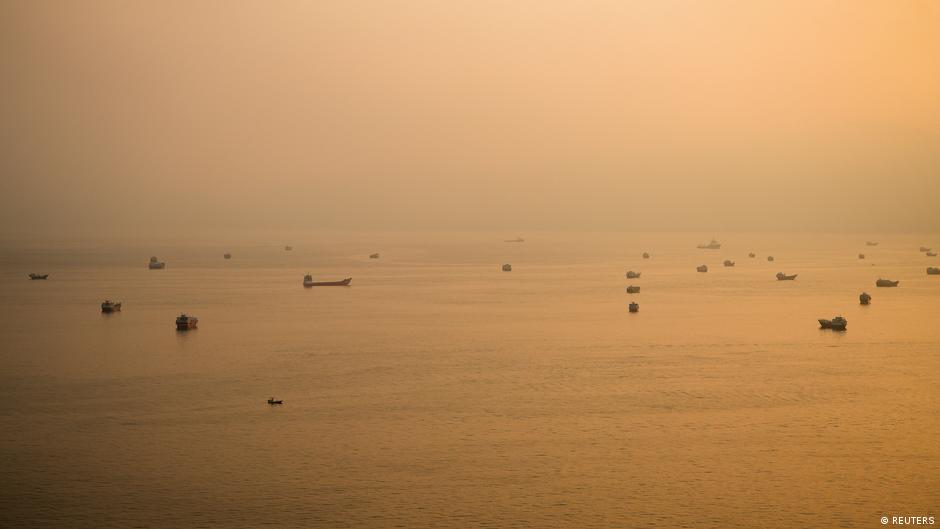
The dueling narratives matter less than the pattern they reveal. The Iran war — initiated by US and Israeli strikes on February 28 — is nominally in a de-escalation phase. Both the US and Israel have held off major attacks during recent election cycles. But de-escalation without resolution is just a pause button, and Tehran has used the pause to tighten its grip on the Strait of Hormuz, attacking ships it considers unauthorized and asserting control over the world's most important oil transit chokepoint. The US Navy has responded by enforcing its own blockade of Iranian vessels and escorting tankers through the strait, where reports of burning ships have surfaced. This is two navies running parallel blockades in a 21-mile-wide waterway — a condition that generates friction events like Friday's drone incident with near-mathematical certainty. The question is not whether these events occur, but whether one of them escalates past the threshold both sides are trying to manage. Diplomacy has produced nothing usable. Pakistan-mediated peace talks between the US and Iran in April ended without conclusion. Before the midterm elections, President Trump floated the possibility of another "Epic Fury" — a reference to the US-Israeli strike campaign — without committing to a timeline. The remark functions as strategic ambiguity, keeping Tehran uncertain while giving domestic audiences the impression of resolve. The next diplomatic test arrives quickly. Trump is expected to meet Chinese President Xi Jinping and Russian President Vladimir Putin at an APEC leaders' summit in China next week, where the Iran war is reportedly on the agenda. Both Beijing and Moscow have interests in how Hormuz traffic flows and neither wants a full US military escalation on their energy supply routes, but neither has shown willingness to pressure Tehran into meaningful concessions. The structural problem remains unchanged: Iran controls geography, the US controls naval firepower, and neither side has a theory of how this ends. Every week the war continues in its current form, the Hormuz chokepoint degrades as a reliable global energy corridor. Shippers reroute, insurance premiums climb, and the cost is distributed silently across every economy that depends on Gulf hydrocarbons. The drone incident is noise. The chokepoint degradation is signal.
Worth reading?
SKIP
Score
16
/100
Extractive. Dual naval blockades in a 21-mile strait degrade the world's most critical energy chokepoint, imposing costs on every oil-dependent economy while generating zero new capability or stability for any party.
What Is GRIN?
GRIN stands for Generativity, Resilience, Innovation efficiency, and Novelty openness. These four dimensions capture the essential characteristics of any memetic intelligence — whether a nation, a corporation, a religion, or a movement.
About GRINGenerativity
0/5
Resilience
1/5
Efficiency
1/5
Novelty
1/5
Extractive
4/5
Inverted
Does this create new capability or just redistribute existing value?
Pure destruction. Dual blockades, drone strikes, and burning ships create no new capacity. Global energy routing is degraded, shipping costs rise, and no party gains productive capability.
Verified Facts (10)
Iran's Revolutionary Guard Corps said its air force targeted and destroyed a US early warning radar system on the island of Bahrain
IRGC claimed this was retaliation for a US attack on a telecommunications tower in the Iranian county of Sirik, on the shores of the Strait of Hormuz
US Central Command denied the IRGC's claim and said it stopped two 'one-way attack drones' targeting Bahrain
US reported no casualties or damage
Iran war started by US and Israeli strikes on February 28
Tehran has continued seeking to control the Strait of Hormuz
US Navy has recently escorted tankers through the strait
Trump said 'We may do another little Epic Fury' before the midterm elections
Trump is expected to meet Xi Jinping and Vladimir Putin at an APEC leaders' summit in China next week
Pakistan-mediated peace talks between the US and Iran in April failed to reach a conclusion
More latest news
Read all