EIB LOAN
€3B
PRIOR DISPUTE
17yr
GLOBAL MAKERS
2
TRUCE YEAR
2021
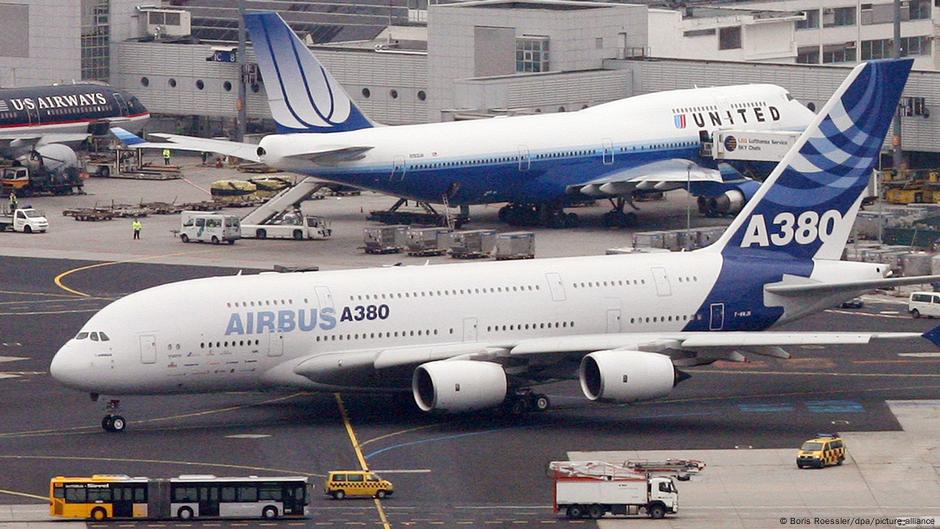
The European Investment Bank's €3 billion loan to Airbus — the largest corporate loan the bank has ever authorized — has drawn a sharp rebuke from the US Trade Representative's office. Jamieson Grier called the loan a continuation of decades of trade-distorting subsidies by France, Germany, and Spain, suggesting it breaches the 2021 EU-US agreement on state support for aerospace. The EU insists it is a standard market-rate loan that carries interest, must be repaid in full, and is consistent with the 2021 deal's market-terms principle.
Extraction Map
This dispute did not appear from nowhere. It is the latest iteration of a 17-year Airbus-Boeing corporate trade war that the World Trade Organization adjudicated by finding both sides guilty — the EU for providing launch aid and the US for channeling defense R&D contracts that cross-subsidized Boeing's commercial programs. That dispute generated billions in retaliatory tariffs before a 2021 truce, strengthened in 2025, temporarily buried the hatchet. Boeing itself triggered the current escalation, asking the US Trade Representative in July to intervene over the loan, linking it to Airbus's plans to develop a new single-aisle aircraft program. That detail matters: a next-generation narrowbody would directly challenge Boeing's 737 MAX franchise in the most profitable segment of commercial aviation. This is not abstract trade law — it is corporate competitive strategy wearing a regulatory mask. The substantive question — whether a €3 billion loan at undisclosed terms constitutes a subsidy — is genuinely unresolvable without a full WTO investigation, as trade economists quoted in the reporting acknowledge. The loan's terms are not public. Whether the interest rate is truly market-rate, whether it carries implicit sovereign backing that lowers Airbus's borrowing cost, and how much of the funding flows to defense versus commercial R&D are all open questions that neither side has an incentive to clarify. Fredrik Erixon of the European Centre for International Political Economy identifies the structural driver: aerospace is a duopoly with enormous upfront development costs, and both companies are now being pulled into expanded military spending by their respective governments. Boeing's defense R&D contracts produce technology that benefits its civil aircraft program — exactly what the WTO previously found. The subsidy accusations are symmetric, and the symmetry is the problem. The likely next step is a US Section 301 investigation, which would give the Trump administration unilateral authority to impose tariffs without WTO involvement. Inu Manak of the Peterson Institute warns that the administration has little interest in engaging with the WTO and may see the loan as leverage to extract broader concessions from the EU. The Airbus dispute becomes a bargaining chip in a larger trade negotiation, not a standalone legal question. The deepest structural issue is what Erixon calls a "state aid race." As defense budgets grow and both companies require ever-larger government investment, each new subsidy becomes ammunition for the other side's trade complaints. The cycle is self-reinforcing: more state money flows to both companies, more trade disputes follow, and the two governments spend political capital fighting over industrial subsidies while both quietly expanding them.
Worth reading?
SKIP
Score
20
/100
Extractive — public capital flows to two incumbent aerospace giants while governments weaponize trade rules to protect their national champion, with costs borne by taxpayers and downstream industries on both continents.
What Is GRIN?
GRIN stands for Generativity, Resilience, Innovation efficiency, and Novelty openness. These four dimensions capture the essential characteristics of any memetic intelligence — whether a nation, a corporation, a religion, or a movement.
About GRINGenerativity
1/5
Resilience
1/5
Efficiency
1/5
Novelty
1/5
Extractive
4/5
Inverted
Does this create new capability or just redistribute existing value?
Zero new capability created. The loan funds an incumbent duopolist to defend market share against the other incumbent duopolist. No new entrants, no expanded pie — pure positional spending.
Verified Facts (10)
EIB agreed in June to loan Airbus up to €3 billion ($3.4 billion)
US Trade Representative Jamieson Grier said in late October: 'I had sincerely hoped that trade-distorting European subsidies to Airbus were a thing of the past'
Airbus-Boeing dispute was a 17-year corporate trade dispute
WTO ruled that both the EU and US provided the companies with state subsidies
Deal to end tariffs agreed in 2021 and strengthened in 2025
Boeing asked the US trade representative back in July to intervene over the loan
Inu Manak is a senior fellow at the Peterson Institute for International Economics
Fredrik Erixon is founding director of the European Centre for International Political Economy
EIB spokesperson described the loan as 'a standard EIB corporate loan, implemented under the bank's established procedures and on market-based terms'
EC spokesperson stated: 'The EIB loan to Airbus is a standard loan on market terms'
More latest news
Read all