YRS · BÖLL FOUNDATION
18
PATTERN SINCE COUP
2016+
HIGH-PROFILE CASES
10+
ESPIONAGE QUESTIONS ASKED
0
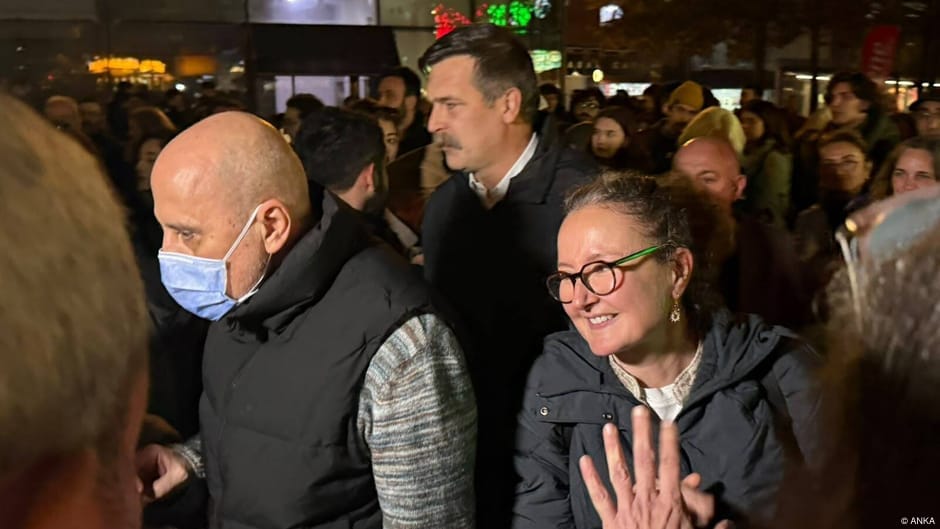
Yonca Verdioglu Sik, a German-born project coordinator for the Heinrich Böll Foundation, was detained in Istanbul on espionage charges last Wednesday. Her lawyer says she was never asked about espionage during interrogation. Instead, prosecutors focused on the foundation's financial transfers and her work organizing projects on democracy, women's rights, minority rights, and LGBTQ+ rights. She was released but slapped with a travel ban.
Extraction Map
The targeting is not subtle. Verdioglu Sik is married to Ahmet Sik, an investigative journalist and left-wing TIP parliamentarian who is one of President Erdogan's most vocal critics. Sik has recently been probing a stock market scandal allegedly benefiting members of Erdogan's AKP party and their associates. As a sitting MP, Sik has parliamentary immunity. His wife does not. This is a pattern with deep roots in the Turkish state, not an aberration. Since the failed 2016 coup, espionage charges have been leveled at journalists Can Dundar and Erdem Gul, reporter Deniz Yücel (whom Erdogan personally labeled a "German agent," triggering a diplomatic crisis with Berlin), US pastor Andrew Brunson, philanthropist Osman Kavala, former Istanbul mayor Ekrem Imamoglu, local employees of the US diplomatic corps, and a lawyer working for the German embassy. The charges rarely stick as espionage convictions. That is the point. Hakki Tas, a Turkey specialist at the German Institute for Global and Area Studies, identifies a dual function. Domestically, the charges create a chilling effect: any contact with a foreign institution, any funding, any salary from abroad can become the basis for an investigation. For civil society and opposition figures, normal professional activity becomes a security risk. Internationally, the cases signal to foreign governments that their institutions' staff are not beyond reach — particularly during periods of diplomatic tension. The Brunson case illustrates the foreign-policy dimension explicitly. After arresting the American pastor, the Turkish government proposed exchanging him for Fethullah Gulen, the US-based cleric Ankara blamed for the 2016 coup attempt. Tas calls this "hostage diplomacy." The espionage accusation becomes a bargaining chip, not an evidentiary claim. The Kavala case is the domestic template. Initially acquitted of espionage multiple times, Kavala nonetheless spent years in prison on those charges before being convicted of different offenses. Tas invokes US legal scholar Malcolm Feeley's 1979 work: "The Process Is the Punishment." Pre-trial detention, travel bans, reputational destruction, and social isolation do the work that convictions never need to. The Erdogan government did not invent this suspicion of foreign institutions — German organization representatives faced similar trials in the early 2000s under different governments. But the current administration has industrialized the tactic, passed its own "foreign agent law," and expanded the target list from journalists to politicians' families to diplomatic staff. The acceleration is the story.
Worth reading?
SKIP
Score
8
/100
Extractive. The Turkish state is converting legal infrastructure into a political weapon, destroying the generative capacity of civil society, journalism, and foreign institutional engagement while concentrating power in the executive.
What Is GRIN?
GRIN stands for Generativity, Resilience, Innovation efficiency, and Novelty openness. These four dimensions capture the essential characteristics of any memetic intelligence — whether a nation, a corporation, a religion, or a movement.
About GRINGenerativity
0/5
Resilience
1/5
Efficiency
1/5
Novelty
0/5
Extractive
5/5
Inverted
Does this create new capability or just redistribute existing value?
Pure destruction. Every espionage charge against a journalist or NGO worker eliminates a node of independent inquiry. No new capability is created — only existing checks on power are neutralized.
Verified Facts (12)
Yonca Verdioglu Sik has been the Heinrich Böll Foundation's project coordinator for 18 years
Verdioglu Sik was born and raised in Germany
She was accused of political and military espionage but was never asked questions about espionage during interrogation
Ahmet Sik belongs to the left-wing Workers' Party of Turkey (TIP) and is a member of parliament
Sik has been investigating a stock market scandal allegedly benefitting AKP members and associates
Can Dundar and Erdem Gul were accused of espionage in 2015 after reporting on Turkish arms shipments to Syrian rebels
Erdogan called Deniz Yücel a 'German agent' in 2017
Osman Kavala remains in prison, charged with espionage and attempting to overthrow the constitutional order
Espionage charges have been brought against former Istanbul mayor Ekrem Imamoglu
After Brunson's arrest, the Turkish government proposed exchanging him for Fethullah Gulen
Hakki Tas is a research fellow at the German Institute for Global and Area Studies (GIGA)
Malcolm Feeley's 1979 work is titled 'The Process Is the Punishment'
More latest news
Read all