STARSHIP FLIGHT
15th
SPACEX INVESTED
$15B+
STARLINK SATS
26
ROCKET HEIGHT
124m
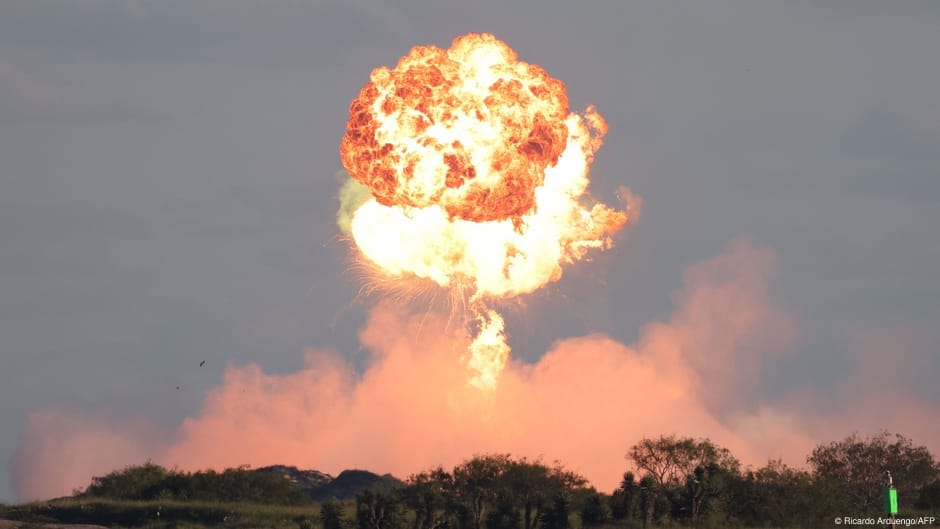
SpaceX's Starship — the largest and most powerful rocket system ever built at 124 meters tall — lifted off from its South Texas Starbase on Friday for its 15th test flight. The mission's headline objective was ambitious: recover both the Super Heavy booster and the upper-stage spacecraft, making it the first time both halves of the system would be returned intact. That objective was half-met at best.
Extraction Map
The booster, which had been successfully caught by the launch tower's mechanical arms on previous flights, diverted from its return path to the launch site and instead steered toward a designated area over the Gulf of Mexico, where it exploded above the sea surface. SpaceX commentator Dan Huot offered candid uncertainty: "Not sure right now why we weren't able to bring it back." The cause of the failure was not immediately identified. The upper stage continued into orbit and deployed all 26 Starlink satellites it was carrying — a real operational payload riding what remains a test vehicle. SpaceX plans to attempt catching the spacecraft itself when it returns to Earth on Saturday, which would mark the first-ever recovery of the Starship upper stage. All 14 previous upper stages ended up in the ocean, either by design or failure. The stakes here are structural, not just technical. SpaceX's entire cost model depends on full reusability. The current workhorse Falcon 9 recovers its first stage but discards the second — a partial solution that still dominates the commercial launch market. Starship's promise is that both stages come back, fly again, and drive per-kilogram launch costs toward levels that make lunar missions and Mars transport economically plausible. Every booster that explodes instead of landing is a data point against that timeline. The financial architecture is revealing. NASA has invested billions in the Starship program, and SpaceX itself has poured in at least $15 billion. The stated goal is to put astronauts on the Moon by 2028, with Musk projecting weekly Starship launches by early 2027. Both timelines depend on solving exactly the kind of booster-recovery failure that occurred Friday. Outstanding technical challenges — a phrase NASA uses diplomatically — could delay the lunar schedule. The competitive context matters. China is developing its own heavy-lift reusable rocket systems, and the pace of SpaceX's iteration is the primary argument that the US maintains its lead. Fifteen test flights in roughly two years is an extraordinary cadence for a vehicle this size. But cadence without reliability convergence is just expensive iteration. The question is whether SpaceX's test-fly-fail-fix loop is actually closing on the reliability numbers needed for crewed missions, or whether the remaining problems are the hard kind that don't yield to volume. What the market sees: a company that launched successfully, delivered commercial payload, and is attempting something no one else has tried. What the engineering record shows: a booster that worked before and didn't work this time, with no immediate explanation. The gap between those two readings is where the real story lives.
Worth reading?
OPTIONAL
Score
56
/100
Generative in ambition — full reusability would genuinely expand access to space — but the program concentrates public funding and market power in a single private actor with no contractual cost-sharing guarantee if the technology succeeds.
What Is GRIN?
GRIN stands for Generativity, Resilience, Innovation efficiency, and Novelty openness. These four dimensions capture the essential characteristics of any memetic intelligence — whether a nation, a corporation, a religion, or a movement.
About GRINGenerativity
3/5
Resilience
2/5
Efficiency
2/5
Novelty
4/5
Extractive
2/5
Inverted
Does this create new capability or just redistribute existing value?
High ceiling, unproven floor. Full reusability would be transformational for space economics. But 15 flights in and the booster still explodes unpredictably — the generative payoff remains theoretical.
Verified Facts (10)
SpaceX's Starship is 124 meters (407 feet) tall
The booster exploded over the Gulf of Mexico
26 Starlink satellites were deployed
SpaceX commentator Dan Huot said: 'Not sure right now why we weren't able to bring it back'
All 14 previous Starship upper stages ended up in the ocean
SpaceX has invested at least $15 billion
Musk said he expected weekly Starship launches by early 2027
The main goal is to put astronauts on the Moon by 2028
The program has received billions of dollars in NASA funding
The Friday launch was an uncrewed mission
More latest news
Read all