FREE PRESS ACCESS
1 in 100
JAAFARTALK VIEWS · 2026
1.1B
FOLLOWERS
9M+
HOLZER BIRTHDAY
100th
The 2026 Werner Holzer Prize, awarded in Frankfurt's Römer on what would have been the namesake's 100th birthday, is less a celebration than a distress signal. The prize honors foreign correspondence — the most expensive, most dangerous, and most rapidly disappearing form of journalism — at a moment when the practice is contracting in every measurable dimension.
Extraction Map
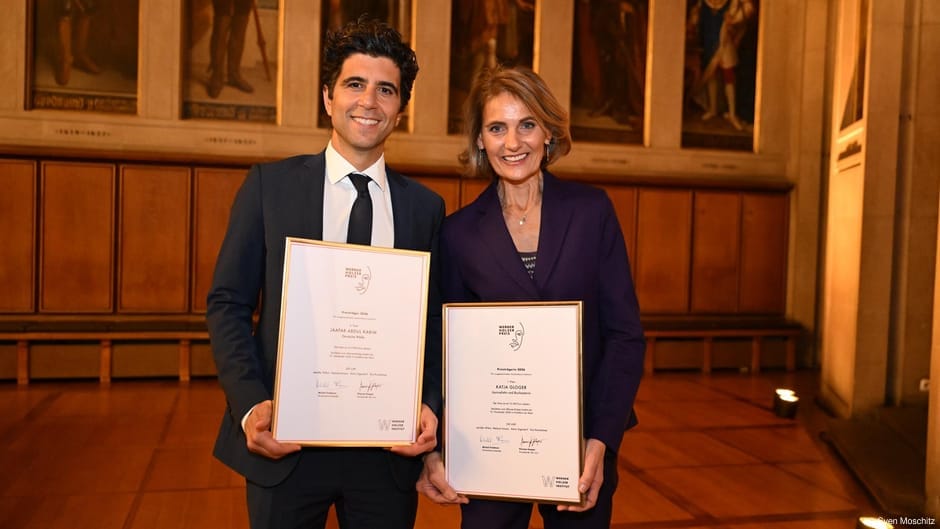
First prize went to Katja Gloger, a Russia correspondent who moved to Moscow in 1989 and spent years with direct access to the Kremlin's inner circle, from Gorbachev to Putin. Her book with Georg Mascolo, "The Failure: An Investigative Report of Germany's Russia Policy," dissects decades of German strategic miscalculation on Russia. The jury cited her willingness to speak uncomfortable truths — a quality that reads as table stakes for journalism but has become genuinely rare in coverage of German-Russian relations. Second prize went to DW journalist and presenter Jaafar Abdul Karim, whose talk show JaafarTalk has amassed over 1.1 billion views in 2026 alone and more than 9 million followers. Abdul Karim operates in a space — Arabic-language dialogue on taboo subjects — where the personal risk is not abstract. He described an environment of hatred, incitement, attacks, and threats both online and offline, then argued the answer is more dialogue, not less. A research grant went to freelance journalist Luise Land for a project tracing why her German-Namibian family still holds extensive land in Namibia, connecting that ownership to the early-20th-century genocide against the Herero and Nama peoples by German colonial forces. The grant quietly underscores how underfunded investigative foreign work has become — freelancers need prize money to do the work newsrooms once funded. Gloger's acceptance speech delivered the sharpest data point: according to the latest Reporters Without Borders rankings, only 1 in 100 people worldwide can access free, independent journalism. She called for defending "trustworthy, reliable and fact-based journalism with everything in our power" and dedicated the award to journalists in exile and to colleagues at Novaya Gazeta, which was forced to shut down its Russian operations and evacuate its Moscow newsroom earlier this week. Abdul Karim's speech pivoted to polarization, arguing that journalists must connect bubbles rather than broadcast into them. "When everyone is just shouting into their own bubbles or communities, we need journalists who connect these bubbles with one another," he said. Frankfurt Mayor Mike Josef anchored the ceremony in historical context, noting that freedom of speech and freedom of the press were first enshrined for all Germans by the Frankfurt Parliament in the nearby Paulskirche in 1848. The prize ceremony functions as both honor and inventory. Each laureate represents a node in the foreign-correspondence ecosystem that is under direct structural pressure: bureau-based deep expertise (Gloger), digital-first multilingual dialogue (Abdul Karim), and freelance investigative work on colonial legacies (Land). The question the Holzer Prize keeps asking, louder each year, is whether the infrastructure that produces this work can survive the economics destroying it.
Worth reading?
OPTIONAL
Score
52
/100
Mildly generative — the prize itself creates visibility and modest funding, but cannot counteract the systemic extraction hollowing out the profession it celebrates.
What Is GRIN?
GRIN stands for Generativity, Resilience, Innovation efficiency, and Novelty openness. These four dimensions capture the essential characteristics of any memetic intelligence — whether a nation, a corporation, a religion, or a movement.
About GRINGenerativity
2/5
Resilience
2/5
Efficiency
2/5
Novelty
3/5
Extractive
1/5
Inverted
Does this create new capability or just redistribute existing value?
Limited generativity. The prize amplifies existing work and creates modest funding (Land's grant), but generates no new institutional capacity for foreign correspondence.
Verified Facts (10)
First prize went to Katja Gloger, who moved to Moscow in 1989 and accompanied Vladimir Putin during the early years of his presidency.
Gloger's book with Georg Mascolo is titled 'The Failure: An Investigative Report of Germany's Russia Policy.'
Second prize was awarded to DW journalist and presenter Jaafar Abdul Karim.
JaafarTalk has garnered more than 1.1 billion views across all platforms in 2026 and its community has grown to more than 9 million followers.
A research grant went to freelance journalist Luise Land for a project on her German-Namibian family's landholdings in Namibia and the genocide against the Herero and Nama peoples.
Gloger worked for Reporters Without Borders for 12 years.
Only one in 100 people can get their information from free, independent journalism and a free, independent press, per latest RSF rankings.
Novaya Gazeta was forced to shut down its operations in Russia and leave its Moscow newsroom earlier this week.
Freedom of speech and freedom of the press were first enshrined for all Germans by the Frankfurt Parliament in the Paulskirche in 1848.
The ceremony took place in Frankfurt's Römer, and Mayor Mike Josef spoke.
More latest news
Read all