NATIONS PRESENT
200+
US ABSENT
2nd yr
THRESHOLD · YEARS AWAY
1.5°C
RENEWABLES MANDATE
0
The COP31 summit in Antalya has entered its critical second week with the UN's top climate official, Simon Stiell, publicly warning delegates to stop stalling. "I urge parties to move swiftly to the hardest issues and to avoid tactical delays," he said — a diplomatic way of saying that negotiators are running down the clock on finance commitments and emissions targets. More than 200 nations are nominally present, but the ones that matter most on fossil fuels are either absent or obstructing.
Extraction Map
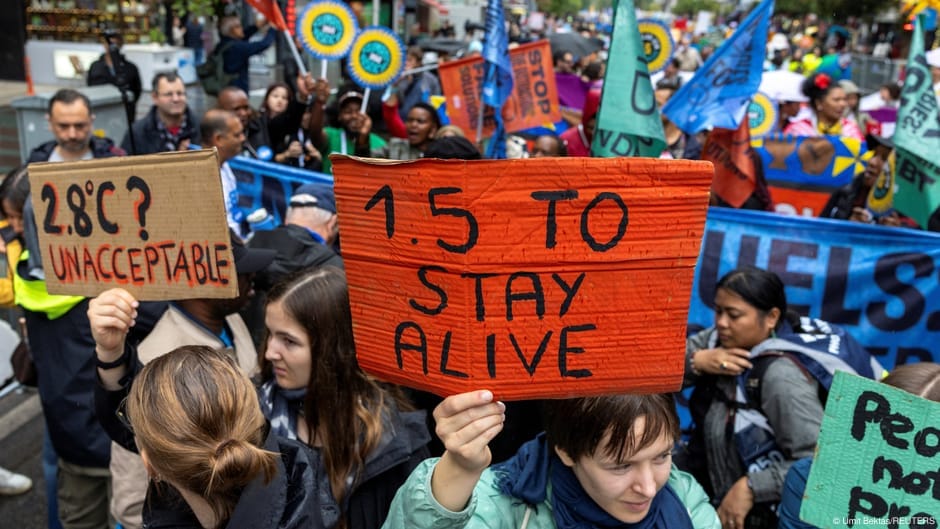
The United States has snubbed the talks for a second consecutive year under President Donald Trump, who continues to dismiss climate change as a hoax and champion fossil fuel production. That absence is not symbolic — it removes the world's largest historical emitter and second-largest current emitter from the room where binding financial commitments are negotiated. Large fossil-fuel-producing nations are simultaneously pressuring delegates to avoid stricter phaseout targets for oil and gas, effectively turning the conference into a rearguard action by incumbent energy interests. Tens of thousands of protesters marched through Antalya on Saturday demanding climate action and human rights protections. South African environmental activist Zaki Mamdoo told DW that "the pursuit of profit at all costs continues to set the global agenda," while Germany's Fridays for Future organizer Luisa Nebauer criticized Chancellor Friedrich Merz and other European leaders for their absence. Turkish authorities permitted the rally — notable in a country that routinely bans large public gatherings — alongside a parallel "People's Climate Summit" involving hundreds of civil society organizations. Host Turkey is pushing a global electrification plan as the summit's signature initiative, but environmental groups have flagged a critical gap: the proposal does not require that expanded electricity generation come from renewable sources. An electrification deal without a renewables mandate is, in effect, a lifeline for gas-fired power and a branding exercise for the host country's energy ambitions. It addresses energy access without addressing emissions — the core question the conference exists to answer. The backdrop is grim. A UN report last month warned that the 1.5°C warming threshold set at COP21 in 2015 — beyond which scientists expect increasingly extreme climate impacts — will be exceeded within a few years. The 2°C ceiling that COP31 officially targets is itself under threat. Inflation, wars, deindustrialization, and sovereign debt have pushed climate down every major government's priority list, with many actively watering down clean energy transition commitments and the billions pledged to help developing nations adapt. Australia's Chris Bowen, serving as COP31 President of Negotiations, has indicated that a first draft deal text is expected next week. But the structural dynamics point toward a weak outcome: the US absent, the fossil-fuel bloc entrenched, major European leaders skipping, and the host's flagship proposal deliberately agnostic on energy source. The conference's three stated goals — unlocking climate finance, reducing methane and super-pollutants, and ensuring food security — each require commitments that the current political alignment makes unlikely. What COP31 reveals is less about climate science and more about political economy. The extractive pattern is now self-reinforcing: fossil fuel producers delay commitments, governments prioritize short-term economic pressures, developing nations bear accelerating climate costs without adaptation finance, and each failed summit lowers expectations for the next one. The 1.5°C threshold isn't a scientific abstraction — it's a deadline the global system has collectively decided to miss.
Worth reading?
SKIP
Score
20
/100
Extractive. Fossil-fuel incumbents and major emitters capture continued production value while externalizing climate costs onto developing nations, future generations, and the global commons.
What Is GRIN?
GRIN stands for Generativity, Resilience, Innovation efficiency, and Novelty openness. These four dimensions capture the essential characteristics of any memetic intelligence — whether a nation, a corporation, a religion, or a movement.
About GRINGenerativity
1/5
Resilience
1/5
Efficiency
1/5
Novelty
1/5
Extractive
4/5
Inverted
Does this create new capability or just redistribute existing value?
No new capability being created. Turkey's electrification plan omits renewables, the US is absent, and finance commitments are evaporating. The summit is redistributing blame, not generating solutions.
Verified Facts (10)
Simon Stiell, executive secretary of the UNFCCC, urged parties to 'avoid tactical delays'
Delegates from more than 200 nations are gathered in Antalya
The United States has snubbed the talks for the second year in a row under President Donald Trump
South African activist Zaki Mamdoo said 'The pursuit of profit at all costs continues to set the agenda'
Luisa Nebauer, main organizer of Germany's Fridays for Future movement, noted German Chancellor Friedrich Merz was absent
A UN report last month warned the world is set to exceed 1.5°C of warming within a few years
Australia's Chris Bowen serves as COP31 President of Negotiations
Turkish authorities permitted the rally to go ahead
COP31 summit runs until November 19
1.5°C figure set at COP21 in 2015
More latest news
Read all