SATELLITES LOST
40
CONSTELLATION BUILT
12%
STARLINK SATS
11,000+
ULA MISSION FAILURE
1st
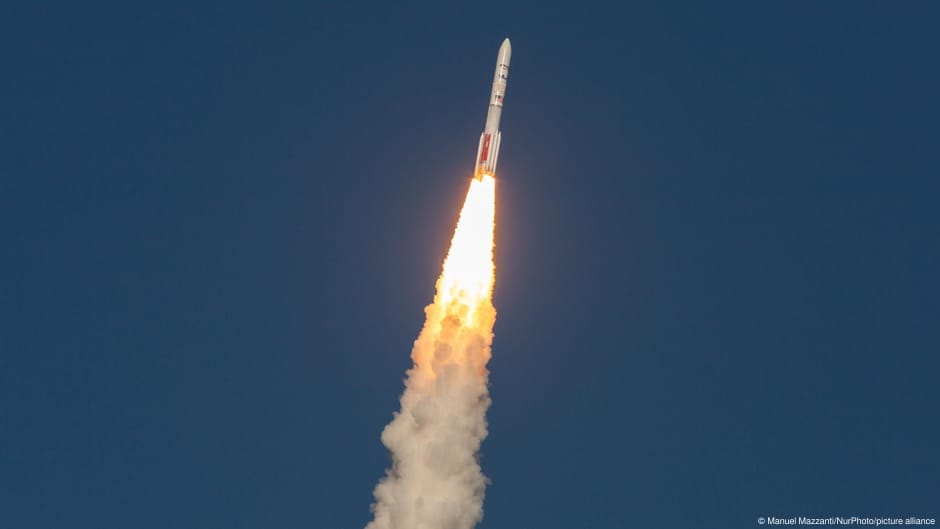
A Vulcan rocket operated by United Launch Alliance — the Boeing-Lockheed Martin joint venture — failed approximately 10 minutes after liftoff from Cape Canaveral Space Force Station on Sunday, destroying all 40 Amazon Leo internet satellites aboard. It was ULA's first total mission failure in its 19-year history, ending an unblemished delivery record.
Extraction Map
The failure compounds a pattern of Vulcan reliability concerns. Sunday's launch was only the fifth Vulcan flight since the rocket's 2024 debut and its first in nine months. The gap followed separate technical investigations into its solid rocket boosters — which showed anomalies on the previous two flights, including a February 2026 Space Force mission — and its core BE-4 engines, supplied by Blue Origin, the space company founded by Amazon's Jeff Bezos. An investigation had traced a prior problem to the engine's main oxygen valve, prompting Blue Origin to develop modifications. Whether the BE-4 engines played any role in Sunday's failure remains unclear. The structural problem is concentration. SpaceX's Falcon 9, the world's most active rocket, is no longer accepting new bookings. Blue Origin's New Glenn suffered an explosion during a ground test in May, days before it was scheduled to carry Amazon Leo satellites. Arianespace, Rocket Lab, and other providers lack the heavy-lift cadence needed for mega-constellation deployment. That leaves ULA's Vulcan as one of very few alternatives — and now it's grounded pending investigation. Amazon's satellite internet ambitions absorb the immediate cost. Before Sunday's loss, the company had launched 398 Leo satellites across 14 missions since 2025, roughly 12% of the 3,236 satellites needed for global coverage. Amazon had hoped to begin initial internet services this year. Every grounding month widens the gap with SpaceX's Starlink, which operates more than 11,000 satellites and serves millions of customers worldwide. SpaceX's structural advantage is vertical integration — it launches its own satellites on its own rockets. Amazon depends entirely on third-party providers. The national security dimension is equally exposed. The Space Force had already paused Vulcan's national security launches pending corrective measures for the booster anomalies. Sunday's total mission failure will extend that pause indefinitely, narrowing the Pentagon's assured-access-to-space options at a moment when the Falcon 9 booking freeze is already constraining capacity. ULA framed the failure in standard post-anomaly language: "Every flight generates data, and every flight teaches us something." Amazon offered diplomatic support, calling ULA "a trusted partner" and expressing confidence in their "long-term plans for Vulcan." But diplomatic language cannot obscure the math: a company that has launched 12% of its required constellation after two years of operations, using rockets that keep failing or blowing up on the ground, is not on a competitive trajectory. The 20-year question is whether non-SpaceX launch capacity ever catches up, or whether vertical integration — owning the rocket and the payload — becomes the only viable model for mega-constellation deployment. If the latter, the satellite internet market may consolidate around whoever can build both, leaving governments and competitors dependent on a single provider's goodwill.
Worth reading?
SKIP
Score
20
/100
Extractive: vertical integration by SpaceX creates a structural moat that concentrates satellite internet deployment capability into one company, while competitors bear repeated launch failures and mounting delays.
What Is GRIN?
GRIN stands for Generativity, Resilience, Innovation efficiency, and Novelty openness. These four dimensions capture the essential characteristics of any memetic intelligence — whether a nation, a corporation, a religion, or a movement.
About GRINGenerativity
1/5
Resilience
1/5
Efficiency
1/5
Novelty
1/5
Extractive
4/5
Inverted
Does this create new capability or just redistribute existing value?
Destroys capability. 40 satellites lost, Vulcan grounded, no replacement launch provider available. Amazon's constellation falls further behind with no generative output from $100M+ spent.
Verified Facts (11)
Vulcan rocket suffered anomaly 10 minutes into flight and failed to deliver the Amazon mission to orbit
First total mission failure in ULA's history since formation in 2006
Sunday's launch was Vulcan's fifth since its debut in 2024 and its first in nine months
Amazon had launched 398 Leo satellites across 14 missions since 2025
398 satellites represented about 12% of the 3,236 satellites needed for global coverage
SpaceX's Starlink has more than 11,000 satellites and millions of customers worldwide
SpaceX is no longer accepting bookings for the Falcon 9
Blue Origin's New Glenn explosion in May occurred during a ground test
BE-4 engines supplied by Blue Origin; investigation traced prior problem to main oxygen valve
Space Force paused Vulcan's national security launches pending investigation
Booster anomalies on Vulcan's previous two flights including February 2026 Space Force mission
More latest news
Read all