ADAPTATION FLOOR
$120B
ELECTRIFICATION · 2035
35%
NEGOTIATION ITEMS
144
OVERSHOOT ADMITTED
1.5°C
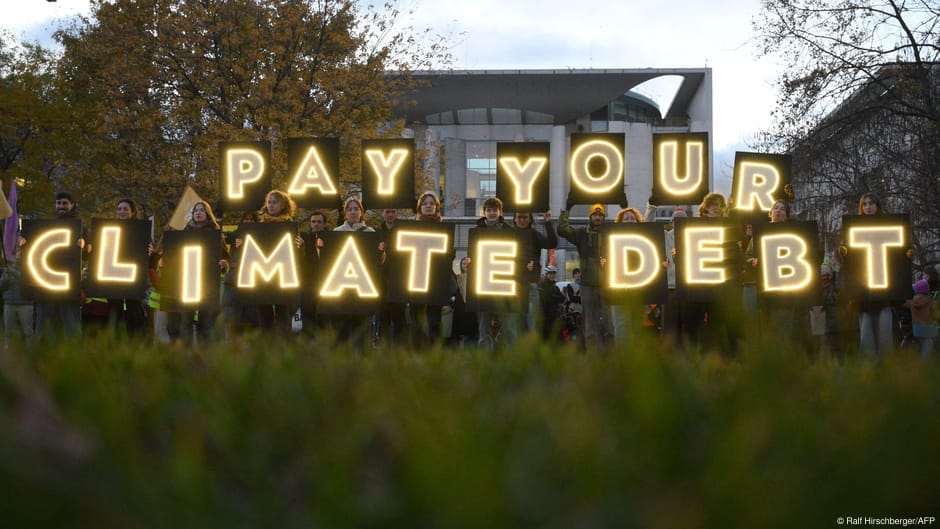
The COP31 co-hosts have laid their cards on the table. Australia's draft political deal, released at the start of the second week of climate talks in Antalya, Turkey, calls for an "immediate transition away from fossil fuels" and a tripling of climate adaptation finance for developing countries to at least $120 billion (€109 billion). Turkey's target of 35% global electrification by 2035 also features prominently. On paper, this is the most aggressive opening language any COP presidency has tabled.
Extraction Map
But the architecture of the text reveals the familiar structural tension. The draft notes that "electrification can provide co-benefits regardless of the electricity mix" — a formulation that lets fossil-gas-powered grids count toward electrification targets. This is the loophole that petrostate delegations have spent years prying open. If electrification is decoupled from renewable sourcing, the target becomes a vehicle for gas-fired power expansion dressed in green language. The draft acknowledges what the science community has been saying for two years: the 1.5°C threshold agreed at Paris in 2015 is now effectively out of reach. The text expresses "deep concern" and pivots to language about "minimizing overshoot" and returning to below 1.5°C "as soon as possible." This is a significant rhetorical shift — from prevention to damage limitation — and it frames the entire negotiation around how much overshoot is tolerable rather than whether it can be avoided. Greenpeace Germany's Martin Kaiser praised the draft's building blocks, including the goal of climate neutrality for all industrialized countries by 2030 and mechanisms to enforce the 1.5-degree limit. But he immediately flagged the absence of binding commitments and warned that oil-producing nations — specifically Russia and Middle Eastern states — are positioned to hollow out the text during final negotiations. E3G's Cosima Cassel echoed the assessment: ambitious language is a starting position, not an outcome. The finance fight is where the deal will live or die. Disagreements center on three structural questions: who pays (historical emitters vs. all major economies), how (grants vs. loans that saddle developing nations with debt), and how much ($120 billion is the floor, but the gap between pledged and delivered climate finance has been a defining failure of the COP process for over a decade). These are not technical details — they are the core extractive question of international climate politics. At 18 pages and 144 items, the text is a negotiation surface, not a finished agreement. Australia's chief negotiator Chris Bowen described the tone as "very constructive," but constructive tone at COP has historically preceded aggressive watering-down in final-hours negotiations. The deadline is Friday. The pattern from COP26 through COP30 — strong opening text, weakened final agreement, petrostate veto power preserved — is the base case until proven otherwise. The test is not whether the draft language survives. It is whether the final text contains mechanisms — financial, legal, or institutional — that make non-compliance costly. Without that, "immediate transition" is a phrase, not a policy.
Worth reading?
SKIP
Score
32
/100
Extractive at the system level. The draft's strongest language protects the ambiguity that allows fossil-fuel producers to continue extraction while claiming participation in the transition. Finance mechanisms route costs to developing nations through loans rather than grants.
What Is GRIN?
GRIN stands for Generativity, Resilience, Innovation efficiency, and Novelty openness. These four dimensions capture the essential characteristics of any memetic intelligence — whether a nation, a corporation, a religion, or a movement.
About GRINGenerativity
2/5
Resilience
1/5
Efficiency
2/5
Novelty
2/5
Extractive
4/5
Inverted
Does this create new capability or just redistribute existing value?
Potential but unbuilt. The $120B adaptation target and 35% electrification goal could unlock real capacity — if binding. Without enforcement, these are aspirational numbers, not generative infrastructure.
Verified Facts (9)
Draft calls for 'immediate transition away from fossil fuels'
Tripling of finance for climate adaptation measures in developing countries to at least $120 billion (€109 billion)
Turkey's goal to increase electrification of the world's economies to 35% by 2035
Draft notes 'electrification can provide co-benefits regardless of the electricity mix'
Greenpeace Germany head Martin Kaiser: 'goal of climate neutrality for all industrialized countries by 2030'
Draft expressed 'deep concern' that the 1.5 Celsius temperature threshold was now out of reach
18 pages and 144 items in the draft deal
Chris Bowen is Australia's minister for climate change and energy and chief of negotiations
Cosima Cassel is an expert at climate think tank E3G
More latest news
Read all