ANNOUNCED INVESTMENT
€3B
FIRST VEHICLES
2029
TARGET CAPACITY
1M
CURRENT WORKFORCE
12,600
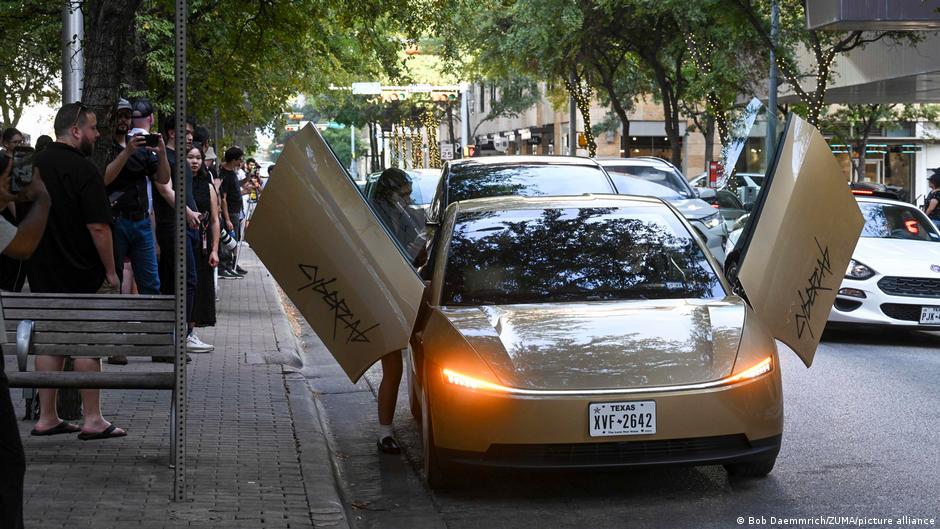
Tesla announced Monday it will invest €3 billion ($3.3 billion) to expand its Grünheide factory outside Berlin for production of the Cybercab, a driverless robotaxi. Construction is slated to begin in 2027 with the first vehicles rolling off the line in 2029. The company claims an eventual capacity of 1 million units, though it provided no timeframe for reaching that figure.
Extraction Map
The pivot follows last week's announcement that Tesla is shutting down Cybertruck production entirely. What was once billed as the future of consumer EV design is being replaced by an autonomous vehicle that doesn't yet have regulatory approval in any European market. That's not a minor detail — it's the entire commercial viability question. Brandenburg's State Premier Dietmar Woidke welcomed the announcement with predictable enthusiasm, calling it "an enormously important economic decision" and "a strong message" about Germany's attractiveness for industrial investment. Politicians love big-number announcements. The harder question is whether a factory that won't submit its building application until year-end, won't break ground until 2027, and won't produce a vehicle until 2029 represents a commitment or a placeholder. The employment picture is modest relative to the headline figure. Grünheide's workforce dipped before recovering to 12,600 in October, and the expansion is expected to add only "several hundred" jobs. At €3 billion for a few hundred positions, this is a capital-intensive automation play, not a jobs engine. The generous political framing obscures this. Tesla's current Grünheide operations have already generated significant local tension over water access — the factory sits in a water-stressed region, and residents have fought the existing facility's consumption. A major expansion will intensify that conflict. The article notes the dispute but neither Tesla nor Brandenburg addressed how the tripling of ambition squares with existing resource constraints. The company said it aims to increase weekly vehicle production at the existing plant to 7,500 units (375,000 annually) and expand on-site battery cell production. These nearer-term targets are more concrete than the 2029 Cybercab vision, but they also represent what Tesla needs to do just to stabilize its European business after a sales slump. The expansion announcement bundles a recovery play with a speculative future product. The core question is whether this is a genuine industrial commitment or a strategic announcement timed to shift the narrative away from Cybertruck's cancellation and sluggish European sales. A €3 billion figure with a 4-year horizon, no regulatory pathway, unresolved water conflicts, and a building application that hasn't been submitted yet is a press release, not a factory.
Worth reading?
OPTIONAL
Score
40
/100
Mildly extractive. The €3B figure captures political goodwill and market narrative today while deferring all execution risk to 2027-2029. Public officials lend credibility; taxpayers and local residents absorb resource and infrastructure costs; Tesla retains all optionality to scale back or pivot.
What Is GRIN?
GRIN stands for Generativity, Resilience, Innovation efficiency, and Novelty openness. These four dimensions capture the essential characteristics of any memetic intelligence — whether a nation, a corporation, a religion, or a movement.
About GRINGenerativity
2/5
Resilience
1/5
Efficiency
2/5
Novelty
3/5
Extractive
3/5
Inverted
Does this create new capability or just redistribute existing value?
Speculative at best. No new capability exists yet — just an announcement with a 4-year horizon, no regulatory pathway for autonomous taxis in Europe, and a building application not yet filed.
Verified Facts (9)
Tesla planning to invest €3 billion ($3.3 billion) in its German factory near Berlin for Cybercab production
Construction work at Grünheide set to begin in 2027, first vehicles in 2029
Capacity target of 1 million units, timeframe unclear
Employment at Grünheide dipped before rising to 12,600 in October
New expansion expected to lead to hiring of several hundred additional staff
Tesla aims to increase weekly vehicle production to 7,500 units, equivalent to 375,000 a year
Brandenburg State Premier Dietmar Woidke called it 'an enormously important economic decision'
Company said it would submit building application by end of year
Elon Musk announced last week that Tesla was shutting down Cybertruck production
More latest news
Read all