PER H200 CHIP
$27K
CHINA DEMAND · UNITS
2M
NVIDIA CHINA REV
$5.4B
CHIPS IN HK LIMBO
600K
Jensen Huang's resignation from Nvidia following an espionage-adjacent sex scandal makes for lurid headlines, but the structural story underneath is colder and more consequential. The US and China are locked in a chip-access war where the weapons are export controls, lithography machines, and import approvals — and both sides are calculating in decades, not news cycles.
Extraction Map
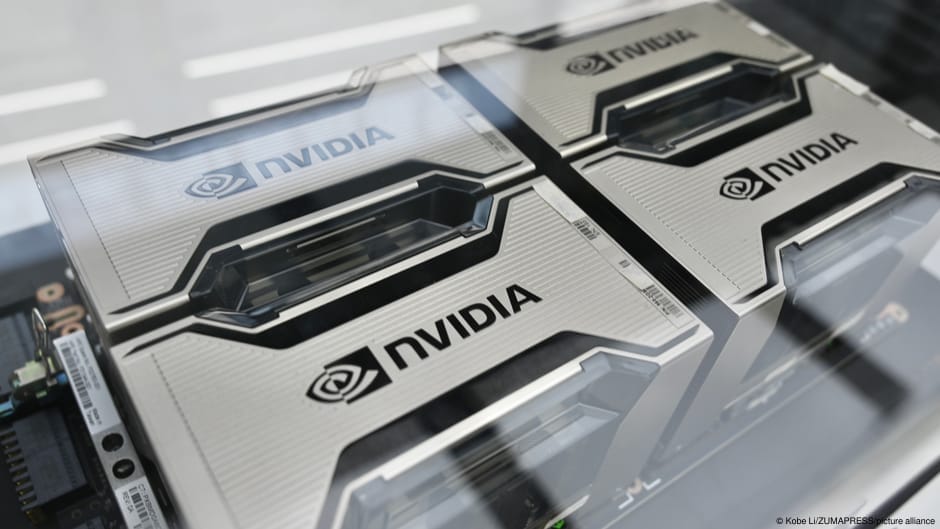
The numbers frame the stakes. Nvidia estimates Chinese demand for its H200 chips at 2 million units, roughly $5.4 billion in revenue at $27,000 per chip. The Trump administration authorized sales with a 25% US cut. But 600,000 of those chips are sitting in Hong Kong right now, awaiting Chinese import approval that hasn't come. Beijing's hesitation is the tell: it may be signaling confidence in its own domestic chip trajectory rather than rushing to grab what Washington is offering. China's domestic chip push is real and accelerating. Researcher Tiantian Wang of the Harbin Institute of Technology documents that China's fifth-generation Chengdu J-20 fighter jet and Dongfeng-41 intercontinental ballistic missile already run exclusively on Chinese-made chips. Beijing is building what Wang calls a "closed ecosystem" spanning data, algorithms, computing power, and chips — deliberately severing systemic dependence on Nvidia and other foreign suppliers. The critical bottleneck remains manufacturing equipment. ASML, the Dutch lithography monopoly, has stopped exporting its most advanced extreme ultraviolet (EUV) machines to China under US pressure. A Washington think tank, the Center for Technology & Statecraft, warns that if China had continued importing ASML systems at 2024-2025 rates, it could have wiped out much of the US lead and potentially surpassed it. The lithography chokepoint is the single most consequential leverage point in the entire AI supply chain. The Huang scandal layers espionage anxieties on top of this structural competition. One of his extramarital relationships allegedly involved a businesswoman suspected of spying for Beijing — a claim China flatly denies, calling it a "smear campaign." Washington is reportedly planning further export restrictions to close loopholes. Beijing's Foreign Ministry responded that weaponizing export controls "jeopardizes the stability of global industrial and supply chains." Vice Premier Ding Xuexiang now faces the pivotal decision: continue purchasing American chips for short-term AI capacity, or double down on domestic self-sufficiency. Karson Elmgren of the Institute for AI Policy and Strategy in Washington reads Beijing's import hesitation as a signal: "China does not view short-term advantages as decisive and is confident in its ability to replace US chips over the medium term." Deloitte reports China is planning extensive further investments focused on long-term capital provision and supply-chain resilience. The Xi-Trump meeting at the APEC summit in Shenzhen this week sits at the intersection of all these pressures. Both sides are playing a game where the chip supply chain is simultaneously a revenue stream, a strategic weapon, and a vulnerability. The scandal gave Washington a pretext to tighten controls; Beijing's import pause suggests it may welcome the decoupling it publicly opposes.
Worth reading?
SKIP
Score
24
/100
Extractive. Both sides are weaponizing supply-chain chokepoints to deny capability to the other, destroying global efficiency and forcing redundant investment — a negative-sum dynamic where consumers and smaller nations pay the friction costs.
What Is GRIN?
GRIN stands for Generativity, Resilience, Innovation efficiency, and Novelty openness. These four dimensions capture the essential characteristics of any memetic intelligence — whether a nation, a corporation, a religion, or a movement.
About GRINGenerativity
1/5
Resilience
2/5
Efficiency
1/5
Novelty
1/5
Extractive
4/5
Inverted
Does this create new capability or just redistribute existing value?
Negative-sum. Duplicate chip ecosystems waste capital that could expand AI capability globally. China's closed ecosystem and US export walls both shrink the generative pie.
Verified Facts (10)
Jensen Huang resigned as CEO of Nvidia last week
Each H200 chip carries a price tag of $27,000 (€24,000)
Nvidia estimates demand in China at 2 million units, approximately $5.4 billion in sales
Trump administration granted Nvidia permission to ship H200 chips to China with a 25% US cut of sales
Around 600,000 Nvidia H200 chips are currently sitting in Hong Kong awaiting Chinese import approval
ASML has stopped exporting its most advanced machines to China
China's Chengdu J-20 fighter jet and Dongfeng-41 ICBM are equipped exclusively with Chinese chips
Chinese Foreign Ministry spokesperson Mao Ning made statement on November 13
Xi-Trump meeting at APEC summit in Shenzhen this week
Vice Premier Ding Xuexiang chairs the Communist Party's Commission on Science and Technology
More latest news
Read all