LIVELIHOODS AT STAKE
300K+
DISPLACED TO MALI
160K
JAILED TUESDAY
224
KILLED IN CLASHES
10
Guinea's military junta has turned its security apparatus on the country's artisanal gold mining sector with force that far outstrips the judicial infrastructure behind it. On Tuesday, Conakry's economic crimes court sentenced 22 former regional administrators from the northeastern Siguiri region to two years each for complicity in environmental degradation, water pollution, and destruction. Another 202 alleged illegal miners — including foreign nationals — received three-year sentences, combined fines of 10 billion Guinean francs, and ten-year territorial bans for the non-Guineans.
Extraction Map
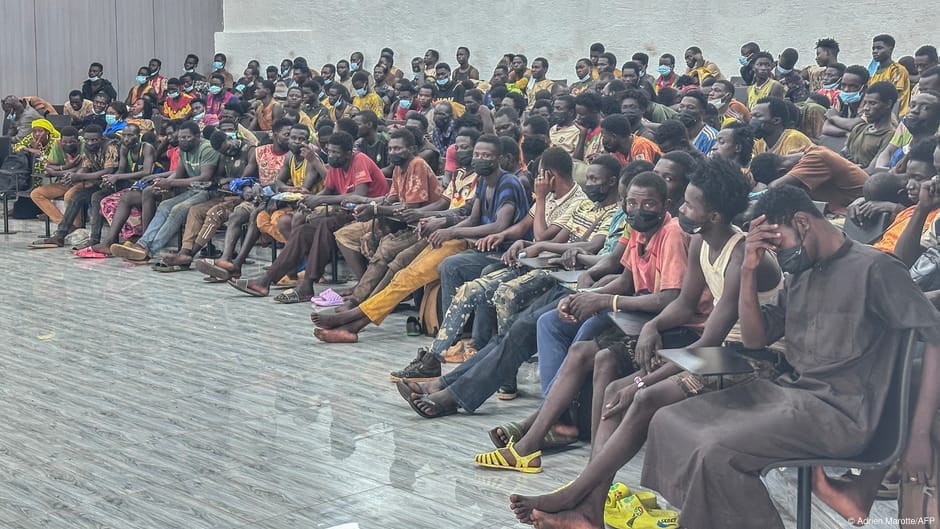
The numbers tell the structural story. According to the UN Environment Program, unauthorized gold mining is a source of income for more than 300,000 people in Guinea. The country's gold-rich northeast, particularly the Siguiri region near the Mali border, draws workers from across West Africa. This is not a marginal criminal enterprise — it is a regional labor market operating outside state capture. The crackdown has already turned violent. Last week, clashes between protesters and security forces in the northeast killed 10 people and injured 13. More than 1,200 artisanal miners were arrested in Siguiri in November alone. The human displacement is staggering: Malian authorities report approximately 160,000 people have flooded across the border after being driven from Guinea's gold-rich regions, many of them Burkinabè nationals waiting for transport home. The junta frames this as environmental protection — preventing damage to farmland and rivers. That concern is real; artisanal gold mining across West Africa poisons waterways with mercury, strips topsoil, and degrades agricultural land. But the crackdown's design reveals its priorities. The state is not building alternative livelihoods, regulating artisanal mining into compliance, or investing in environmental remediation. It is criminalizing a labor force and sentencing administrators for failing to prevent activity the state itself never provided alternatives to. The fines are revealing. Individual administrators were fined 10 million Guinean francs each — roughly €1,025. The 202 miners collectively owe 10 billion francs. These are not deterrent-scale penalties for a formal mining company; they are crushing debts for subsistence workers and low-level officials. The foreign nationals face ten-year territorial bans, severing them from the regional labor market entirely. What this crackdown accomplishes is displacement, not reform. Pushing 160,000 people into Mali does not reduce gold mining — it relocates it, along with its environmental damage, to a country with even less state capacity to manage it. Guinea's military government, which took power in a 2021 coup, gains tighter control over who accesses gold-bearing land, clearing space for formal concessions that generate taxable revenue. The environmental argument provides political cover for what is fundamentally a resource-capture operation. The regional implications are severe. Burkina Faso and Mali — both under military juntas themselves — now absorb a displaced labor force with no employment pipeline. West Africa's artisanal mining corridor, which functions as an informal social safety net across multiple countries, is being dismantled by state violence without any replacement. The 20-year trajectory here is a cycle of displacement, re-infiltration, and escalating force that benefits formal mining interests while impoverishing the most vulnerable workers in the region.
Worth reading?
SKIP
Score
12
/100
Extractive. The state is converting a distributed informal economy into a controlled formal resource extraction zone, displacing 160,000 people and criminalizing 300,000 livelihoods without building alternatives.
What Is GRIN?
GRIN stands for Generativity, Resilience, Innovation efficiency, and Novelty openness. These four dimensions capture the essential characteristics of any memetic intelligence — whether a nation, a corporation, a religion, or a movement.
About GRINGenerativity
0/5
Resilience
1/5
Efficiency
1/5
Novelty
1/5
Extractive
5/5
Inverted
Does this create new capability or just redistribute existing value?
Purely destructive. Eliminates 300,000 livelihoods with no alternative economic pathway, displaces 160,000 people, and relocates environmental damage rather than solving it.
Verified Facts (9)
22 former regional administrators sentenced to two years each in prison
202 alleged illegal miners sentenced to three-year prison sentences
Combined fine of 10 billion Guinean francs for the 202 miners
Individual fines of 10 million Guinean francs (around €1,025 or $1,125) for administrators
Foreign nationals banned from Guinean territory for 10 years
UN Environment Program: unauthorized gold mining is a source of income for more than 300,000 people in Guinea
10 people killed and 13 injured in clashes between protesters and security forces
More than 1,200 artisanal miners arrested in Siguiri in November
Malian authorities say approximately 160,000 people have flooded into the country
More latest news
Read all