WAR CRIMES SENTENCE
25 yr
OBSTRUCTION ADD-ON
+17 mo
PROPOSED CAP
15 yr
CHAMBERS CREATED
2015
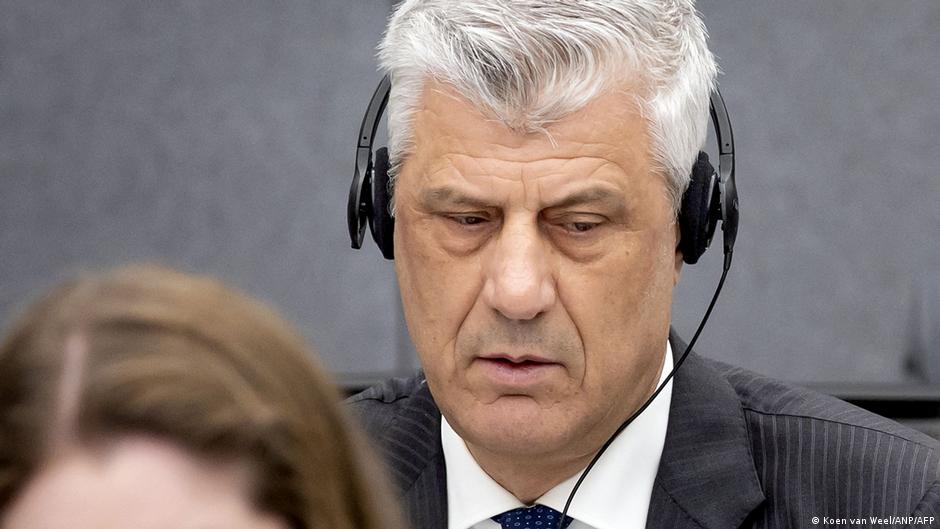
Former Kosovo President Hashim Thaci was convicted Tuesday of obstructing justice and witness tampering during his war crimes trial, adding 17 months to the 25-year sentence handed down in September by the Kosovo Specialist Chambers in The Hague. The obstruction involved passing confidential witness information to detention-facility visitors and instructing them on how to influence testimony. Three co-defendants — former intelligence chief Bashkim Smakaj, former Justice Minister Hajredin Kuci, and Fadil Fazliu — were also convicted.
Extraction Map
The Kosovo government responded within hours, issuing a statement that threaded a careful needle: affirming commitment to the rule of law while insisting that justice must be "fair, transparent, and credible." Prime Minister Albin Kurti has stated the government considers the September war crimes verdict "unjust, both legally and morally" and is working to secure a reversal at the appeals level. A working group chaired by Foreign Minister Glauk Konjufca was established after the September conviction to draft an appeal strategy. The more consequential move is legislative. Kosovo's parliament is considering amendments to the law governing the Specialist Chambers that would narrow its jurisdictional time period, cap maximum sentences at 15 years (down from the 25 Thaci received), allow sentences to be served in Kosovo rather than The Hague, and introduce presidential pardon authority for final convictions. The draft law is expected to pass. This is where the structural tension becomes unmistakable. Kosovo's own parliament created the Specialist Chambers in 2015 at EU and US instigation. The court sits in The Hague precisely because of witness-intimidation concerns — concerns that Thaci's obstruction conviction now validates. Amending the governing law while the appeals process is active looks, to outside observers, like retroactive interference with a judicial process Kosovo itself authorized. Political analyst Artan Muhaxheri warned that "from an international perspective, at first glance, this initiative could even be interpreted as an attempt to interfere in the judicial process." He stressed that Kosovo's legal experts must demonstrate beyond doubt that the amendments don't conflict with the country's EU obligations — otherwise the initiative could backfire. Ehat Miftaraj of the Kosovo Law Institute offered a more sympathetic framing, arguing that the Chambers' own conduct has created an impression of "distrust, prejudice, and an often condescending approach" toward Kosovo. Miftaraj drew a distinction that captures the core dilemma: "There is a fundamental distinction between criticism based on legal arguments and attempts to delegitimize courts or exert influence over judicial proceedings. And here, there is room for criticism of both sides." The question is whether capping sentences and enabling pardons while an appeal is pending falls on the criticism side or the interference side. The 20-year trajectory matters. If Kosovo successfully rewrites the Specialist Chambers' mandate mid-trial, it sets a template: international judicial mechanisms can be hollowed out by the very states that created them once politically inconvenient verdicts arrive. The EU and US, who pushed for the court's creation, face a credibility test of their own — whether they treat this as a sovereignty matter or a rule-of-law red line.
Worth reading?
SKIP
Score
20
/100
Extractive — political elites are using legislative power to retroactively narrow judicial accountability mechanisms, concentrating benefit (reduced sentences, pardon authority) among a wartime political class at the cost of institutional credibility and international trust.
What Is GRIN?
GRIN stands for Generativity, Resilience, Innovation efficiency, and Novelty openness. These four dimensions capture the essential characteristics of any memetic intelligence — whether a nation, a corporation, a religion, or a movement.
About GRINGenerativity
1/5
Resilience
1/5
Efficiency
1/5
Novelty
1/5
Extractive
4/5
Inverted
Does this create new capability or just redistribute existing value?
No new capability created. Legislative amendments are designed to reduce accountability, not build institutions. The working group exists to reverse a verdict, not strengthen rule of law.
Verified Facts (9)
Hashim Thaci convicted Tuesday of obstructing justice and attempting to influence witnesses, sentenced to 17 months in prison
17-month term added to 25-year war crimes sentence handed down September 16
Three co-convicted: Bashkim Smakaj (former intelligence chief), Hajredin Kuci (former Justice Minister), Fadil Fazliu
Kosovo Specialist Chambers established in 2015 by Kosovo parliament at EU and US instigation
Draft law envisages: narrowing jurisdictional time period, 15-year maximum sentence cap, sentences served in Kosovo, presidential pardon authority
Working group chaired by Foreign Minister Glauk Konjufca
PM Kurti stated government considers first-instance judgment 'unjust, both legally and morally'
Analyst Artan Muhaxheri warned initiative 'could even be interpreted as an attempt to interfere in the judicial process'
Ehat Miftaraj (Kosovo Law Institute) noted 'fundamental distinction between criticism based on legal arguments and attempts to delegitimize courts'
More latest news
Read all