ESTIMATED DEAD
~10,000
ROHINGYA DISPLACED
700K
CASE DURATION
7 yrs
UNSC VETOES BLOCKING
2
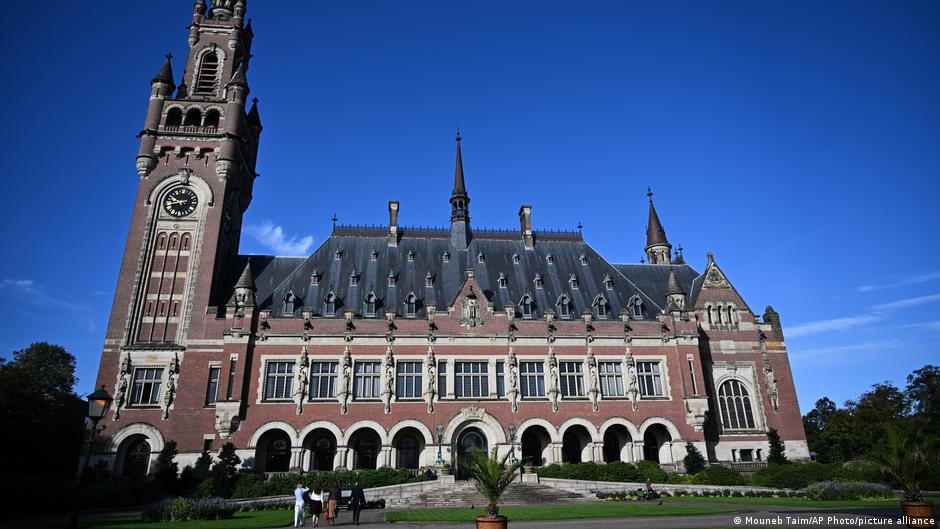
The International Court of Justice will deliver on Thursday its judgment in The Gambia v. Myanmar, the first court anywhere in the world to rule on whether Myanmar's 2016-2017 military campaign against the Rohingya constituted genocide. The case has been seven years in the making, filed by The Gambia in November 2019 under the 1948 UN Genocide Convention. A UN fact-finding mission concluded some 10,000 people likely died in the pogroms, with 700,000 Rohingya fleeing to Bangladesh, where most remain today in the world's largest refugee settlement.
Extraction Map
The legal fight hinges on intent. Myanmar argues its operations in Rakhine State were legitimate counterinsurgency responses to coordinated attacks by the Arakan Rohingya Salvation Army on more than 30 police posts in August 2017. The Gambia counters that counterinsurgency and genocide are not mutually exclusive — that the sexual violence, killing of children, and systematic arson accompanying the operations cannot be squared with any purpose beyond terrorizing and destroying the Rohingya population. The evidentiary question is itself precedent-setting. Investigators were denied access to Rakhine State and had to rely on interviews with victims and witnesses who had fled Myanmar, plus UN and NGO reports. How the ICJ weighs this circumstantial evidence will ripple through parallel cases: DRC v. Rwanda, Ukraine v. Russia, South Africa v. Israel. As international law professor Michael Becker of Trinity College Dublin noted, the parties in those cases will immediately absorb whatever evidentiary standard the court establishes here. Myanmar's political landscape has shifted dramatically since the case was filed. Nobel laureate Aung San Suu Kyi traveled to The Hague in 2019 to defend her country's military — the same military that had persecuted her for decades — calling the allegations "incomplete and incorrect." The military then ousted her government in a 2021 coup, and she remains under arrest as a civil war continues to rage. The ICJ's 2020 provisional measures ordering Myanmar to prevent genocide have been, by all accounts from rights groups, blatantly ignored. The enforcement gap is the story's structural core. Any reparations or restitution the court orders would require UN Security Council action. China and Russia, both allies of coup leader Min Aung Hlaing's regime, hold veto power. This is the familiar architecture of international justice: a court with moral authority but no enforcement muscle, dependent on a political body where the interests of great powers routinely override the rights of the vulnerable. Still, the ruling carries real weight beyond enforcement. A finding of genocide by the ICJ could bolster the International Criminal Court's consideration of an arrest warrant for Min Aung Hlaing on charges of crimes against humanity. It would also establish legal precedent on how genocide is proven when physical access to crime scenes is blocked — a question with obvious relevance to multiple active conflicts. For the Rohingya, who have endured decades of persecution, denial of citizenship, and forced resettlement even before the 2016-2017 pogroms, the ruling represents something that cannot be vetoed: a formal legal determination by the world's highest court on what was done to them. As activist Aung Kyaw Moe put it, international venues were the only hope when no domestic avenues existed. Whether that hope translates into material justice depends on a Security Council structure designed to protect the powerful from accountability.
Worth reading?
SKIP
Score
32
/100
Extractive. The current architecture concentrates the costs of mass atrocity on the Rohingya while distributing impunity to Myanmar's military junta through great-power veto protection at the Security Council.
What Is GRIN?
GRIN stands for Generativity, Resilience, Innovation efficiency, and Novelty openness. These four dimensions capture the essential characteristics of any memetic intelligence — whether a nation, a corporation, a religion, or a movement.
About GRINGenerativity
2/5
Resilience
1/5
Efficiency
1/5
Novelty
3/5
Extractive
4/5
Inverted
Does this create new capability or just redistribute existing value?
Potential precedent on proving genocide via circumstantial evidence is genuinely generative for international law. But without enforcement, the ruling creates legal capital that may never be spent.
Verified Facts (10)
The Gambia filed the case with the ICJ in November 2019
A UN fact-finding mission concluded some 10,000 people likely died in the pogroms
700,000 Rohingya fled to neighboring Bangladesh
The ICJ issued emergency provisional measures in 2020 ordering Myanmar to prevent genocide
Myanmar's military ousted the democratically elected government in 2021
The ICJ rejected Myanmar's jurisdiction challenges in 2022
14 days of hearings held in January 2025
The Arakan Rohingya Salvation Army staged coordinated attacks on more than 30 police posts in August 2017
China and Russia hold veto power on the UN Security Council
The ICC is considering an arrest warrant request for Myanmar coup leader Min Aung Hlaing
More latest news
Read all