BUILD TIME · EXTENSION
~6 wks
IAEA LOCKED OUT
17 yrs
KNOWN ENRICHMENT SITES
2
INSPECTORS IN DPRK
0
The IAEA's Rafael Grossi confirmed Wednesday that North Korea has constructed a new extension to its original uranium-enrichment facility at the Yongbyon nuclear complex. Construction began in mid-September 2026 and was externally complete by late October 2026 — roughly six weeks from groundbreaking to finished shell. The speed is the signal: Pyongyang is not experimenting, it is scaling a mature industrial process.
Extraction Map
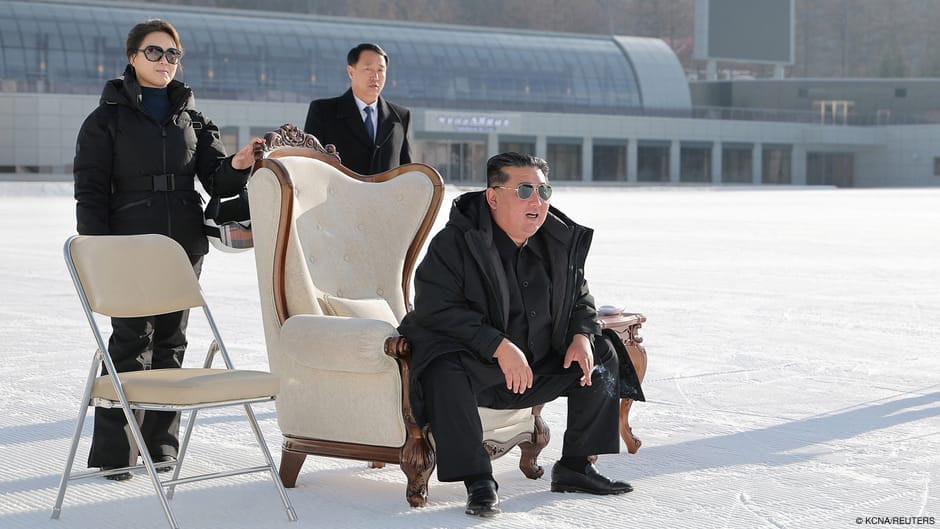
The IAEA has been locked out of North Korea since Pyongyang expelled inspectors in 2009, leaving the agency reliant on satellite imagery to monitor a nuclear program being built underground, behind walls, and inside mountains. Grossi addressed activities at both the Yongbyon facility north of Pyongyang and the Kangson enrichment site just southwest of the capital during a quarterly Board of Governors meeting. No further details on the extension's purpose or capacity were provided. The timing is strategic. The Iran war — triggered by US and Israeli strikes in March — has consumed the bandwidth of every major nonproliferation actor. Kim Jong Un explicitly cited Washington's "global terrorism and aggression" against Iran as justification for his own buildup. The lesson Pyongyang drew is the one it has drawn from every conflict since Libya: states that surrendered nuclear programs got destroyed; states that kept them got left alone. Kim's September 2024 speech calling for "exponentially" expanding the nuclear arsenal was not rhetoric. The reveal of a previously covert enrichment plant that month, followed by the IAEA's April confirmation of "a rapid increase" in nuclear activities, and now a new physical extension completed in weeks — this is an industrial acceleration curve, not a diplomatic bargaining chip. Donald Trump floated the possibility of meeting Kim during his Shenzhen trip to see Xi Jinping and Putin, but North Korean state media has shown only images of Kim visiting a ski resort and Mount Paektu, with no mention of diplomatic travel. The asymmetry is telling: Washington signals openness; Pyongyang signals indifference. Kim Yo Jong, Kim's powerful sister, called anyone expecting denuclearization "idiots." International sanctions remain nominally in place but have been systematically flouted. The IAEA passed fresh resolutions at its September conference expressing concern about the North Korean program. The gap between institutional concern and actual constraint is now the defining feature of the nonproliferation regime's encounter with Pyongyang. The 20-year trajectory is straightforward: North Korea becomes a mid-tier nuclear power with a diversified, hardened arsenal — not a rogue outlier but a permanent nuclear state that the international system eventually accommodates the way it accommodated Pakistan and India. Every year the IAEA issues satellite-based warnings without access, the precedent hardens.
Worth reading?
SKIP
Score
12
/100
Extractive. North Korea concentrates regime-survival capability at the expense of its own population (resources diverted from civilian needs), regional stability (South Korea, Japan face escalating threat), and the global nonproliferation regime (every successful defiance weakens the system for all).
What Is GRIN?
GRIN stands for Generativity, Resilience, Innovation efficiency, and Novelty openness. These four dimensions capture the essential characteristics of any memetic intelligence — whether a nation, a corporation, a religion, or a movement.
About GRINGenerativity
0/5
Resilience
1/5
Efficiency
1/5
Novelty
1/5
Extractive
5/5
Inverted
Does this create new capability or just redistribute existing value?
Zero generative value for anyone outside the Kim regime. Enrichment capacity creates no civilian benefit, no economic growth, no shared capability — pure military consolidation for regime survival.
Verified Facts (10)
IAEA head Rafael Grossi said North Korea has built an extension on its original uranium-enrichment plant at the Yongbyon nuclear complex.
The IAEA has been unable to access North Korea since Pyongyang expelled its inspectors in 2009.
Since mid-September 2026, a further extension to the original Yongbyon enrichment facility has been under construction with the new extension externally complete by late October 2026.
Grossi addressed the ongoing operation of enrichment facilities at Yongbyon and Kangson.
In September 2024, North Korea revealed its first covert uranium-enrichment plant.
Kim delivered a speech calling for 'exponentially' expanding the country's nuclear arsenal.
In April, Grossi confirmed 'a rapid increase' in activities at nuclear facilities in North Korea.
Kim Yo Jong called those expecting denuclearisation 'idiots.'
In March, soon after the US and Israel launched strikes on Iran, Kim accused Washington of 'global terrorism and aggression.'
US President Donald Trump floated the possibility of a meeting with North Korean leader Kim Jong Un during his trip to meet Xi Jinping and Putin in China.
More latest news
Read all