ICJ VOTE
9-6
ESTIMATED DEAD
~10,000
REFUGEES DISPLACED
700K
STATE GENOCIDE RULING
1st
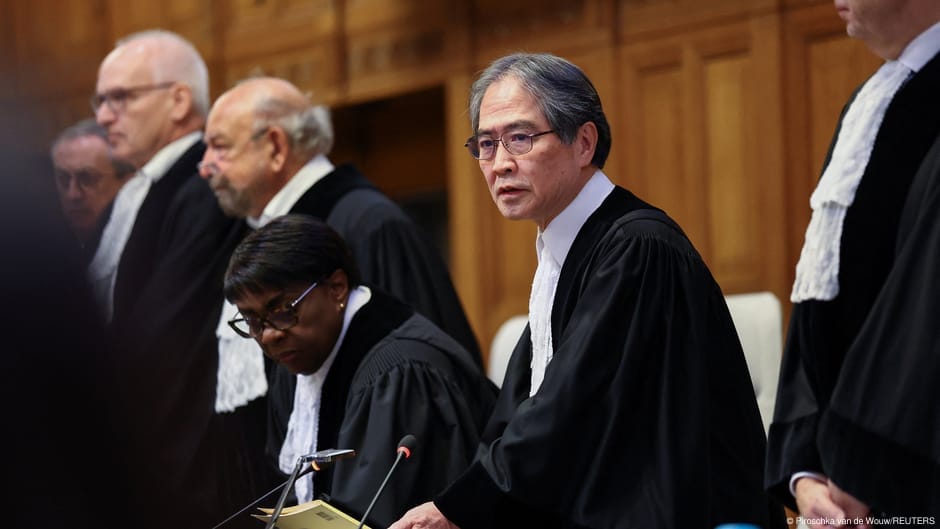
The International Court of Justice ruled Thursday that Myanmar committed genocide against its Rohingya Muslim minority during 2017 military "clearance operations" in Rakhine state. The verdict, decided 9-6, marks the first time in the ICJ's history that a state has been found responsible for genocide — not just individuals, but the state apparatus itself. Judge Yuji Iwasawa said the court concluded that the only reasonable inference from Myanmar's actions was "an intention to destroy a substantial part of... the Rohingya population in northern Rakhine State."
Extraction Map
The case, filed by Gambia in 2019, centers on atrocities that followed a coordinated attack by a Muslim militia group against police and military installations in August 2017. A UN fact-finding mission concluded some 10,000 people likely died in the military response. Around 700,000 Rohingya fled to Bangladesh, where most still live in the world's largest refugee camp. The court found Myanmar's security forces killed thousands, perpetrated sexual violence, attacked fleeing civilians, and committed extreme violence against children. The ruling did more than catalog atrocities. The ICJ found that while some civilian participation in clearance operations could not be attributed directly to the state, Myanmar's government and security forces made no meaningful effort to prevent non-Rohingya civilian atrocities and actively "fanned the flames of ethnic and religious tension." The court also noted Myanmar's refusal to investigate, facilitate access to evidence, or provide requested information — an obstruction that the judges acknowledged may have concealed material they never saw. Enforcement is where the ruling collides with reality. Myanmar's military — the actual perpetrator — is now back in full de facto control of the country amid an ongoing civil war. There was no immediate response from the government or the military. The shadow National Unity Government, which includes remnants of Aung San Suu Kyi's party, said it "respects the authority" of the ICJ, but commands no security apparatus. Aung San Suu Kyi herself had traveled to The Hague to contest the charges, calling them "incomplete and incorrect," while nominally leading the country during the atrocities. International reactions were swift but structurally familiar. UN Secretary-General Antonio Guterres called it a "powerful recognition" and the first verdict of its kind against a state. The UK expelled Myanmar's defense attaché and called for a special UN Security Council session. UN human rights chief Volker Türk said Myanmar "stands responsible for one of the most egregious crimes known to humankind." Gambia's Justice Minister Dawda Jallow said simply: "The victory belongs to the Rohingya." The precedent-setting nature of the ruling is its most significant dimension. The ICJ ordered reparations, the facilitation of refugee return, and investigation and prosecution of individual wrongdoing by Myanmar's nationals and security forces. These are binding obligations under international law. But the ICJ has no enforcement mechanism of its own — compliance depends on political will channeled through the UN Security Council, where China and Russia hold vetoes and have historically shielded Myanmar. Rohingya activist Yasmin Ullah captured the gap between legal recognition and lived reality: "The Rohingya never needed a court to tell us what happened to us. We needed the world to hear it." The case will draw close attention from those pursuing ICJ actions against Israel over Gaza and against Russia over Ukraine. Whether this verdict becomes a functioning precedent or a symbolic monument depends entirely on what the international system does next.
Worth reading?
OPTIONAL
Score
40
/100
Extractive pattern persists. The legal verdict names the extraction — genocide by a state against its own minority — but the enforcement vacuum means the beneficiaries of that extraction (Myanmar's military) face no material consequence while victims remain displaced.
What Is GRIN?
GRIN stands for Generativity, Resilience, Innovation efficiency, and Novelty openness. These four dimensions capture the essential characteristics of any memetic intelligence — whether a nation, a corporation, a religion, or a movement.
About GRINGenerativity
3/5
Resilience
1/5
Efficiency
1/5
Novelty
4/5
Extractive
4/5
Inverted
Does this create new capability or just redistribute existing value?
Historic legal precedent — first state-level genocide finding — creates new international law architecture. But generative potential is conditional on enforcement that does not yet exist.
Verified Facts (8)
Panel of 15 judges decided by nine votes to six that Myanmar had committed genocide against the Rohingya in Rakhine state
A UN fact finding mission later concluded that some 10,000 people likely died in the military clearance operations
Around 700,000 people fled to Bangladesh, where most still reside in the world's largest refugee camp
Gambia filed the complaint at The Hague in 2019
Coordinated attack by a Muslim militia group against several police and military installations and personnel in August 2017
UK Foreign Secretary Ed Miliband said Britain would expel Myanmar's defense attache in London and was calling for a special UN Security Council session
UN Secretary-General Antonio Guterres called it a 'powerful recognition' and noted it was the first verdict of its kind against a state
Aung San Suu Kyi traveled to The Hague to contest the charges, calling them 'incomplete and incorrect'
More latest news
Read all