SUMMITS HELD
18
YEAR OF WAR
5th
NEGOTIATION GAP
9 mo
PARALLEL TRACKS
3
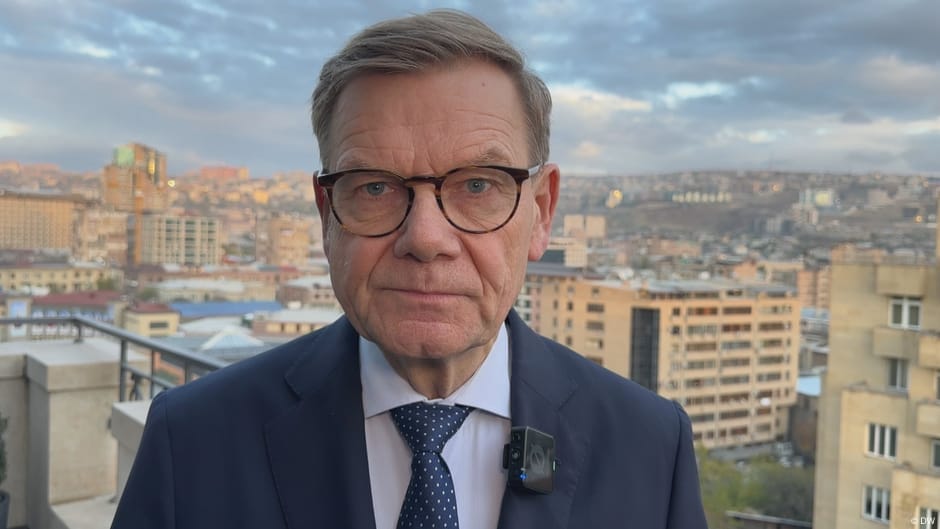
Germany's Foreign Minister Johann Wadephul declared Thursday's Berlin summit of the so-called Coalition of the Willing a success before the talking points had cooled. The meeting — the 18th high-level gathering among Ukraine's supporters — was billed as the largest yet, designed to demonstrate that allied resolve had not eroded as Russia's war enters its fifth year. The diplomatic staging is deliberate: project solidarity now, build negotiating leverage later.
Extraction Map
The summit's strategic logic rests on a simple premise — that Ukraine must negotiate from strength, not exhaustion. Wadephul told DW that allies were ready to do "what was necessary" to ensure that outcome, including continued military support, winterization aid (heating, electricity, water), and eventual security guarantees in any peace deal. The language is carefully calibrated: strong enough to reassure Kyiv, vague enough to avoid committing to specific escalation thresholds. The diplomatic landscape is shifting underneath the coalition. After nine months of stalled negotiations, an initial meeting took place in Abu Dhabi, with a follow-up round planned and European participation expected. Wadephul welcomed this US-initiated restart, as well as the Trump-Putin-Xi trilateral meeting in Shenzhen — "every conversation that takes place is a good conversation." That line is diplomatic generosity; Europe's real anxiety is being sidelined from talks about its own continent. Putin's Thursday countermove was revealing: he invited Europeans to Moscow for talks on the "potential structure" of future negotiations. This is talks-about-talks-about-talks — classic Kremlin process management designed to buy time while testing whether Europe will accept Moscow as the venue and Russia as the convener. The asymmetry is obvious: Berlin gathers allies, Moscow summons them. Wadephul's insistence that Europe and Ukraine "must be involved" in any negotiations over Ukraine's future reveals the core anxiety. The Trump-Putin-Xi Shenzhen channel could easily produce a framework that treats European security interests as secondary. The Coalition of the Willing summit is partly a hedge against that outcome — a visible reminder that Europe has its own coalition, its own aid pipeline, and its own conditions for peace. The winterization planning is the most concrete signal in the communiqué. By explicitly preparing for negotiation failure and another winter of war, Berlin is telling Moscow that the coalition's support infrastructure is not contingent on diplomatic breakthroughs. This is the unsexy backbone of deterrence: logistics, heating oil, and water treatment, sustained over years. The structural question remains unanswered: can a coalition of donors and diplomatic statements generate the kind of leverage that changes Moscow's calculations? Eighteen summits in, the coalition's durability is proven. Its coercive power is not.
Worth reading?
OPTIONAL
Score
52
/100
Mildly generative — the summit sustains an alliance infrastructure and aid pipeline, but the diplomatic framework remains output-thin relative to the coordination costs, with no clear mechanism converting summits into changed Russian behavior.
What Is GRIN?
GRIN stands for Generativity, Resilience, Innovation efficiency, and Novelty openness. These four dimensions capture the essential characteristics of any memetic intelligence — whether a nation, a corporation, a religion, or a movement.
About GRINGenerativity
3/5
Resilience
3/5
Efficiency
2/5
Novelty
2/5
Extractive
2/5
Inverted
Does this create new capability or just redistribute existing value?
Aid pipeline and winterization planning create real value for Ukraine's survival. But 18 summits without a negotiating breakthrough suggest the coalition generates solidarity more reliably than strategic outcomes.
Verified Facts (7)
Johann Wadephul described the summit as the largest meeting of Ukraine's supporters so far
The meeting represents the 18th set of high-level talks among the coalition's members
After nine months without progress, an initial meeting had taken place in Abu Dhabi
Wadephul welcomed the trilateral meeting between US President Donald Trump, Russian President Vladimir Putin and Chinese President Xi Jinping in Shenzhen
Putin said he had invited Europeans to Moscow for talks on the potential structure of future talks to end the war
Wadephul stated allies were preparing to continue supplying Ukraine with heating, electricity and essential supplies including water over the coming winter
Any peace agreement must include security guarantees to protect Ukraine against future Russian attacks
More latest news
Read all