CIVILIANS REMAINING
~340
PRE-WAR POPULATION
70K
PROPOSED CEASEFIRE
5 days
OLESHKY PRECEDENT
Oct 27–Nov 1
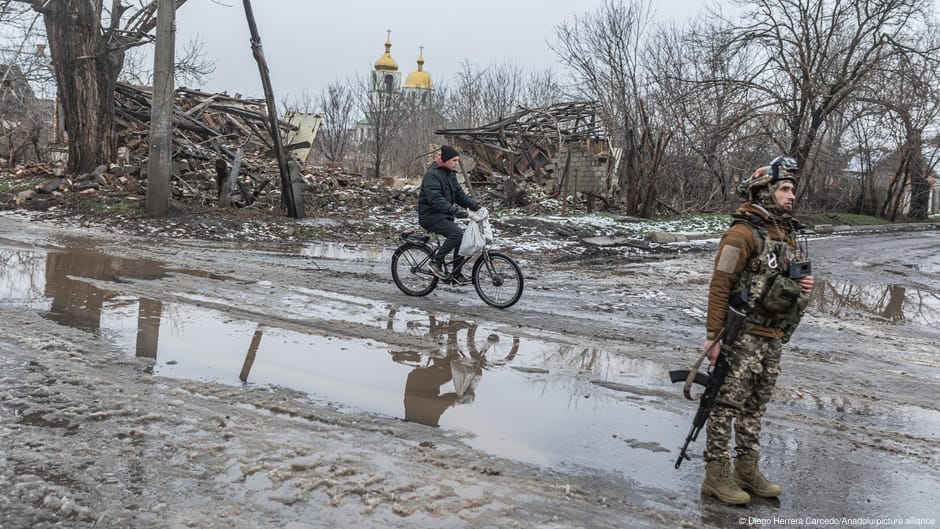
Vladimir Putin has proposed a humanitarian mission in Kostiantynivka, a frontline city in Donetsk whose pre-invasion population was roughly 70,000, now reduced to an estimated 340 civilians living without water, electricity, gas, or public transport. Russia claims it controls the city. Ukraine says fighting is ongoing. The open-source military tracking project DeepState describes the situation as "extremely difficult" but confirms Ukrainian army control.
Extraction Map
The proposal — a five-day road-clearing operation incorporating human rights organizations from both sides and foreign press — arrives during active US-brokered negotiations between Washington and Moscow. It is structurally identical to the Oleshky ceasefire of October 27 to November 1, which Ukraine's General Staff reported Russia used to rotate troops, entrench positions, reinforce anti-drone measures, and bring in ammunition. The pattern is now documented: propose humanitarian pause, exploit pause militarily, resume offensive from a stronger position. Kostiantynivka is the southernmost city in the Donetsk "fortress belt" that includes Druzhkivka, Kramatorsk, and Sloviansk. Military expert Oleksandr Kovalenko of the Dmytro Tymchuk Center for Security Studies compares its defensive role to Bakhmut, Avdiivka, and Chasiv Yar — cities whose fortifications held Russian forces for years. Its fall would open the road north to the entire conurbation. Kovalenko argues Russia is proposing the ceasefire precisely because its forces are losing ground and need time to bring in reinforcements that active combat prevents. The diplomatic trap is explicit. Military analyst Denys Popovych told DW that rejection of the proposal would be weaponized: "If we reject it, they'll say to us: 'You're rejecting peace proposals, you're not taking care of your own citizens, why should we keep talking to you.'" US intermediaries are reportedly pushing the mission concept, amplifying the pressure on Kyiv. Zelenskyy responded directly, saying Putin "simply wants us to leave Kostiantynivka so that they can move in and occupy the entire city," and accused Russia of using the Oleshky ceasefire to move military equipment into that city. Human rights voices are cautious but not dismissive. Yevhen Zakharov of the Kharkiv Human Rights Protection Group called the proposal "suspect" and urged "the utmost caution." Oleksandr Pavlichenko of the Ukrainian Helsinki Human Rights Union proposed a counter: Russian troop withdrawal from the city and International Committee of the Red Cross supervision of civilian evacuation. "If a proposal comes from only one side, and from a side such as Russia, it doesn't inspire confidence," he said. Popovych argues Ukraine should not reject the proposal outright but should impose conditions drawn from Oleshky's lessons — specifically, that all soldiers remain at their positions during any ceasefire. The evacuation itself is nearly impossible without a pause: Russian forces occupy the road between Kostiantynivka and Druzhkivka, drones blanket the area, and since spring 2026 the only exit has been on foot. The 340 remaining civilians are genuinely trapped. The structure is a classic coercive bargain: create a humanitarian crisis through military action, propose relief that requires the defender to lower its guard, then frame refusal as cruelty. The Oleshky precedent makes the mechanism transparent. The question is whether transparency is enough to defeat the framing when US negotiators are applying concurrent pressure.
Worth reading?
SKIP
Score
12
/100
Extractive — the humanitarian framing extracts diplomatic legitimacy and military advantage from Ukraine's defensive position, using trapped civilians as leverage rather than genuinely generating safety or stability.
What Is GRIN?
GRIN stands for Generativity, Resilience, Innovation efficiency, and Novelty openness. These four dimensions capture the essential characteristics of any memetic intelligence — whether a nation, a corporation, a religion, or a movement.
About GRINGenerativity
0/5
Resilience
1/5
Efficiency
1/5
Novelty
1/5
Extractive
5/5
Inverted
Does this create new capability or just redistribute existing value?
Zero generative value. No new capability, infrastructure, or safety is created. The proposal redistributes military advantage under humanitarian cover, destroying the defensive value Kostiantynivka currently provides Ukraine.
Verified Facts (7)
In July, Russia announced that it had taken Kostiantynivka but did not provide any proof
DeepState say that the city is still controlled by the Ukrainian army, but that the situation there is 'extremely difficult'
Local authorities say some 340 civilians remain in the city whose pre-invasion population was around 70,000
The city has no central water, electricity or gas supplies, no public transport, and since spring 2026 people have only been able to evacuate on foot
After the end of the ceasefire in Oleshky (October 27 to November 1), the Ukrainian General Staff announced that Russians had rotated troops, entrenched positions, reinforced measures to repel drones and brought in ammunition
Zelenskyy visited the main command post of a brigade defending Kostiantynivka in March 2026
Putin proposed five days to clear the access roads, with human rights organizations from Ukraine and Russia and foreign press delegates incorporated
More latest news
Read all