AFRICA'S GLOBAL EMISSIONS
<4%
BIOMASS ENERGY USE
90%
TONS CO₂ · PIPELINE
379M
BARRELS / DAY
246K
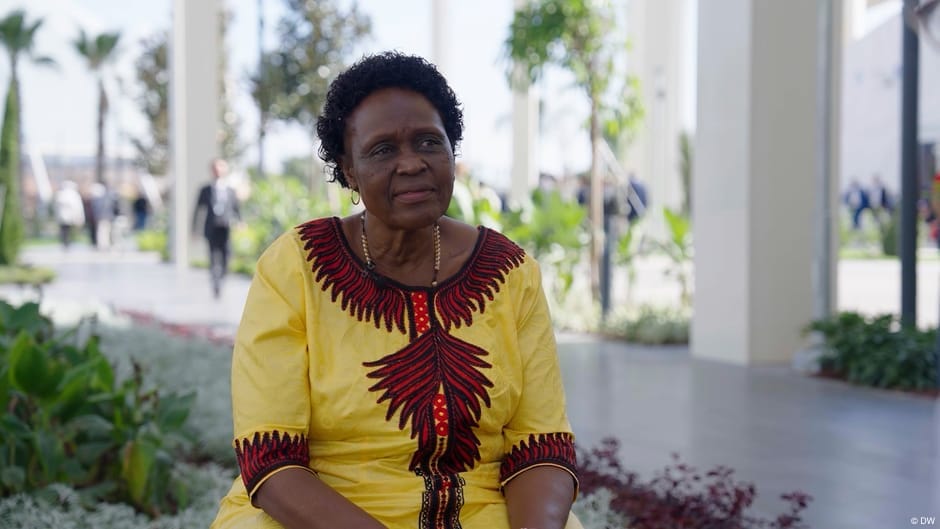
Uganda's Environment Minister Beatrice Atim Anywar arrived at COP31 in Antalya carrying the same paradox that defines climate politics for the global South's newest petrostate aspirants: the country contributes almost nothing to global emissions, suffers enormously from climate impacts, and is about to become an oil exporter. The contradiction is not hypocrisy — it is the architecture of a development trap where every exit is marked "Please pay at the door."
Extraction Map
The numbers frame the bind. Africa produces less than 4% of global greenhouse emissions. Uganda's 53 million people get only 2% of their energy from electricity. Over 90% of households burn wood and charcoal for cooking, driving deforestation that compounds the very climate vulnerability Anywar described — landslides, floods, droughts, crop failures. Less than half the population has electricity access. This is not a country with the luxury of skipping fossil fuel revenue. Enter the East African Crude Oil Pipeline, a 1,443-kilometer TotalEnergies-operated project connecting Ugandan oil fields to Tanzania's coast, capable of moving 246,000 barrels per day when it opens in 2027. The Climate Accountability Institute estimates 379 million tons of carbon emissions over its 20-year lifespan. Oil wells sit inside Murchison Falls, Uganda's largest and oldest national park. Anywar acknowledged the "sticky issue" but insisted the project proceeds "deliberately" with mitigation measures. The minister's framing is structurally honest even if politically convenient: "You cannot tell us to cut off the umbilical cord that feeds us, as much as it has to be cut off." Oil revenues, she argues, could fund Uganda's clean energy transition — hydropower expansion, solar deployment, reduced charcoal dependence. The logic mirrors Norway's sovereign wealth fund model, except Norway started rich and Uganda starts poor, with far weaker institutional guardrails against resource-curse dynamics. Carbon credits emerged as Anywar's other hoped-for revenue stream, described as a potential "breakthrough" for monetizing Uganda's biodiversity. The pitch — attract investors to natural assets, earn finance through forest protection and renewable projects — is real but fragile. Carbon credit markets remain plagued by transparency failures, verification gaps, and the fundamental criticism that they let rich-country emitters buy permission to keep polluting rather than actually cutting emissions. The structural diagnosis is clear: developed nations created the emissions problem, promised climate finance, and have not delivered at scale. Uganda — and dozens of countries like it — face a choice between waiting for funds "which are not forthcoming" and exploiting whatever resources they have. The pipeline is not irrational. It is what happens when the global financial architecture makes fossil extraction the fastest path to development capital. Anywar's plea for a "just transition" is a request that the countries who industrialized on coal and oil finance alternatives for those who haven't yet. The 20-year question is whether Uganda's oil revenues actually fund a transition or simply create a new fossil-dependent constituency that fights to keep pumping. Every petrostate in history has faced this test. Most have failed it. Uganda's simultaneous investment in hydropower is a positive signal, but 379 million tons of pipeline emissions is a structural commitment that outlasts any minister's intentions.
Worth reading?
SKIP
Score
28
/100
Extractive — the pipeline locks in 20 years of carbon emissions and routes resource wealth through TotalEnergies, while climate finance promises remain unfulfilled, leaving Uganda bearing climate costs it did not create.
What Is GRIN?
GRIN stands for Generativity, Resilience, Innovation efficiency, and Novelty openness. These four dimensions capture the essential characteristics of any memetic intelligence — whether a nation, a corporation, a religion, or a movement.
About GRINGenerativity
2/5
Resilience
1/5
Efficiency
1/5
Novelty
2/5
Extractive
4/5
Inverted
Does this create new capability or just redistribute existing value?
Hydropower and solar expansion are genuinely generative, but the pipeline's main value-creation channel routes through TotalEnergies. Oil revenue reinvestment into transition is promised, not guaranteed.
Verified Facts (10)
Africa contributes less than 4% of the global greenhouse emissions
More than 90% of Ugandan households still rely on wood and charcoal as the most affordable fuel
Only around 2% of the country's energy comes from electricity
Less than half of the population has access to electricity
1,443-kilometer (897-mile) pipeline... can transport up to 246,000 barrels per day
Climate Accountability Institute said it would release 379 million tons of climate-heating pollution over its 20-year lifetime
Due to open in 2027
Oil wells for the project, operated by French energy giant TotalEnergies, are also located in Uganda's largest and oldest national park, Murchison Falls
Country of some 53 million people
Biomass accounts for 90% of the country's final energy consumption
More latest news
Read all