SECTORS HIT
4+
OUTAGE DURATION
1 wk
ROOT CAUSES ID'D
0
APPOINTMENT STATUS
Acting
Sean Cairncross is out as White House national cyber director. The departure, reported Friday by Axios and confirmed by Secretary of State Marco Rubio, follows a week in which technology outages hit US air travel, banking systems, e-commerce platforms, and — most critically — National Security Agency networks. No cyberattack has been confirmed. The administration's answer is not a structural overhaul but a personnel swap.
Extraction Map
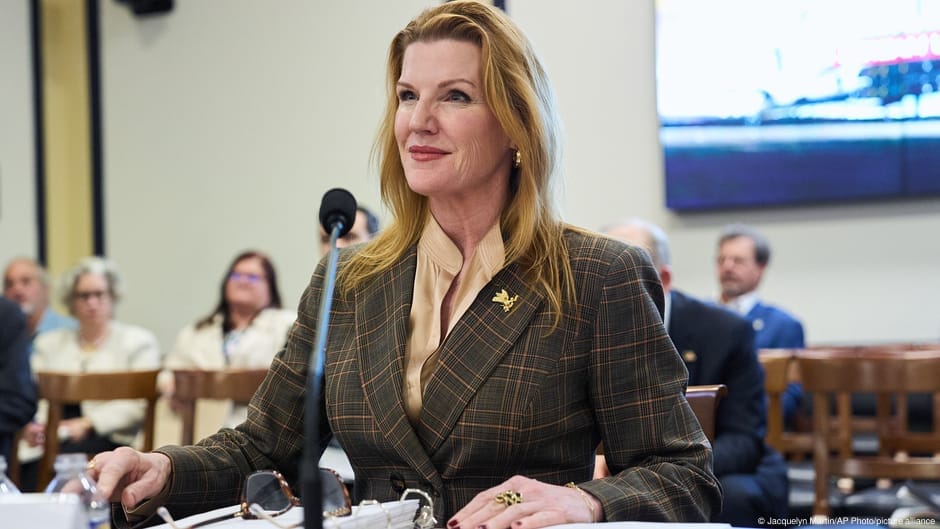
Kirsten Davies, the Pentagon's Chief Information Officer, steps in as acting cyber director. Her qualifications are framed almost entirely in loyalty terms: Defense Secretary Pete Hegseth praised her as a 'dedicated patriot' who would 'advance President Trump's America First agenda across the cybersecurity landscape.' Her own public statement referenced 'analog, digital, and quantum technologies' and the need to 'dominate the cyber landscape for generations' — rhetoric long on ambition, short on operational specifics. Cairncross was a political operative, not a technologist. He came to the cyber director post via the Republican National Committee and various White House staff roles during Trump's first term. The Senate confirmed him in 2025. His departure after a string of outages raises the obvious question: was the outage response a failure of the office, or was the office never equipped to prevent systemic failure in the first place? The outages themselves remain unexplained. Senior officials have ruled out a cyberattack, but no root cause has been publicly identified for disruptions that simultaneously affected aviation, finance, communications, and intelligence infrastructure. That breadth suggests either a shared dependency — a single vendor, cloud provider, or network backbone — or a cascade through tightly coupled systems. Neither possibility is reassuring. Davies' appointment in an acting capacity signals that this may be a placeholder move rather than a strategic reset. Acting officials lack the institutional weight to push through major reforms. If the administration intended to signal seriousness about critical infrastructure resilience, a permanent appointment with a clear mandate would have been the move. Instead, the messaging centered on loyalty and agenda alignment. The structural problem here is older than any single administration. US critical infrastructure runs on aging systems, fragmented oversight, and a cyber director's office that has never been given the budget or authority to match its mandate. Cairncross' departure is a symptom. The real question is whether Davies will be empowered to address root causes or simply manage the next crisis when it arrives. What the week revealed is that the US has no demonstrated resilience plan for simultaneous multi-sector tech failures. The response was political — a personnel change, public reassurances, patriotic language. The systems that failed remain the same systems that will be tested again.
Worth reading?
SKIP
Score
20
/100
Extractive — the response substitutes political signaling for structural investment, concentrating narrative control in the executive while deferring the costs of infrastructure fragility onto the public and downstream sectors.
What Is GRIN?
GRIN stands for Generativity, Resilience, Innovation efficiency, and Novelty openness. These four dimensions capture the essential characteristics of any memetic intelligence — whether a nation, a corporation, a religion, or a movement.
About GRINGenerativity
1/5
Resilience
1/5
Efficiency
1/5
Novelty
1/5
Extractive
4/5
Inverted
Does this create new capability or just redistribute existing value?
Zero new capability created. A political operative replaced by an acting loyalist. No new authority, budget, or mandate announced. This is a name change, not a capacity change.
Verified Facts (8)
Sean Cairncross is exiting his post as White House national cyber director
Secretary of State Marco Rubio announced the Pentagon's Chief Information Officer, Kirsten Davies, as the new cyber director
Davies will assume the position in an acting capacity
Service outages affected not just travel, communications, and e-commerce, but also the National Security Agency
Top US officials have since sought to assure people in the country that there was no evidence of a cyberattack
In 2025, Trump nominated Cairncross to serve as his top adviser on cybersecurity and data protection policy. He was subsequently confirmed to the post by the Senate.
He was also an executive at the Republican National Committee before becoming the cybersecurity chief
Defense Secretary Pete Hegseth referred to Davies' tenure at the Pentagon as one in which 'she has proven herself to be a dedicated patriot and professional'
More latest news
Read all