STATE PARTIES
128
CALLED FOR BAN
~100
BINDING RULES
0
NEXT DEADLINE
2028
Five days of negotiations in Geneva under the UN Convention on Certain Conventional Weapons ended Saturday with no legally binding agreement on lethal autonomous weapons systems. Instead, 128 state parties agreed to "launch the elaboration of an international instrument" over the next two years — diplomatic language for kicking the can to 2028 while autonomous weapons continue rolling off production lines and into active theaters.
Extraction Map
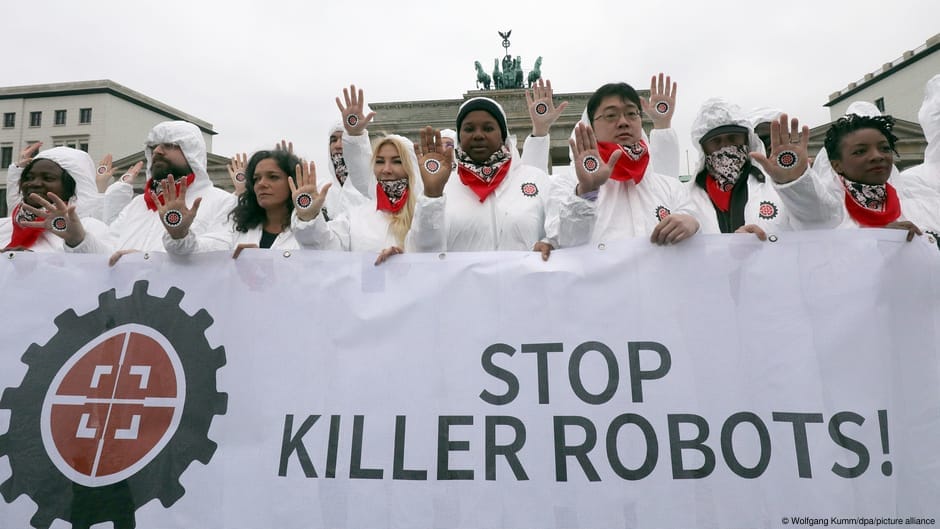
The gap between demand and outcome is stark. Nearly 100 nations explicitly called for binding negotiations. UN Secretary-General António Guterres, Pope Leo XIV, and the International Committee of the Red Cross all backed a ban. The coalition of the willing was broad but powerless against a small bloc of arms-producing states — the US, Russia, and Israel prominent among them — that refused the mandate. Consensus-based CCW rules meant any one of them could effectively veto. Stop Killer Robots, a coalition of over 300 organizations, called the outcome "watered-down" and noted that "a small number of states weakened the mandate introducing uncertainty about the legal status of the final document" during overnight negotiations. The coalition had warned that autonomous weapons systems are already reaching battlefields, with systems tested or deployed in the Ukraine war. The technology is not theoretical; the regulation is. The structural dynamic here is familiar from climate, landmines, and cluster munitions: incumbent powers with deployed capability resist constraint while slower-moving multilateral institutions debate frameworks. The difference is speed. AI-enabled weapons iterate on software timelines, not procurement cycles. Two years of further "elaboration" is not a pause — it is a permissive environment for deployment to become normalized before rules exist. Switzerland's conference chair, Julien Thoni, framed the result as multilateral diplomacy delivering "concrete results" in a "deeply divided world." This is the thinnest possible definition of concrete. No binding instrument was agreed. No timeline for one was set. The word "should" — not "shall" — governs the two-year mandate. The legal status of whatever emerges remains deliberately ambiguous. The cost structure is asymmetric. States developing autonomous weapons bear zero cost from continued negotiation; they retain full freedom to deploy while talks proceed. States facing these weapons on the battlefield — or civilian populations in conflict zones — bear the entire risk of an ungoverned technology. The longer the gap between capability and regulation, the harder retroactive constraint becomes, as deployed systems create industrial constituencies and military dependencies that resist rollback. The 2028 horizon now becomes the next pressure point. But if the CCW's consensus mechanism allowed a handful of states to gut the mandate this time, there is no structural reason to expect a different outcome in two years — unless the coalition of 95+ states moves outside the CCW framework entirely, as happened with landmines (Ottawa Treaty) and cluster munitions (Oslo Convention). Whether they have the political will to do so is the only question that matters.
Worth reading?
SKIP
Score
20
/100
Extractive. Arms-producing states capture a two-year deployment runway while bearing none of the costs of ungoverned autonomous weapons. The multilateral system absorbs the legitimacy cost of appearing to act while producing no constraint.
What Is GRIN?
GRIN stands for Generativity, Resilience, Innovation efficiency, and Novelty openness. These four dimensions capture the essential characteristics of any memetic intelligence — whether a nation, a corporation, a religion, or a movement.
About GRINGenerativity
1/5
Resilience
1/5
Efficiency
1/5
Novelty
1/5
Extractive
4/5
Inverted
Does this create new capability or just redistribute existing value?
Zero new capability created. The outcome generates neither binding norms nor enforceable rules — just a mandate for more meetings. No governance infrastructure built.
Verified Facts (8)
Delegates from 128 states that are parties to the UN Convention on Certain Conventional Weapons (CCW) had been meeting in Geneva since Monday
Nearly 100 nations had called for negotiations on a legally binding agreement
UN Secretary-General António Guterres, Pope Leo XIV and the Red Cross had also supported a ban on killer robots
Countries that have the technology, including arms-producing giants like the US, Russia and Israel, were among those opposing the mandate
The 128 countries agreed to launch the elaboration of an international instrument on lethal autonomous weapons systems, which should be conducted over the next two years
Stop Killer Robots, a global coalition of over 300 organizations
Over 95 states expressed their support for a treaty
In the final hours, a small number of states weakened the mandate introducing uncertainty about the legal status of the final document
More latest news
Read all