TARIFFS ELIMINATED
98%
ANNUAL EU SAVINGS
€600M+
COMBINED MARKET
730M
NEGOTIATION TIME
~10 YRS
The European Union and Indonesia signed the Comprehensive Economic Partnership Agreement (CEPA) and an Investment Protection Agreement (IPA) on Saturday, concluding nearly ten years of negotiations. Commission President Ursula von der Leyen called it "one of the most ambitious deals the European Union has concluded in Asia," covering a combined market of 730 million people.
Extraction Map
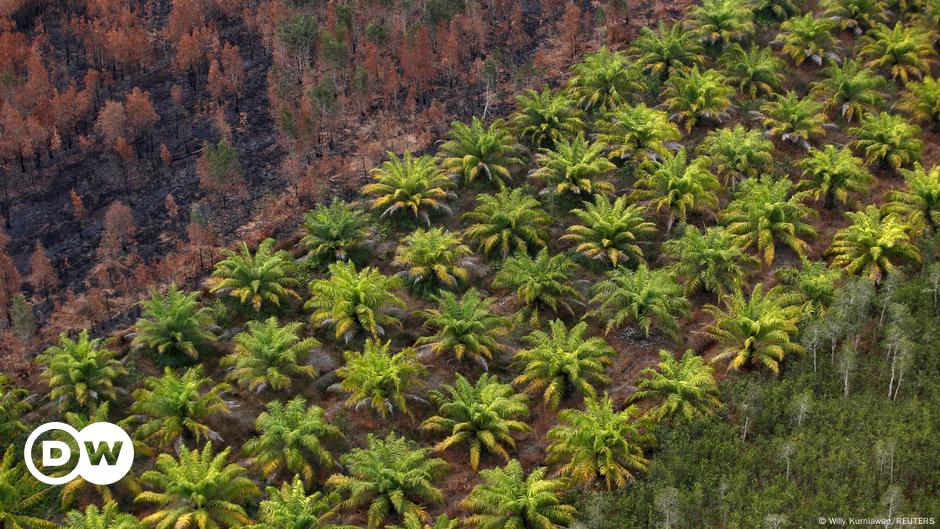
The deal's headline economics are straightforward: tariffs on approximately 98% of EU exports to Indonesia will be eliminated, with projected annual savings for European companies exceeding €600 million. Strategic sectors — electric vehicles, electronics, pharmaceuticals — are the named targets for investment facilitation. Indonesia's key exports to Europe — palm oil, footwear, textiles — get reciprocal benefits. The timing tells the real story. Brussels is not signing trade deals out of abstract commitment to free trade. It is building redundancy into a supply chain architecture that has become dangerously concentrated around China and increasingly unreliable via the United States under shifting tariff regimes. Von der Leyen's line — "in a time when others are closing their doors, we keep ours open" — is diplomatic code for: we are hedging against both Washington and Beijing simultaneously. Palm oil was the deal's landmine for a decade, and the agreement's resolution of deforestation concerns will be its most scrutinized provision. A dedicated protocol on palm oil addresses environmental sustainability, though the specific enforcement mechanisms remain to be tested. Whether this protocol has real teeth or functions as a political fig leaf covering commodity access is the central integrity question. Indonesian Economic Affairs Minister Airlangga Hartarto framed the benefits as "concrete and measurable" for Indonesian exporters. This symmetry is genuine — Indonesia gets preferential access to the world's largest single market, the EU gets a Southeast Asian manufacturing and commodity partner that is not China. Both sides are diversifying counterparty risk. Ratification is the remaining bottleneck. The European Parliament must approve the deal, and Indonesian authorities will complete their own process, with entry into force targeted for 2027. Given the EU Parliament's history of environmental objections to trade deals (the Mercosur saga being the obvious precedent), the palm oil protocol will face real legislative scrutiny. The structural logic is sound: the EU is methodically building a web of bilateral agreements across Asia to reduce single-source dependency. Whether these deals collectively generate new economic capability or merely reroute existing trade flows through friendlier jurisdictions is the 20-year question.
Worth reading?
RECOMMENDED
Score
68
/100
Mildly generative. The deal expands market access for both sides and builds structural redundancy against US-China bifurcation, though the degree of new value creation vs. trade diversion remains uncertain.
What Is GRIN?
GRIN stands for Generativity, Resilience, Innovation efficiency, and Novelty openness. These four dimensions capture the essential characteristics of any memetic intelligence — whether a nation, a corporation, a religion, or a movement.
About GRINGenerativity
3/5
Resilience
4/5
Efficiency
3/5
Novelty
3/5
Extractive
1/5
Inverted
Does this create new capability or just redistribute existing value?
Real but incremental. Tariff elimination creates genuine savings (€600M/yr) and opens new EV/pharma investment corridors, but this is market access, not new capability creation.
Verified Facts (8)
Ursula von der Leyen called it 'one of the most ambitious deals the European Union has concluded in Asia'
Combined market of 730 million people
Tariffs on about 98% of EU exports to Indonesia to be done away with
EU estimates European companies could save more than €600 million per year
Nearly 10 years of negotiations
Indonesian Minister of Economic Affairs Airlangga Hartarto hailed a 'new chapter' in economic relations
Agreement includes a dedicated protocol on palm oil to address environmental concerns
EU Parliament expected to greenlight; entry into force targeted for 2027
More latest news
Read all