FBI BOUNTY
$5M
DEAD IN RAID
11
MEZA'S AGE
44
FBI MOST WANTED
Top 10
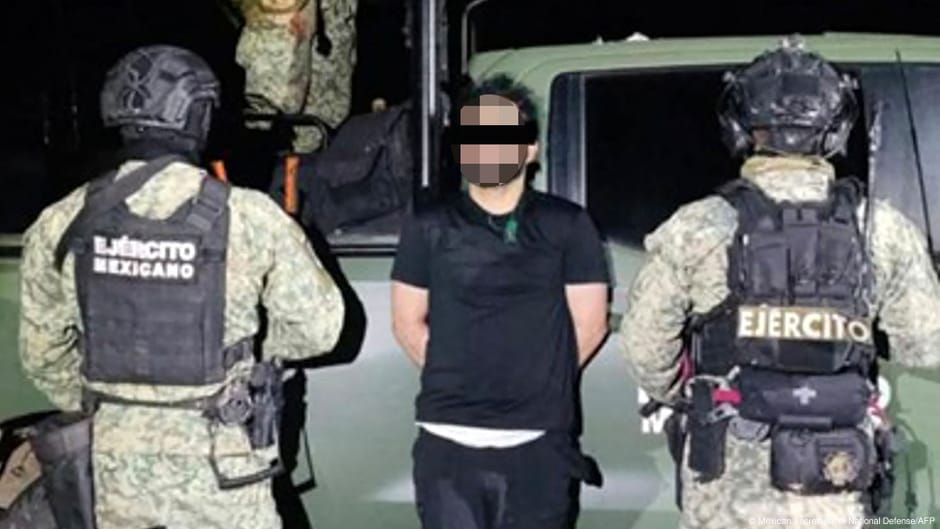
Mexican special forces arrested Fausto Isidro Meza F., known as "Chapo Isidro," in an overnight raid in Guasave, Sinaloa, on Saturday. The 44-year-old is the suspected leader of the Beltrán Leyva drug trafficking network — aligned with the Mayos faction of the Sinaloa cartel — and ranks among the FBI's ten most wanted fugitives. The US had offered $5 million for information leading to his capture.
Extraction Map
The operation killed at least 11 people: seven alleged cartel gunmen and four Mexican soldiers. Three detainees, including Meza, were transported to Mexico City. Mexican authorities described the raid as the product of "intelligence coordination" between Mexico's military and US agencies, though specifics of that coordination remain undisclosed. The aftermath was chaotic. Unverified videos showed military helicopters firing at ground targets and baseball fans scrambling for cover in Guasave. Cartel members retaliated by setting up roadblocks across the region, forcing the Mexican military to deploy additional forces to restore traffic on roads and highways in Sinaloa. US Ambassador Ronald Johnson framed the arrest as proof of bilateral partnership: "Results like these are not achieved overnight. They are the product of sustained cooperation and trust." The statement reads as a deliberate counter-narrative to Donald Trump's repeated threats to send US military forces into Mexico to fight cartels unilaterally — threats that have put President Claudia Sheinbaum under intense domestic and international pressure. The capture fits a pattern of accelerating high-profile cartel takedowns. Less than two weeks earlier, the Mexican Navy arrested Rafael A., suspected of leading a cartel cell in Jalisco and Michoacán. These raids serve dual purposes: disrupting trafficking networks and generating political proof that Mexico can police its own territory without foreign military intervention. The structural question is whether decapitation strikes actually reduce trafficking or simply reshuffle cartel hierarchies. The Beltrán Leyva network was once led by the Beltrán Leyva brothers; it fragmented, reorganized under "Chapo Isidro," and continued moving heroin, methamphetamine, cocaine, fentanyl, and marijuana into the United States. Arresting leaders has historically triggered succession violence — exactly what the Guasave roadblocks suggest is already beginning. Whether Mexico extradites Meza to the US remains unclear. That decision will be the real diplomatic signal — a measure of how much sovereignty Sheinbaum is willing to share under Trump-era pressure, and how much cooperation Washington can sustain without threatening the partnership it claims to value.
Worth reading?
SKIP
Score
24
/100
Extractive — kingpin arrests redistribute cartel power without generating new security capacity; the underlying trafficking infrastructure persists while political actors on both sides extract legitimacy from the spectacle.
What Is GRIN?
GRIN stands for Generativity, Resilience, Innovation efficiency, and Novelty openness. These four dimensions capture the essential characteristics of any memetic intelligence — whether a nation, a corporation, a religion, or a movement.
About GRINGenerativity
1/5
Resilience
1/5
Efficiency
1/5
Novelty
2/5
Extractive
4/5
Inverted
Does this create new capability or just redistribute existing value?
No new capability created. Decapitation strikes disrupt leadership without building lasting enforcement infrastructure. The trafficking pipeline — fentanyl, meth, cocaine — remains structurally intact.
Verified Facts (10)
Fausto Isidro Meza F., known as 'Chapo Isidro,' arrested in Guasave, Sinaloa
FBI's ten most wanted fugitives; $5 million (€4.56 million) reward offered
11 killed: 7 alleged cartel gunmen and 4 Mexican soldiers
Three detainees transported to Mexico City
Beltrán Leyva network aligned with Mayos faction of Sinaloa cartel
Meza is 44 years old
US Ambassador Ronald Johnson posted on X praising cooperation
Mexican Navy arrested Rafael A. less than two weeks earlier in Jalisco and Michoacán
Cartel members set up roadblocks after arrest; military deployed to restore traffic
Unverified videos showed military helicopters firing at ground targets and baseball fans scrambling
More latest news
Read all