DE DEFENSE BUDGET
€139B
GDP TARGET · 2035
5%
DE SPEND SINCE 2021
3×
BUNDESWEHR TARGET
460K
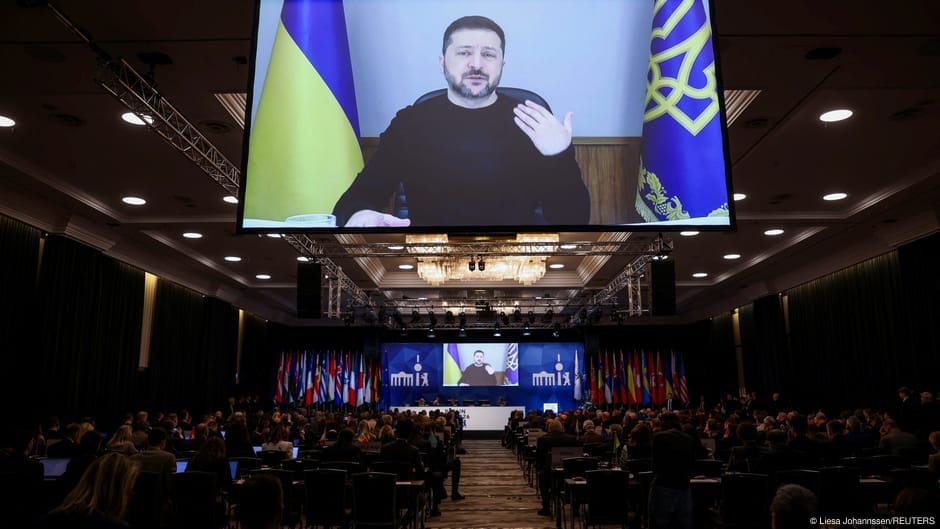
The 72nd NATO Parliamentary Assembly in Berlin produced the alliance's familiar choreography: warm applause for Zelenskyy on video, solemn pledges on air defense, and a polite but firm rejection of Ukraine's membership bid. The pattern has held since the 2008 Bucharest summit, and it held again. NATO Secretary General Mark Rutte stated the obvious — "NATO alone decides who becomes a member" — while confirming the alliance lacks unanimity to admit Ukraine. The door is open; the threshold is locked.
Extraction Map
German Chancellor Friedrich Merz conceded that refusing Ukraine's membership in 2008 "was a mistake," which is the kind of hindsight acknowledgment that costs nothing. What Merz offered instead of membership was a ceasefire-contingent security guarantee framework — NATO-like protection without NATO's Article 5 trigger. This is the emerging European compromise: extend a security umbrella without the legal obligation that makes it credible. The numbers that matter are fiscal. Germany's defense budget has tripled since 2021 to over €139 billion ($151 billion) for the coming year. The Bundeswehr plans to expand to 460,000 personnel by mid-2030s, including 200,000 reservists. NATO members collectively committed to 5% of GDP on defense by 2035, with Rutte pushing them to arrive "sooner." These are real resource commitments that reshape European fiscal politics for a generation. Zelenskyy's ask was direct and hard to argue against on its merits: air defense systems sitting in warehouses should be deployed where they're needed. Patriot batteries and comprehensive anti-air systems are the specific hardware request, timed to winter bombardment cycles. The logic is sound — idle capability during active need is waste by any efficiency measure. The structural tension is between NATO's consensus requirement and the speed of events. Every member has veto power over accession. Countries like Hungary and Turkey have used this leverage on other issues, and the Ukraine question carries existential weight for states bordering Russia. Rutte framed the US peace-talk efforts as a test of whether "Putin is willing to play ball," suggesting membership could become a negotiation chip — which paradoxically makes it less likely to be offered freely. General Carsten Breuer's election as incoming chair of the NATO Military Committee signals Germany's reintegration into alliance leadership after decades of underinvestment. His description of the Bundeswehr's expansion as "walking a tightrope" between growth and readiness is the most honest assessment from any official at the summit — building a military while operating one is the central challenge, and there are no shortcuts. The 20-year trajectory is clear: NATO becomes a more expensive, more militarized alliance with or without Ukraine as a member. The 5% GDP target, if sustained, would make European defense spending rival Cold War levels. The question is whether that spending buys collective security or merely funds a permanent state of armed deterrence against a threat that membership expansion could have addressed a generation ago.
Worth reading?
OPTIONAL
Score
40
/100
Mixed but tilting extractive — massive fiscal commitments are being made, but the core generative act (extending the security architecture to Ukraine) remains blocked by consensus politics, meaning the spending buys deterrence without resolving the underlying vulnerability.
What Is GRIN?
GRIN stands for Generativity, Resilience, Innovation efficiency, and Novelty openness. These four dimensions capture the essential characteristics of any memetic intelligence — whether a nation, a corporation, a religion, or a movement.
About GRINGenerativity
2/5
Resilience
3/5
Efficiency
2/5
Novelty
1/5
Extractive
3/5
Inverted
Does this create new capability or just redistribute existing value?
Defense tripling and 460K troop targets are real capability creation, but deferring Ukraine's membership means the new capacity exists to manage a problem that admission could structurally resolve.
Verified Facts (8)
Germany's defense budget has tripled since 2021
Germany's defense budget has risen to more than €139 billion ($151 billion) in the coming year
NATO members committed to raising defense spending to 5% of GDP by 2035
Bundeswehr expanding to 460,000 soldiers by mid-2030s, of which 200,000 are reservists
Merz called denying Ukraine NATO membership in 2008 at Bucharest 'a mistake'
Rutte: 'NATO alone decides who becomes a member'
Breuer elected as new chair of the NATO Military Committee, moving to Brussels mid-next year
72nd annual NATO Parliamentary Assembly meeting held in Berlin, first time in 26 years
More latest news
Read all