INDIANS RECRUITED
267
CONFIRMED DEAD
51
WHEREABOUTS UNKNOWN
77
AGENT FEES PAID
₹3-5L
Gurpreet Singh Randhawa, a 40-year-old from Punjab, answered a Facebook ad for a driving job at a Russian garment factory. Instead he was sent to fight in Ukraine. After escaping his unit, he surrendered to Ukrainian forces in November and is now held as a prisoner of war. In an interview with Ukrainian YouTuber Volodymyr Zolkin, he described being taken to a military facility, having his passport and phone confiscated, and being compelled to sign a contract. His account has not been independently verified.
Extraction Map
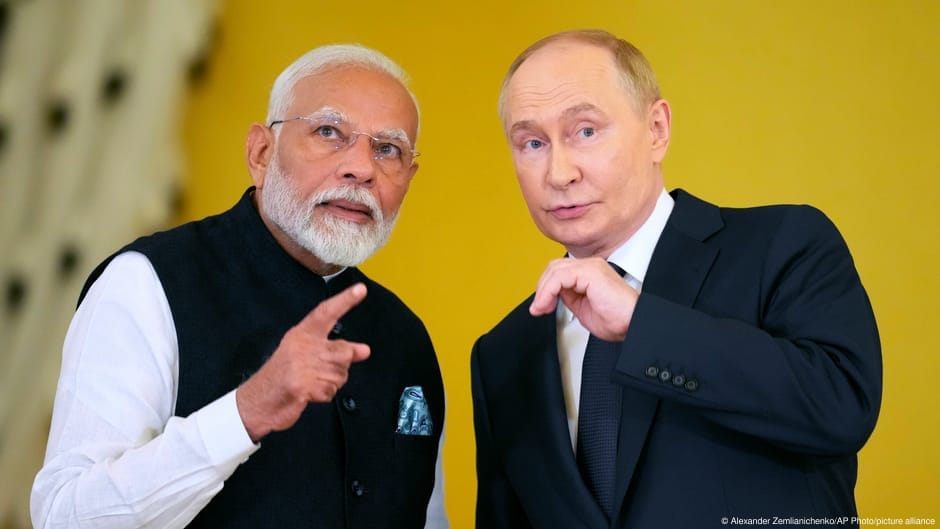
Randhawa is the second Indian national known to have escaped. Sahil Majothi, a 23-year-old from Gujarat, surrendered to Ukrainian forces in October 2025 after joining the Russian military while serving a prison sentence in Russia, reportedly believing military service would secure his release. These are not outliers. India's Ministry of External Affairs told the Supreme Court in October that approximately 267 Indians have joined Russian armed forces since the full-scale invasion began. Of those, 139 were discharged, 51 were killed, and the whereabouts of 77 remain unknown. Russian authorities have confirmed seven of them are missing. The diplomatic track has produced nothing of substance. Prime Minister Narendra Modi raised the issue with Vladimir Putin during his Moscow visit in July 2024. Putin assured him that Indians misled into service would be discharged. The recruitment continued. The MEA has flagged a second category: Indians who knowingly enlist for the financial benefits, believing they can later secure release through government intervention. Some have approached Indian authorities to renounce their citizenship and obtain Russian passports. The ministry has called this "a dangerous path." The recruitment infrastructure feeds on economic desperation and regulatory absence. Former diplomat Anil Trigunayat told DW that Indian workers often pay between 300,000 to 500,000 rupees ($3,500–$5,900) to Indian recruitment agents, and even while working in Russia, more than 30% of their agreed monthly salary is extracted by local and foreign intermediaries. Indians who have overstayed their visas are especially vulnerable—military service is offered as a path to regularize immigration status and earn substantial wages. Mohammad Sufiyan, from Hyderabad, described being lured to Russia under false pretenses and forced into active combat. He has since returned home. Rajan Kumar, a professor at Jawaharlal Nehru University, noted that some Indians don't formally join the army but end up in army regions caught in crossfire. He said India was negotiating with Moscow and that "Russia is very cooperative so far." This is a generous reading. Mohsin Raza Khan of the Jindal School of International Affairs offered a blunter assessment: Putin's need to sustain the war effort takes precedence over India's concerns. The Russian president is reluctant to impose another domestic mobilization for fear of unrest, making foreign recruits a pressure valve. "Neither Modi nor New Delhi has sufficient leverage to change that," Khan said. The structural dynamics are clear: Russia needs bodies and cannot politically conscript more of its own citizens. India has millions of young men without viable employment who will accept extraordinary risk. Intermediary recruitment networks—operating across Facebook ads, local agents in India, and brokers in Russia—profit at every link. India's diplomatic leverage is limited because the relationship with Moscow is too strategically valuable to strain over a few hundred citizens. The pipeline persists because every actor except the recruits themselves benefits from its continuation. Khan's final observation cuts deepest: "For young, educated men without contacts or connections, the chances of respectable employment are so low that the risks of a high casualty war are preferable." That sentence is not about Russia's war. It is about India's labor market. Until that underlying condition changes, diplomatic assurances will remain performative and the recruitment pipeline will find willing entrants.
Worth reading?
SKIP
Score
12
/100
Extractive. Value flows one direction: from desperate Indian workers through layered intermediaries to Russia's military apparatus. No generative capacity is created; human capital is consumed in a foreign war.
What Is GRIN?
GRIN stands for Generativity, Resilience, Innovation efficiency, and Novelty openness. These four dimensions capture the essential characteristics of any memetic intelligence — whether a nation, a corporation, a religion, or a movement.
About GRINGenerativity
0/5
Resilience
1/5
Efficiency
1/5
Novelty
1/5
Extractive
5/5
Inverted
Does this create new capability or just redistribute existing value?
Pure destruction. Indian human capital is consumed on Ukrainian battlefields. No skills, no remittances, no development—51 dead, 77 missing. The pipeline converts economic desperation into cannon fodder.
Verified Facts (7)
Approximately 267 Indians have joined the Russian armed forces since the start of Russia's full-scale invasion of Ukraine (MEA filing before the Supreme Court, October)
Of these, 139 were discharged and 51 were killed; whereabouts of 77 others unknown; Russian authorities confirmed 7 missing
Workers paid between 300,000 to 500,000 Indian rupees ($3,500–$5,900) to Indian recruitment agents
More than 30% of agreed monthly salary taken by local and foreign agents while working in Russia
Prime Minister Modi raised the issue with Putin during his Moscow visit in July 2024
Gurpreet Singh Randhawa, 40, from Jalandhar, Punjab—escaped unit, surrendered November, now POW
Sahil Majothi, 23, from Gujarat—surrendered to Ukrainian forces October 2025
More latest news
Read all