TARGET SATS · 2027
292
STARLINK SATS
10,000+
UA RECAPTURED
400 km²
RU SAT GROWTH SINCE 2022
~4×
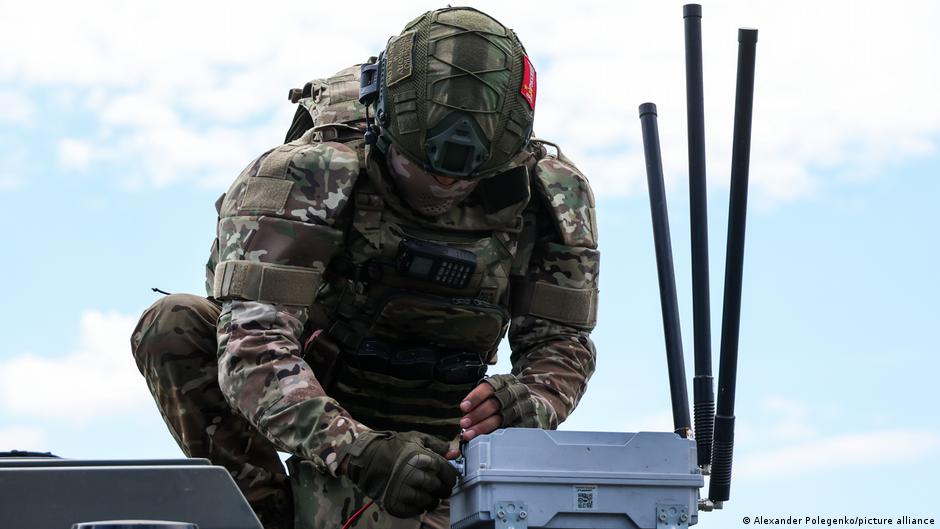
The story of Rassvet is the story of what happens when a wartime dependency gets severed. Russia's military had been using illegally acquired Starlink terminals through third-country intermediaries — running its battlefield communications on the same network as the Ukrainian army it was fighting. When SpaceX and Ukraine's Defense Ministry introduced a whitelist system in early 2026, deactivating unauthorized terminals, Russian forces experienced immediate and serious communication breakdowns along the front. Bloomberg reported Ukraine recaptured roughly 400 square kilometers of territory in the period following the cutoff.
Extraction Map
Bureau 1440's Rassvet system is Russia's attempt to close that gap. Two serial satellite launches occurred in March and July 2026, and by November, Ukraine's military intelligence confirmed Russia had begun using Rassvet for military communications, strike accuracy improvement, reconnaissance drone operations, and electronic warfare resilience. The target is 292 satellites in orbit by end of 2027. That is the military requirement — not the 10,000+ satellites SpaceX has deployed for global civilian coverage. The technical gulf remains staggering. SpaceX manufactures approximately 15,000 ground terminals per day; for Bureau 1440, producing that volume in an entire year would be a remarkable achievement. Rassvet terminals are more expensive and rely on foreign components — a vulnerability under sanctions. Rocket analyst Georgiy Trishkin is blunt: no one can currently match SpaceX's technological edge, especially in production technology. The similarities between the two systems stop at basic features and concept. But the framing of Rassvet as a failed Starlink clone misses the operational logic. Ukrainian military expert Oleh Starikov notes that Elon Musk built a system to cover the world; Bureau 1440 needs to cover the Ukrainian front and Russian territory. The constellation is currently insufficient for uninterrupted coverage of Ukrainian territory, according to Ukraine's military intelligence spokesperson Andriy Yusov, but sufficiency for military purposes is a lower bar than global broadband. The asymmetry this creates is strategically significant. Ukraine cannot use Starlink to control drones over Russian territory because the service does not operate there, as presidential advisor Serhii Beskrestnov has noted. Rassvet potentially gives Russia drone control capability over Ukrainian territory that Ukraine cannot mirror. This is not about internet speed or consumer service quality — it is about operational reach in a specific theater. Meanwhile, the Starlink dependency question cuts both ways. In mid-November, Zelenskyy reported significant disruptions to Starshield operations along the entire Ukrainian front line, with restrictions at speeds above 161 kilometers per hour. Restrictions were first imposed October 14 and lifted October 23, according to Trump. Ukraine's military communications infrastructure remains dependent on a single foreign commercial provider whose service can be throttled or restricted by decisions made in the United States. Russia's broader satellite network has nearly quadrupled since before the full-scale invasion — from 102 satellites on January 1, 2022, to roughly 400 by September 2026. Rassvet is one piece of that expansion. The question is not whether it matches Starlink — it obviously does not and does not need to. The question is whether 292 satellites and a limited number of terminals can provide sufficient battlefield connectivity to restore the operational capability Russia lost when the whitelist went live.
Worth reading?
SKIP
Score
24
/100
Extractive — Rassvet exists solely to restore military capability for prosecuting a war of aggression; any generative spillover to Russian civilian infrastructure is incidental to the weapons-delivery mission.
What Is GRIN?
GRIN stands for Generativity, Resilience, Innovation efficiency, and Novelty openness. These four dimensions capture the essential characteristics of any memetic intelligence — whether a nation, a corporation, a religion, or a movement.
About GRINGenerativity
1/5
Resilience
2/5
Efficiency
1/5
Novelty
1/5
Extractive
4/5
Inverted
Does this create new capability or just redistribute existing value?
Narrow military utility, not broad capability creation. Rassvet builds sovereign comms for one actor's war effort, not an ecosystem. No civilian market, no export potential, no platform effects.
Verified Facts (8)
Two first launches of serial Rassvet satellites took place in March and July 2026
Russia aims to have 292 satellites in orbit by the end of 2027
SpaceX constellation comprises over 10,000 satellites
SpaceX can manufacture about 15,000 terminals per day
Bloomberg reported Ukrainian army recaptured about 400 square kilometers since Russian forces lost Starlink access
Russia's satellite network comprised 102 satellites on January 1, 2022, and has almost quadrupled since
Starlink restrictions first put in place on October 14, lifted October 23 according to Trump
Zelenskyy said Starshield restrictions occurred at speeds of 161 km/h and higher
More latest news
Read all