INCIDENTS · 90 DAYS
3
THANKSGIVING TRAVELERS
80M
KILLED · SEPT OVERRUN
5
RUNWAYS SHUT
3/4
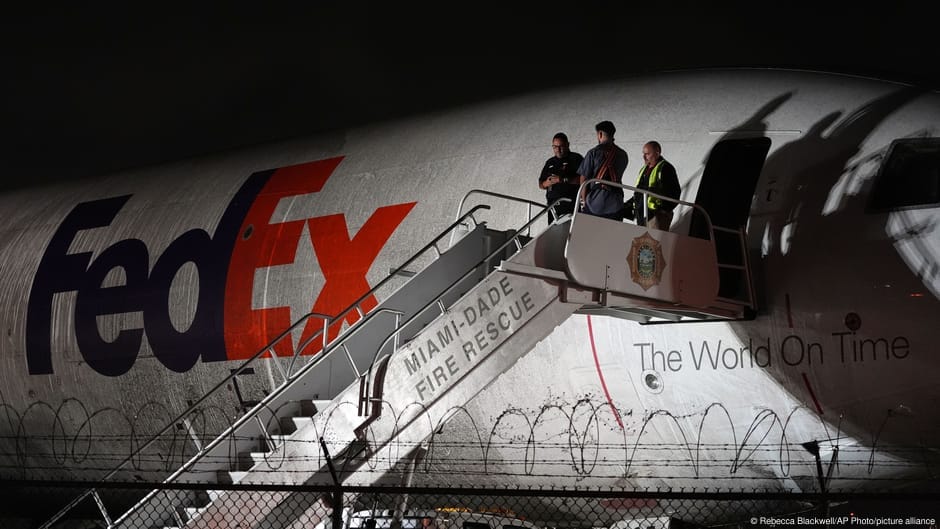
A FedEx cargo plane overran Runway 26R at Miami International Airport at approximately 8:40 pm local time Wednesday, sliding past the runway's end during heavy rain. The aircraft, a McDonnell Douglas MD-11 arriving from Memphis, came to rest near the same runway complex where an Amazon cargo jet overshot a different runway in September, crossed a road, struck a van, and killed five people on the ground. No injuries were reported in Wednesday's incident. The crew walked away.
Extraction Map
The overrun shut all but one of the airport's runways on the eve of Thanksgiving, one of the heaviest travel days of the year, with up to 80 million Americans in transit. By early Thursday the FAA was reporting delays of several hours. A storm expected in the northeastern US threatened further disruption. The airport advised passengers to check with airlines before heading to the terminal — cold comfort for anyone already in the system. This is Miami's third significant runway-area incident since September. Beyond the fatal Amazon overrun and Wednesday's FedEx event, a Copa Airlines plane and a UPS aircraft collided on a taxiway less than two weeks ago. Three of the airport's runways converge at their western end, creating a geometric chokepoint where any overrun puts aircraft in uncomfortably close proximity to roads and other traffic. The FedEx plane came to rest near where the Amazon jet departed the runway surface. The MD-11 itself carries baggage. FedEx only resumed flying the type in May after grounding the fleet following a UPS MD-11 crash in Kentucky last year that killed three pilots and twelve people on the ground. The aircraft is a widebody tri-jet designed in the late 1980s, now operated almost exclusively by cargo carriers. Its return to service was itself a signal of how thin cargo fleet margins have become. The FAA has launched an investigation. The incident lands amid a rough stretch for US aviation infrastructure: a nationwide takeoff halt on November 13 traced to air traffic control communication failures, recurring staffing shortages at key facilities, and aging equipment across the system. Each incident is individually explicable — weather, pilot error, mechanical failure — but the cadence tells a different story. When the same airport complex produces three serious events in under ninety days, the question shifts from "what went wrong this time" to "what structural conditions keep producing these outcomes." Miami International is the busiest airport in Florida and a critical cargo hub. Its runway geometry — three runways meeting at a western convergence point — was designed for a different era of traffic volume and aircraft performance. The repeated incidents at this convergence zone suggest the physical infrastructure is operating near or past its design envelope, particularly in adverse weather. No amount of investigation into individual incidents addresses this. The traveling public bears the cost: delays, cancellations, and the ambient risk of an infrastructure system losing its safety margins. The cargo operators bear regulatory and reputational risk. The FAA bears investigative burden while also managing the air traffic control failures that halted national operations two weeks ago. Nobody is building new runways at Miami. The geometry is fixed. The traffic volume is not.
Worth reading?
SKIP
Score
16
/100
Extractive. The traveling public and ground-level bystanders absorb cascading risk from aging infrastructure, legacy aircraft types, and a regulatory apparatus stretched too thin to enforce systemic fixes. Value flows to cargo throughput; cost flows to everyone else.
What Is GRIN?
GRIN stands for Generativity, Resilience, Innovation efficiency, and Novelty openness. These four dimensions capture the essential characteristics of any memetic intelligence — whether a nation, a corporation, a religion, or a movement.
About GRINGenerativity
0/5
Resilience
1/5
Efficiency
1/5
Novelty
1/5
Extractive
4/5
Inverted
Does this create new capability or just redistribute existing value?
Zero new capability created. Each incident consumes investigative resources and public trust without producing systemic improvement. The same convergence-zone geometry will produce the next event.
Verified Facts (10)
FedEx cargo plane overran Runway 26R at about 8:40 pm local time Wednesday
Aircraft was a McDonnell Douglas MD-11 arriving from Memphis
No injuries were reported
An Amazon cargo jet overshot a different runway in September, crossing a road and hitting a van and killing five people on the ground
A Copa plane and a UPS plane collided on a taxiway less than two weeks ago
FedEx only resumed MD-11 flights in May after a UPS MD-11 crashed in Kentucky last year, killing three pilots and 12 people on the ground
Nationwide halt to takeoffs on November 13 over air traffic control communication problems
Up to 80 million people are traveling for Thanksgiving
FAA was reporting delays of several hours by early Thursday
Three of the airport's runways meet at their western end
More latest news
Read all