STATES · ROLLBACK
4
NO KURDISH GOV · IRAQ
2 YRS
SDF HANDOVER DATE
JAN 18
LASTING GUARANTEES
0
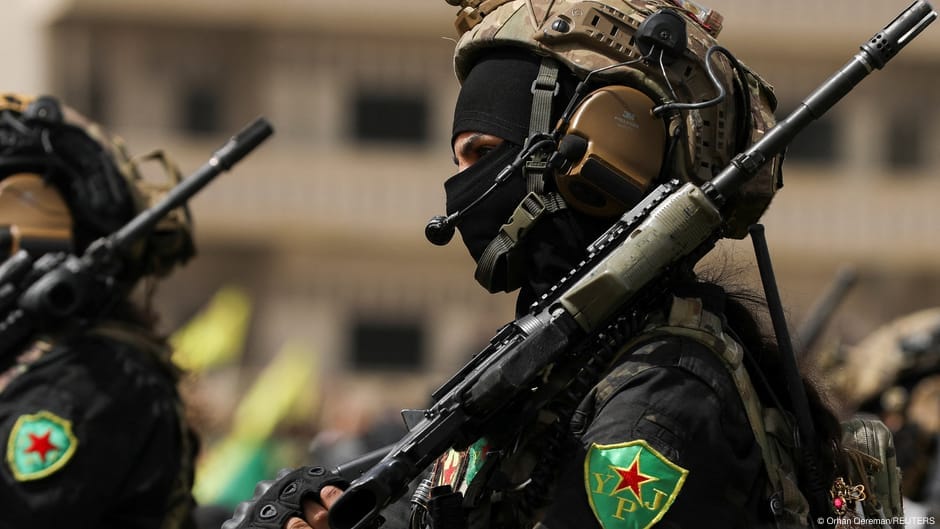
The Kurdish political project is being dismantled simultaneously across four countries, and the mechanisms are different in each case but the outcome is converging. In Syria, the Kurdish-dominated Syrian Democratic Forces signed a January 18 agreement handing over territories and infrastructure to Damascus, formally ending the self-governance experiment that began in 2012. The US, which had backed the SDF as an anti-ISIS partner for years, pivoted to the new central government. As GIGA researcher Dastan Jasim puts it bluntly: western alliances with the Kurds are always alliances of convenience and very rarely have political consequences.
Extraction Map
In Iraq, the constitutionally guaranteed Kurdistan autonomous region is rotting from the inside. Two years after regional elections, there is still no established regional government. The KDP and PUK continue their traditional rivalry, each securing spheres of influence and courting different regional allies rather than building functional shared institutions. A Chatham House analysis from October 2026 warns that the KDP-PUK stalemate threatens to trigger an irreversible decline in the structures that made Kurdish self-governance possible over two decades. Baghdad seized the opening. On November 24, Iraq's central government ordered Kurdish border crossings and several oil fields previously controlled by the Kurds placed under central government control — without prior notice. Kurdistan Regional Government Prime Minister Masrour Barzani called this in no way acceptable, but the leverage has shifted. The US military presence in Iraq has ended, removing the external guarantor that implicitly backed Kurdish autonomy. In Turkey, the PKK announced its dissolution and the end of armed struggle in May 2025, but the peace process focuses almost entirely on disarmament and amnesty. The political causes — Kurdish-language education, constitutional recognition, minority rights — remain unaddressed. Turkish remains the only official language under the constitution. As Chatham House visiting scholar Berfin Coskun writes, the process gained support faster than it could build trust, and without legal guarantees and political reforms, it will not lead to lasting peace. Iran rounds out the picture as the most closed case: some Kurds are suspected of collaborating with foreign powers, and political autonomy is virtually inconceivable under current conditions. Across all four states, the pattern is identical — Kurdish political gains made during periods of instability or external sponsorship are being clawed back as central governments consolidate. The extraction mechanism here is structural, not incidental. Turkey gains the most from the collapse of Kurdish projects in Syria and Iraq, having spent decades preventing the emergence of any Kurdish state. Baghdad recaptures oil revenue and border control. Damascus reasserts territorial sovereignty. The US trades a loyal partner for a simpler bilateral relationship with central governments. The costs — borne by an entire generation socialized under self-governance, by communities that built education systems and women's organizations from scratch — are diffuse and uncounted. Vienna-based political scientist Thomas Schmidinger offers the slimmest thread of continuity: knowledge built in education, women's organizations, and local governance structures during the autonomy period could remain relevant at the grassroots level. But the institutional vessels that held that knowledge — the armed forces, the borders, the governing bodies — are gone or going. What remains is experience without power, which is the definition of a political defeat.
Worth reading?
SKIP
Score
20
/100
Extractive — multiple state actors are recapturing sovereignty, oil revenue, and border control from Kurdish populations, while the political, educational, and institutional capital built during autonomy periods is being destroyed without compensation or incorporation.
What Is GRIN?
GRIN stands for Generativity, Resilience, Innovation efficiency, and Novelty openness. These four dimensions capture the essential characteristics of any memetic intelligence — whether a nation, a corporation, a religion, or a movement.
About GRINGenerativity
1/5
Resilience
1/5
Efficiency
1/5
Novelty
1/5
Extractive
4/5
Inverted
Does this create new capability or just redistribute existing value?
Net destruction. A decade of institution-building — schools, courts, women's organizations, local governance — is being dismantled across Syria and eroded in Iraq. No new capability replaces it.
Verified Facts (8)
An agreement dated January 18 stipulated that the Kurdish-dominated Syrian Democratic Forces (SDF) would hand over territories and key infrastructure to the central government
The PKK had already announced its dissolution and the end of armed struggle in May 2025
Two years after regional elections, there is still no established regional government in Iraqi Kurdistan
On Tuesday, November 24, Iraq's central government ordered the border crossings of the Kurdish autonomous region, as well as several oil fields previously controlled by the Kurds, to be placed under central government control without prior notice
According to an October 2026 analysis by the British think tank Chatham House, the ongoing stalemate between the KDP and the PUK threatens to trigger an irreversible decline in the very structures that have made Kurdish self-governance possible over the past two decades
Dastan Jasim of the German Institute for Global and Area Studies (GIGA): 'The bitter truth is that western alliances with the Kurds are always alliances of convenience and very rarely have political consequences'
Kurdistan Regional Government Prime Minister Masrour Barzani called the Baghdad decree 'in no way acceptable'
Political scientist Berfin Coskun, visiting scholar at Chatham House, writes that the process gained support faster than it could build trust
More latest news
Read all