DRUG WAR DEAD
6,252–30,000
EXIT APPROVAL
88%
TRIAL × ELECTION
2028
ICC CHARGES
3
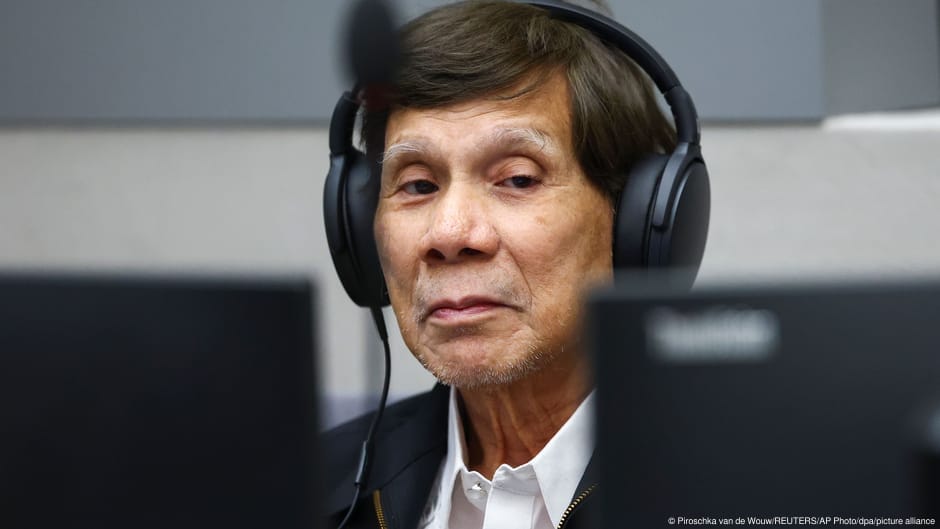
Rodrigo Duterte, 81, will stand trial at the International Criminal Court on November 30, facing three counts of crimes against humanity — murder and attempted murder — linked to the anti-narcotics campaign that defined his presidency. Philippine authorities officially recorded 6,252 deaths during anti-drug operations; human rights organizations estimate the true toll at 12,000 to 30,000. The ICC confirmed charges in April 2025 after Duterte was arrested in March, acting on a warrant issued four days prior.
Extraction Map
The drug war was not a policy aberration — it was a governing strategy. As political scientist David Johnson of the University of Hawaii put it, the campaign was 'a way of governing through killing,' sustained by systemic impunity and 'deep failures of democracy.' Duterte pioneered the model as mayor of Davao City over two decades, then extended it nationally upon winning the presidency in 2016. Targets were overwhelmingly drawn from impoverished urban communities. What makes this trial politically volatile is that Duterte left office in 2022 with an 88% satisfaction rating. His daughter Sara was overwhelmingly elected vice president that same year. As researcher Cleve Arguelles told DW: 'The Dutertes remain popular not in spite of the drug war but because of it.' The family's political capital is built directly on the conduct now under prosecution. Duterte's arrest only became possible because the alliance between the Marcos and Duterte dynasties collapsed. President Ferdinand Marcos Jr. — whose father ruled as dictator until the 1986 People Power Revolution — initially refused ICC cooperation. The break came spectacularly in November 2024 when Sara Duterte claimed she had arranged for Marcos to be assassinated in the event of her own killing, triggering impeachment proceedings against her. The trial timeline creates a direct collision with Philippine electoral politics. Proceedings are expected to run until 2028 — the year of the next presidential election. Sara Duterte remains a frontrunner despite impeachment over allegations of unexplained wealth, and her ratings rebounded after her father's detention. Her brother Sebastian, mayor of Davao City, has emerged as an alternative candidate. Duterte-aligned senators implicated in the ICC investigation could also face arrest and transfer to The Hague. The Duterte family's strategy is transparent: frame the ICC proceedings as foreign interference and political persecution to preserve their base. As legal scholar Jayson Lamchek noted, this narrative is designed to convert a criminal trial into a sovereignty grievance. For voters who experienced the drug war as effective governance, the framing has traction. For the families of the dead, the trial represents the first credible accountability mechanism after years of domestic impunity. The case tests whether the ICC can function as a backstop when domestic institutions fail. Duterte withdrew the Philippines from the Rome Statute in 2018 specifically to block the investigation. The court proceeded anyway, asserting jurisdiction over crimes committed while the Philippines was a member. If the trial produces a conviction, it will be among the most significant the ICC has delivered against a former head of state. If it becomes a vehicle for Duterte political martyrdom, it will demonstrate precisely the limits critics have long identified.
Worth reading?
SKIP
Score
24
/100
Extractive. The Duterte drug war concentrated lethal state power against the poorest communities while generating political capital for a single dynasty; the ICC trial now risks becoming another extraction vehicle — converting accountability proceedings into electoral fuel for the same family.
What Is GRIN?
GRIN stands for Generativity, Resilience, Innovation efficiency, and Novelty openness. These four dimensions capture the essential characteristics of any memetic intelligence — whether a nation, a corporation, a religion, or a movement.
About GRINGenerativity
1/5
Resilience
1/5
Efficiency
1/5
Novelty
3/5
Extractive
5/5
Inverted
Does this create new capability or just redistribute existing value?
Near-zero generativity. The drug war destroyed lives without reducing crime; the trial may produce accountability but generates no new institutional capacity in the Philippines itself.
Verified Facts (11)
Philippine authorities officially recorded 6,252 deaths during anti-drug operations
Human rights organizations estimate the actual death toll at between 12,000 and 30,000
88% of Filipinos were satisfied with his performance (Social Weather Stations survey)
ICC opened a preliminary examination into the drug war in 2018
Duterte withdrew the Philippines from the court's founding treaty
A formal investigation began in September 2021
Philippine authorities arrested Rodrigo Duterte in March 2025, acting on an ICC arrest warrant issued four days earlier
In April this year, ICC judges confirmed three charges of crimes against humanity involving murder and attempted murder
Sara Duterte claimed she had arranged for Marcos to be assassinated in the event of her own killing (November 2024)
Trial will begin with opening statements on November 30
The process is expected to be extensive, potentially running until 2028
More latest news
Read all