WANT RADICAL CHANGE
60%
LEIPZIG STUDY SPAN
24yr
DATA COLLECTION START
2002
KRISENMODUS · WORD OF YR
2023
The concept of "polycrisis" — simultaneous, boundary-less crises reinforcing each other — has moved from academic jargon to lived reality across democracies. The Leipzig Authoritarianism Study 2026, which has tracked German political attitudes biannually since 2002, now documents the downstream consequences: 60% of respondents agree that "something radical is needed to change the current state of affairs." This is not a protest vote. It is a structural shift in what populations will tolerate.
Extraction Map
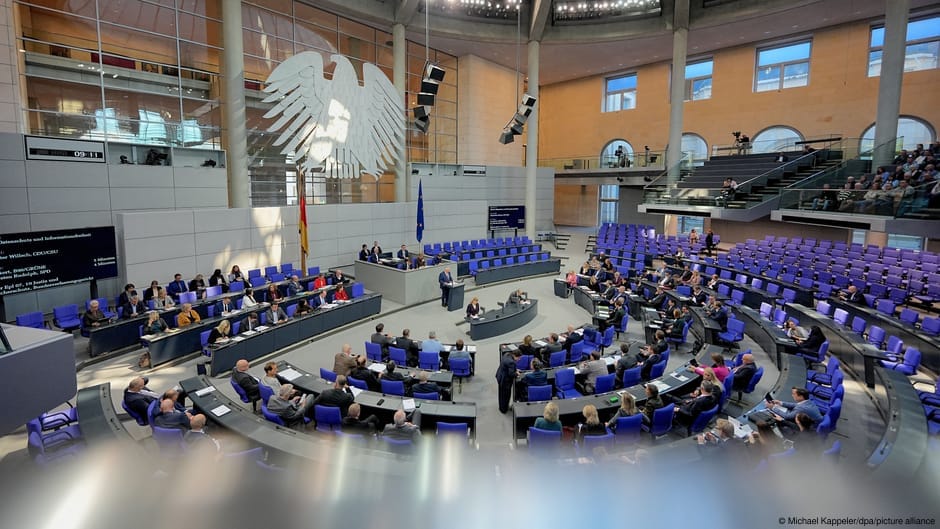
The study's most important finding is a causal distinction that policymakers are largely ignoring. Crises do not directly produce a desire for destruction. Instead, they increase society's propensity toward authoritarian attitudes, which then trigger destructive impulses. The chain is: crisis → authoritarian disposition → appetite for demolition. This indirect pathway matters because it means crisis management alone is insufficient — the authoritarian intermediary must be addressed directly. The political entrepreneurs exploiting this pathway are identifiable and named. In Germany, the AfD's Alice Weidel warns of "mass migration overwhelming our social systems" while Björn Höcke declares Germany "a country teetering on the brink." In Argentina, Javier Milei wields a literal chainsaw. In the US, Donald Trump told voters in 2024 that losing the election meant losing the country. Sociologist Ulrich Bröckling calls this the "politics of the apocalypse" — the deliberate construction of existential urgency to justify institutional demolition. The Leipzig study identifies the specific mechanism the far right exploits: the broken promise of economic prosperity. When growth, productivity, and market economics fail to deliver material improvement, the credibility gap becomes raw material. The AfD simultaneously renews the growth promise through neoliberal policy while legitimizing authoritarian aggression by dividing society into "good" and "evil." The apocalyptic frame makes destruction feel rational — the old must die so the new can begin. What makes this dynamic self-reinforcing is that rising living costs, skyrocketing rents, education cuts, employment uncertainty, and AI disruption are not imaginary grievances. They are real. The study's authors are explicit that their aim is not to defend the status quo uncritically. Democracy itself remains work in progress, with fundamental rights to equal treatment still unevenly implemented. The challenge is that legitimate grievances are being channeled through authoritarian structures rather than democratic ones. The study offers a specific prescription: democratic movements must create space to acknowledge that change entails real costs and losses. The researchers argue for a political culture where loss can be mourned and processed constructively, rather than weaponized. This is not therapy-speak — it is a structural argument that suppressing legitimate economic pain creates the vacuum that authoritarian movements fill. Germany's selection of "Krisenmodus" (crisis mode) as 2023's word of the year captures the ambient condition. The Association for the German Language noted that feelings of uncertainty, fear, anger, helplessness, and powerlessness shape daily life. The question is whether democratic institutions can metabolize these emotions faster than authoritarian entrepreneurs can harvest them. The Leipzig data, tracking 24 years of attitude shifts, suggests the race is tightening.
Worth reading?
SKIP
Score
24
/100
Extractive — the crisis-to-authoritarianism pipeline concentrates political power in demolition-oriented actors while distributing economic costs and institutional decay across entire populations.
What Is GRIN?
GRIN stands for Generativity, Resilience, Innovation efficiency, and Novelty openness. These four dimensions capture the essential characteristics of any memetic intelligence — whether a nation, a corporation, a religion, or a movement.
About GRINGenerativity
1/5
Resilience
1/5
Efficiency
2/5
Novelty
1/5
Extractive
4/5
Inverted
Does this create new capability or just redistribute existing value?
Net negative. The appetite for institutional demolition destroys governance capacity without building replacements. Milei's chainsaw and Musk's DOGE cut functions, not fat.
Verified Facts (8)
60% of respondents explicitly or implicitly agreed with the statement: 'Something radical is needed to change the current state of affairs.'
The Leipzig Authoritarianism Study 2026 has been collecting extensive data every two years since 2002
Krisenmodus ('crisis mode') was voted 'word of the year' by the Association for the German Language (GfdS) in 2023
Alice Weidel speech before parliament: 'Mass migration from all over the world is overwhelming our social systems and driving the costs of our crumbling domestic peace to unmanageable heights'
Björn Höcke at a public forum in Breitungen: 'Our Germany is a country teetering on the brink'
Donald Trump 2024: 'If we lose this election, we may no longer have a country'
Sociologist Ulrich Bröckling calls this the 'politics of the apocalypse'
The study found crises are not the direct cause of destructive desire; rather, they increase authoritarian attitudes which in turn trigger destructiveness
More latest news
Read all