BILL 21 PASSED
2019
RULING SCOPE · UPHELD
6-1
CAQ IN POWER
2018–2026
EXCEPTION · LEGISLATORS
1
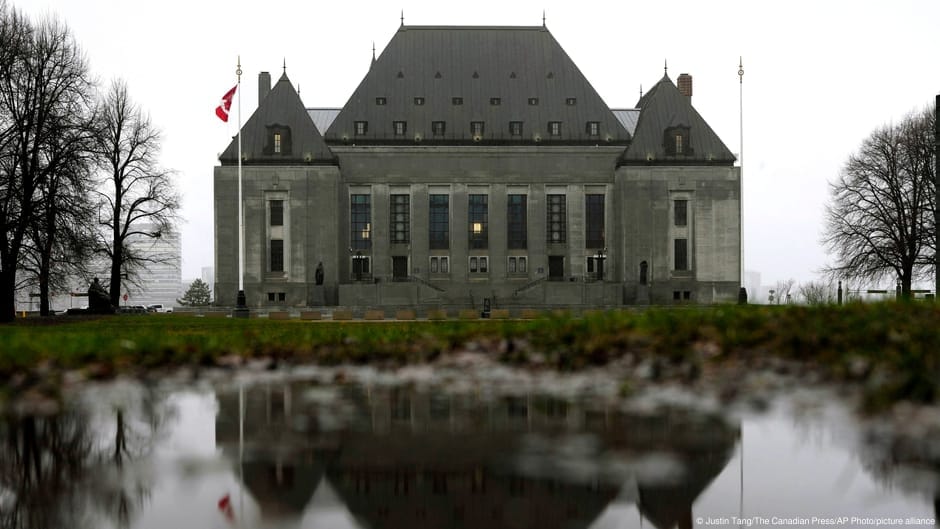
Canada's Supreme Court has largely upheld Quebec's Bill 21, the 2019 law barring public servants — teachers, police officers, judges — from wearing visible religious symbols including hijabs, turbans, and yarmulkes. Chief Justice Richard Wagner framed the law as "rooted in Quebec's legitimate and historical commitment to ensuring the secularism of the state in a free and democratic society." The sole exception carved out: provincial legislators in Quebec's National Assembly retain the right to wear religious symbols.
Extraction Map
The ruling is less about headscarves than about constitutional architecture. Quebec invoked the "notwithstanding clause" when passing Bill 21, a rarely used provision that lets provinces override federal charter protections for renewable five-year periods. The Supreme Court's decision to largely validate this use sets a precedent that other provinces will study carefully. The notwithstanding clause was designed as a pressure valve; it now has the Court's blessing as a load-bearing wall. The political context matters. The Coalition Avenir Québec (CAQ), the right-wing nationalist party that passed Bill 21, governed Quebec from 2018 to 2026 before losing power to the pro-independence, center-left Parti Québécois (PQ), which also supports the law. Interim CAQ leader Mathieu Lévesque called the ruling "a victory for the Quebec nation." Cross-partisan support within Quebec makes repeal unlikely regardless of which party holds power. Critics are unambiguous about who bears the cost. Stephen Brown, CEO of the National Council of Canadian Muslims, called the decision "an unrestricted license for every government in this country to pass legislation taking away the fundamental freedoms and the legal rights of every Canadian." He noted the law forced many Muslim women out of teaching positions or even prevented them from volunteering in schools. Emmett Macfarlane, head of political science at the University of Waterloo, described the law as "Islamophobia as a state policy." The distributional reality is stark. The law is facially neutral — it covers yarmulkes and crosses alongside hijabs — but its practical burden falls overwhelmingly on visibly observant Muslim women and Sikh men, groups for whom religious covering is non-negotiable in ways that a concealed cross is not. The gap between formal neutrality and practical impact is where the extraction lives. The twenty-year question is whether this ruling normalizes notwithstanding-clause use across Canada. If other provinces begin routinely overriding charter rights for popular legislation — on speech, assembly, or other freedoms — the Canadian Charter of Rights and Freedoms becomes advisory rather than binding. Quebec has demonstrated the playbook; the Court has validated the mechanism. The immediate fallout is human-scale: a category of public-sector workers in Quebec must choose between religious observance and their careers, with no legal recourse remaining. The systemic fallout is constitutional: Canada's rights framework now has a court-endorsed bypass that any province can invoke, provided it has the political will to absorb the criticism.
Worth reading?
SKIP
Score
24
/100
Extractive. The ruling concentrates cultural and political power with the provincial majority while extracting employment access, civic participation, and constitutional protection from religious minorities — particularly Muslim women and Sikh men.
What Is GRIN?
GRIN stands for Generativity, Resilience, Innovation efficiency, and Novelty openness. These four dimensions capture the essential characteristics of any memetic intelligence — whether a nation, a corporation, a religion, or a movement.
About GRINGenerativity
1/5
Resilience
1/5
Efficiency
2/5
Novelty
1/5
Extractive
4/5
Inverted
Does this create new capability or just redistribute existing value?
Destroys capability for religious minorities in public service. No new productive capacity created — just a narrower labor pool and reduced civic participation for targeted groups.
Verified Facts (8)
Chief Justice Richard Wagner said that the law 'is rooted in Quebec's legitimate and historical commitment to ensuring the (secularism) of the state in a free and democratic society.'
Mathieu Levesque, the interim CAQ leader, called it 'a victory for the Quebec nation'
CAQ ruled Quebec in two parliamentary terms from 2018 to 2026
Pro-independence center-left Parti Quebecois (PQ) formed government after CAQ failed to enter parliament
Stephen Brown, CEO of the National Council of Canadian Muslims: 'This decision is an unrestricted license for every government in this country to pass legislation taking away the fundamental freedoms and the legal rights of every Canadian'
Emmett Macfarlane, head of political science at the University of Waterloo, described the law as 'Islamophobia as a state policy'
The law bans hijabs, turbans, and yarmulkes for public servants including teachers and police officers
The Court ruled provincial lawmakers should be allowed to wear religious symbols in the National Assembly
More latest news
Read all