DEMOCRACY SATISFIED
33%
EAST GERMANY SAT.
22.8%
CYBERCRIME SOLVED
<5%
FEMALE SOLDIERS HARASSED
38%
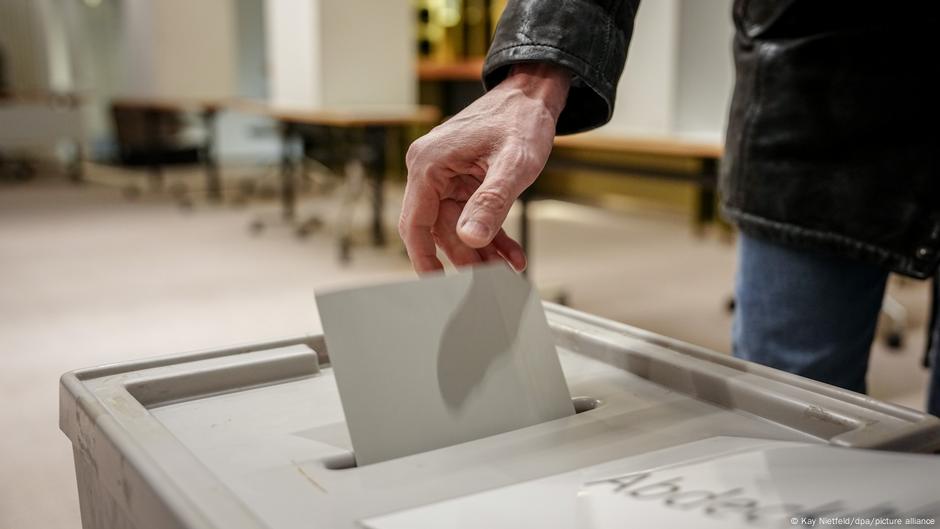
Germany is running a stress test on its own institutions, and the results are coming back ugly. The Leipzig Authoritarianism Study finds democratic satisfaction at 33%, down sharply from 42.3% in 2024 and the lowest point in the study's 24-year history. In the former East German states, the figure is a bleak 22.8%. The saving grace — 89.3% still endorse democracy as a concept — slipped below 90% for the first time, suggesting the gap between abstract approval and lived experience is widening into a chasm.
Extraction Map
The authoritarian undercurrents are not subtle. Nearly 35% of respondents manifestly agreed that Germany is being "dangerously overrun by foreigners," with another 24.4% in latent agreement — meaning roughly six in ten Germans hold some degree of xenophobic sentiment. Antisemitic attitudes are entrenched: 15.5% manifestly agreed that Jewish influence in Germany is "still too great," with another 21.7% latently agreeing. These numbers are not fringe; they describe a structural feature of German public opinion. Meanwhile, the governing CDU/CSU-SPD coalition is visibly struggling with fiscal coherence. A promised electricity tax cut backed by Chancellor Friedrich Merz — requiring €5.4 billion — remains unfunded as the 2027 budget nears its final vote. A sugar tax has been delayed six months. Some planned social benefit cuts were dropped, including a supplement for children in low-income families. The pattern is a coalition that can agree on what not to do but cannot agree on how to pay for what it wants. On security, the picture is one of accelerating threat and sluggish response. BKA President Holger Münch reported crimes directed from abroad rose 24% in the first half of 2026, with fewer than 5% solved. He warned that AI is enabling criminals to identify targets autonomously, and that the boundary between organized crime and state actors is dissolving. Interior Minister Alexander Dobrindt announced Germany is preparing legislation to "strike back in cyberspace," citing recent attacks on supermarket refrigeration systems attributed to Iran's Revolutionary Guards. The Bundeswehr is confronting its own internal rot. A first-of-its-kind survey revealed 38% of female soldiers experienced sexualized verbal harassment in the past year. Seven percent had photos taken without consent or AI-edited. Between 36% and 61% of victims did not report incidents, citing fear of consequences or disbelief that reporting would matter. Defense Minister Boris Pistorius declared a "zero tolerance" policy — the same week the military banned Chinese-made drones and the government pursues an expansion from 186,200 to 260,000 active personnel. Attracting recruits into an institution with documented harassment problems is a contradiction the ministry has not resolved. The German Council of Economic Experts added external pressure, warning that US tariff uncertainty will intensify after the Republican midterm defeat. Gabriel Felbermayr noted that deadlines on China trade measures expire early 2027, and the German export sector — which had briefly benefited from the AI boom — faces a potential cooling. Germany's economic model depends on export access; protectionist escalation strikes at the core of its growth engine. Taken together, the picture is of a wealthy, capable state whose institutional legitimacy is eroding faster than its institutions can adapt. Democratic satisfaction is falling, authoritarian attitudes are rising, fiscal policy is gridlocked, the military cannot protect its own soldiers, cybercrime clearance rates are below 5%, and the export model faces external shocks. None of these crises is existential alone. The question is whether they compound.
Worth reading?
SKIP
Score
32
/100
Extractive — institutional trust, social cohesion, and fiscal capacity are all being drawn down without commensurate investment in the generative foundations (security, democratic legitimacy, military readiness) that would rebuild them.
What Is GRIN?
GRIN stands for Generativity, Resilience, Innovation efficiency, and Novelty openness. These four dimensions capture the essential characteristics of any memetic intelligence — whether a nation, a corporation, a religion, or a movement.
About GRINGenerativity
1/5
Resilience
1/5
Efficiency
2/5
Novelty
2/5
Extractive
3/5
Inverted
Does this create new capability or just redistribute existing value?
No new capability being created. Budget delays defer taxes, drop benefit cuts, and leave the €5.4B electricity tax gap unfunded. This is political consumption, not investment.
Verified Facts (14)
Just a third of respondents said they were satisfied with the state of democracy — the lowest point since the study began in 2002
42.3% level of satisfaction measured in the last study in 2024
In the former East German states only 22.8% expressed satisfaction, down from 29.7%
89.3% of respondents said they agreed with the concept of democracy — first time below 90%
34.9% manifestly agreed Germany is being 'dangerously overrun by foreigners,' with 24.4% in latent agreement
15.5% manifestly agreed 'the influence of Jews in Germany is still too great,' with 21.7% latently agreeing
2,500 people surveyed between mid-March and the beginning of June
Crimes directed from abroad rose by nearly 24% in the first half of the year; fewer than 5% of such cases were solved
38% of female soldiers had been subject to sexualized verbal harassment in the past 12 months
7% of female soldiers said pictures had been taken without consent or edited with AI
Between 36% and 61% said they had not reported incidents
The roughly €5.4 billion ($6 billion) needed to lower the electricity tax to the EU minimum for everyone
Bundeswehr's 186,200 total military personnel; government seeking to boost to 260,000
Survey based on 8,000 filled out questionnaires, representing 4% of the Bundeswehr
More latest news
Read all