DEEP TECH · 2026
€8.1B
YOY STARTUP SURGE
2.8×
AFRICA TRADE SHARE
~2%
AFRICA EXPORT GROWTH
6%
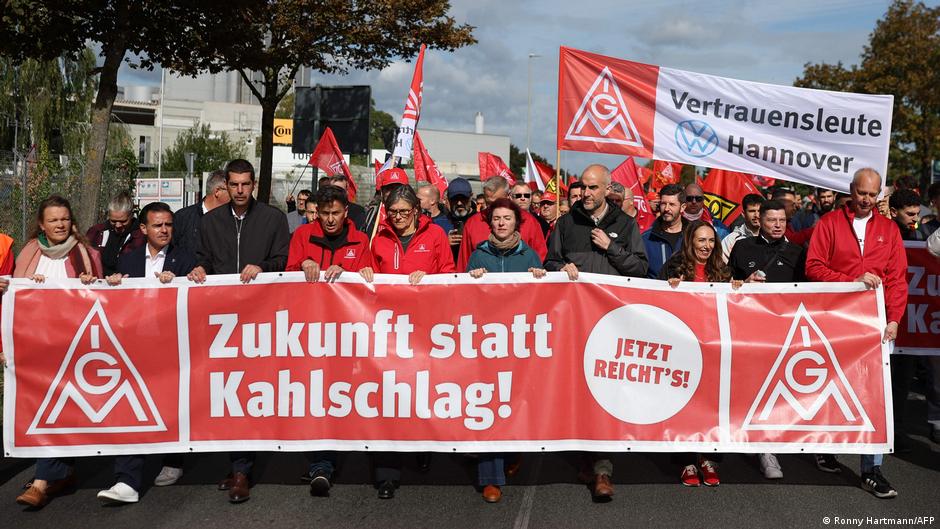
Germany's metalworkers have launched strikes as pay negotiations intensify, adding labor friction to an economy already navigating multiple structural transitions. The industrial action lands at a moment when the country is pouring capital into deep tech — startup investments in AI, humanoid robotics, and defense technology are projected to surge from €2.9 billion last year to €8.1 billion in 2026, nearly tripling in a single year. Firms like Neura Robotics, Helsing, and Quantum Systems are driving the boom, with the German Start-up Association calling it a "major success for Germany as a business location."
Extraction Map
Federal President Steinmeier, on what may be his final Africa tour, is in Abidjan pushing German businesses to invest more aggressively on the continent. The pitch is straightforward: Africa's share of German foreign trade sits at just under 2% (roughly €30 billion), but exports are growing at 6% annually. With Berlin explicitly seeking to reduce dependence on China, the Ivory Coast's 6% GDP growth and relative political stability make it a target. The sixth German-African Economic Summit in Accra expects over 600 business representatives. Environment Minister Carsten Schneider offered a blunt post-mortem on COP31's failure in Antalya, blaming the conference format more than the outcome. His framing was notably economic rather than moral: Germany pivots away from fossil fuels not primarily for climate reasons but because dependence on oil and gas makes the economy "vulnerable to blackmail" and "extremely volatile." He acknowledged that consensus was nearly impossible with Russia and Saudi Arabia at the table, and called for smaller, decision-maker-only negotiations. Chancellor Friedrich Merz, meeting NATO Secretary General Mark Rutte in Berlin, made two significant statements. First, he declared that blocking Ukraine's NATO membership at the 2008 Bucharest summit was a mistake — "If it had become a member of NATO, this war could probably have been prevented." Second, he called on Russia to end "dangerous provocations" after two Russian missiles and a drone crashed in Polish territory, pledging full NATO solidarity with Warsaw. Defense Minister Boris Pistorius urged public calm over reports that Russia may launch a nuclear-armed satellite called Sputnik-S as early as December, potentially violating the 1967 Outer Space Treaty. He confirmed internal consultations and "necessary measures" but cautioned against speculation before the weapon type and deployment location are confirmed. The through-line across all five stories is a Germany actively restructuring its economic dependencies, security posture, and energy model simultaneously. The deep tech investment surge, the Africa trade push, the fossil fuel pivot, the NATO hardening, and even the metalworker strikes are all expressions of a country that recognizes its post-Cold War economic model — cheap Russian energy, Chinese export markets, American security guarantees, labor peace through generous settlements — is no longer viable. The question is whether Germany can execute all these transitions at once without the labor unrest, fiscal strain, and geopolitical exposure compounding into something less manageable.
Worth reading?
RECOMMENDED
Score
60
/100
Mixed generative — the deep tech surge and Africa diversification create new capacity, but metalworker strikes signal distributional friction, and NATO posturing is defensive rather than value-creating.
What Is GRIN?
GRIN stands for Generativity, Resilience, Innovation efficiency, and Novelty openness. These four dimensions capture the essential characteristics of any memetic intelligence — whether a nation, a corporation, a religion, or a movement.
About GRINGenerativity
4/5
Resilience
3/5
Efficiency
2/5
Novelty
3/5
Extractive
2/5
Inverted
Does this create new capability or just redistribute existing value?
Deep tech tripling (€2.9B→€8.1B) and Africa trade diversification are genuinely generative. But the metalworker strikes suggest productivity gains aren't flowing to labor, limiting broad-based value creation.
Verified Facts (13)
Deep tech startup investments projected to surge from €2.9 billion last year to €8.1 billion this year
Africa's share of German foreign trade currently stands at just under 2%, or around €30 billion
German exports to Africa are rising by at least 6% annually
Ivory Coast economy growing by about six percent annually
More than 600 business representatives expected at sixth German-African Economic Summit in Accra
Merz: 'If it had become a member of NATO, this war could probably have been prevented'
Two Russian missiles and a jet-powered drone crashed in Poland on Friday
Russia may be planning to launch Sputnik-S nuclear-armed satellite as early as December
Nuclear weapons banned in orbit by the 1967 Outer Space Treaty
Schneider: Germany's economic performance 'becomes extremely volatile' with oil and gas dependence
Neura Robotics, Helsing, and Quantum Systems named as drivers of investment boom
About 300 new deep tech startups mentioned in the study
Steinmeier has visited 31 African countries during his political career, 12 trips as president
More latest news
Read all