MISSILES ON NATO SOIL
3
COUNTRIES VIOLATED
6+
SPACE TREATY AT RISK
1967
NATO MEMBERS CONVENED
32
Three Russian CH-101 cruise missiles manufactured in Dubna this year crashed in southeastern Poland on Friday during a large-scale Russian strike on Ukraine, the most direct physical violation of NATO territory in the war's four-year history. The incident coincided with European military drills in Poland, a timing overlap Polish Prime Minister Donald Tusk called an "intentional provocation." Polish state prosecutors confirmed the missile identification from recovered debris. Warsaw is summoning the Russian ambassador.
Extraction Map
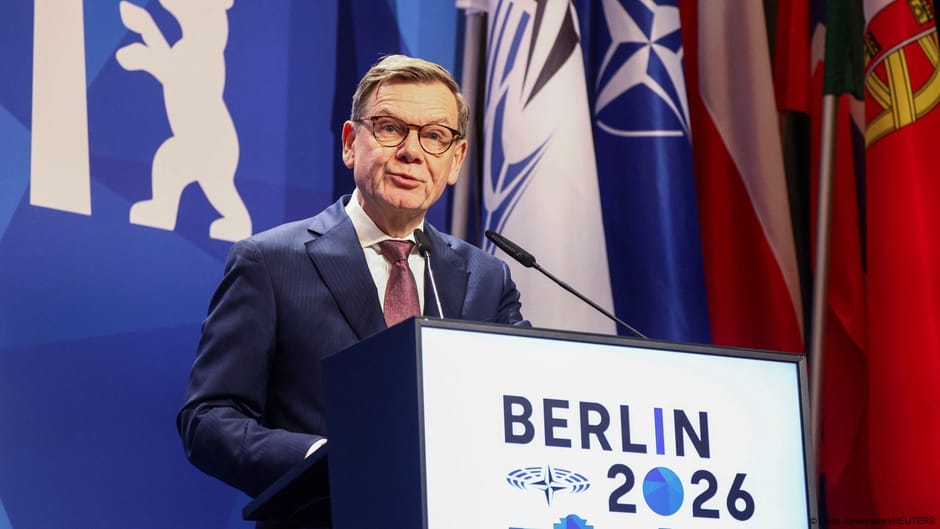
NATO Secretary-General Mark Rutte, addressing the 72nd NATO Parliamentary Assembly in Berlin on Monday, refused to characterize the violation as intentional before Polish and allied investigations conclude. "I will never speculate," he said — a carefully calibrated non-answer that buys time while keeping escalation options open. German Foreign Minister Johann Wadephul was less ambiguous: "We will defend every centimeter of NATO territory. Don't be deceived: we may be a defensive alliance but we are prepared to defend our countries and our alliance." The airspace violations extend well beyond Poland. Romania, Lithuania, Latvia, Estonia, Finland, and Moldova have all reported Russian incursions. Finland detected a manned Russian military helicopter near Loviisa on Saturday. The pattern is no longer occasional drift from Ukrainian strikes; it is a persistent probing of NATO's detection, response, and political-will thresholds across the alliance's entire eastern flank. Ukrainian President Volodymyr Zelenskyy, addressing the assembly by video link, called for four-party talks — Ukraine, Europe, America, and Russia — "as soon as possible," saying partners have signaled a target before Christmas. "We are ready to do this literally tomorrow." The juxtaposition is sharp: Zelenskyy pushing for negotiation while Russian missiles are physically landing on allied territory. The most consequential development may be the intelligence reports, sourced to NDR, WDR, and Süddeutsche Zeitung, that Western military intelligence believes Russia is planning to station a nuclear weapon in space by year's end. A satellite codenamed "Sputnik-S" has reportedly been stored near Moscow for several years, and NATO member states have shared the intelligence. A Bundeswehr spokesman acknowledged Russian capability and warned a nuclear detonation in space would devastate global satellite communications — "effectively back to the stone age." This would breach the 1967 Outer Space Treaty, which Russia reaffirmed at the UN General Assembly in December 2024. The space dimension complicates the escalation calculus enormously. The US admitted in September 2025 to positioning offensive non-nuclear weapons in orbit, meaning both sides are now militarizing a domain that was theoretically treaty-protected. A Russian nuclear weapon in orbit is not primarily a strike weapon — it is a hostage mechanism targeting the global communications and navigation infrastructure that underpins civilian and military operations worldwide. The NATO Parliamentary Assembly in Berlin is thus meeting under conditions no post-Cold War assembly has faced: physical missile impacts on member territory, persistent airspace violations across six countries, an active request for four-party negotiations, and credible intelligence of imminent nuclear weaponization of space. The gap between diplomatic language and physical facts is narrowing fast.
Worth reading?
SKIP
Score
28
/100
Extractive — Russia is extracting security margin from NATO's eastern flank, testing response thresholds, and threatening global commons (space infrastructure) as leverage, while no generative diplomatic or institutional capacity is being created.
What Is GRIN?
GRIN stands for Generativity, Resilience, Innovation efficiency, and Novelty openness. These four dimensions capture the essential characteristics of any memetic intelligence — whether a nation, a corporation, a religion, or a movement.
About GRINGenerativity
1/5
Resilience
2/5
Efficiency
1/5
Novelty
2/5
Extractive
4/5
Inverted
Does this create new capability or just redistribute existing value?
Zero new capability created. Each escalation step — missiles on NATO soil, space nuclearization — destroys trust, diplomatic capital, and treaty regimes without replacing them with functional alternatives.
Verified Facts (12)
Three Russian CH-101 cruise missiles crashed in southeastern Poland on Friday
Missiles believed manufactured in Q4 of this year at an arms factory in Dubna, approximately 140km north of Moscow
NATO Secretary-General Mark Rutte said: 'I will never speculate'
German Foreign Minister Johann Wadephul said: 'We will defend every centimeter of NATO territory'
Zelenskyy called for four-party negotiations: Ukraine, Europe, America, and Russia
Finland reported a suspected airspace violation by a manned Russian military helicopter near Loviisa on Saturday
Airspace violations reported in Romania, Lithuania, Latvia, Estonia, Finland, and Moldova
Intelligence reports cite a satellite codenamed 'Sputnik-S' stored in the Moscow area for several years
Russia launched 'Kosmos-2552' satellite in February 2022
United States admitted in September 2025 to positioning offensive non-nuclear weapons in orbit
Russia agreed to continuation of 1967 Outer Space Treaty at UN General Assembly in December 2024
Bundeswehr spokesman: nuclear explosion in space would mean 'effectively back to the stone age'
More latest news
Read all