OPENAI DEAL
$250B
ORGANIC DEMAND · ALLEGED
~0
TSMC SUPPLIER
1
KRESS CONFRONTATION
Aug '25
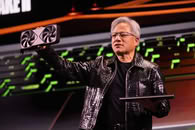
A Wall Street Journal investigation alleges that NVIDIA, under former CEO Jensen Huang, systematically invested in small AI startups and cloud providers on the condition — implicit or explicit — that they would purchase NVIDIA GPUs and build data centers. The effect was a closed loop: NVIDIA's capital flowed out as investment and returned as revenue, creating the appearance of organic demand for its chips while the company sat on an oversupply from TSMC.
Extraction Map
The report centers on an August meeting between Huang and his senior finance team, including CFO and acting CEO Colette Kress. Kress reportedly pushed to scale back circular financing agreements, including a $250 billion deal with OpenAI, warning that the small cloud providers NVIDIA was funding could not independently afford to purchase GPUs — making them potential financial dead ends. Huang allegedly responded by berating Kress, calling her a "deer in the headlights." The strategic context matters. Major AI hyperscalers — Google, Amazon, Microsoft, Meta — have been steadily moving away from off-the-shelf NVIDIA GPUs toward custom silicon (Google's TPUs, Amazon's Trainium, Microsoft's Maia). This shift threatened to leave NVIDIA holding an "avalanche" of chips from TSMC with no natural buyers. Rather than absorb the inventory hit or negotiate down TSMC commitments, the alleged response was to create buyers. This is textbook demand manufacturing. The mechanism is not new — pharmaceutical companies have funded patient advocacy groups that lobby for their drugs, defense contractors have funded think tanks that advocate for weapons programs. What makes the GPU version distinctive is its scale and its interaction with a genuine technology boom. Real AI demand exists. The allegation is that NVIDIA layered artificial demand on top of real demand to maintain pricing power and the perception of scarcity during a period when supply was actually catching up. The financial risk profile described by Kress is significant. If the startups NVIDIA funded cannot sustain themselves independently, NVIDIA is essentially converting balance-sheet cash into revenue that will eventually unwind — a form of channel stuffing dressed up as venture capital. The $250 billion OpenAI deal figure, if accurate, dwarfs typical vendor financing arrangements in the semiconductor industry. Huang's departure adds a new dimension. Whether he left voluntarily or was pushed, the timing suggests the board may have concluded that the circular financing strategy was unsustainable. Kress, now acting CEO, was the executive reportedly trying to pull back from these arrangements — which positions her tenure as a potential unwinding phase. The broader market implication is a repricing of NVIDIA's demand narrative. If a meaningful fraction of GPU purchases were funded by NVIDIA's own capital, the company's reported revenue growth overstates genuine market demand. Investors, hyperscalers, and TSMC itself will all need to reassess how much of the AI chip boom was organic and how much was manufactured.
Worth reading?
SKIP
Score
16
/100
Extractive. If the allegations hold, NVIDIA manufactured artificial scarcity and demand to maintain pricing power, converting its own capital into phantom revenue while inflating costs for the broader AI ecosystem.
What Is GRIN?
GRIN stands for Generativity, Resilience, Innovation efficiency, and Novelty openness. These four dimensions capture the essential characteristics of any memetic intelligence — whether a nation, a corporation, a religion, or a movement.
About GRINGenerativity
1/5
Resilience
1/5
Efficiency
1/5
Novelty
1/5
Extractive
5/5
Inverted
Does this create new capability or just redistribute existing value?
Negative-sum if true. Capital recycled through shell demand creates no new capability — it props up pricing and delays the market correction that would let more players access compute.
Verified Facts (9)
WSJ report cites August meeting between Huang and senior finance team including CFO Colette Kress
Kress pushed for reduction in circular financing agreements
Huang allegedly called Kress a 'deer in the headlights'
Kress pushed to scale back NVIDIA's $250 billion deal with OpenAI
NVIDIA was on the hook for an 'avalanche' of GPUs from TSMC with no immediate buyers
Small-scale cloud providers NVIDIA invested in could not afford to buy NVIDIA GPUs
AI hyperscalers moving away from off-the-shelf components in favor of custom solutions
Jensen Huang described as now-former NVIDIA CEO
Colette Kress is NVIDIA's CFO and acting CEO
More latest news
Read all