Get it
Kilonova Catcher
on Official site
REGISTERED VOLUNTEERS
150+
OFFICIAL GCN REPORTS
64+
ROMAN ALERTS EXPECTED
1000s
KILONOVA FADE TIME
Days
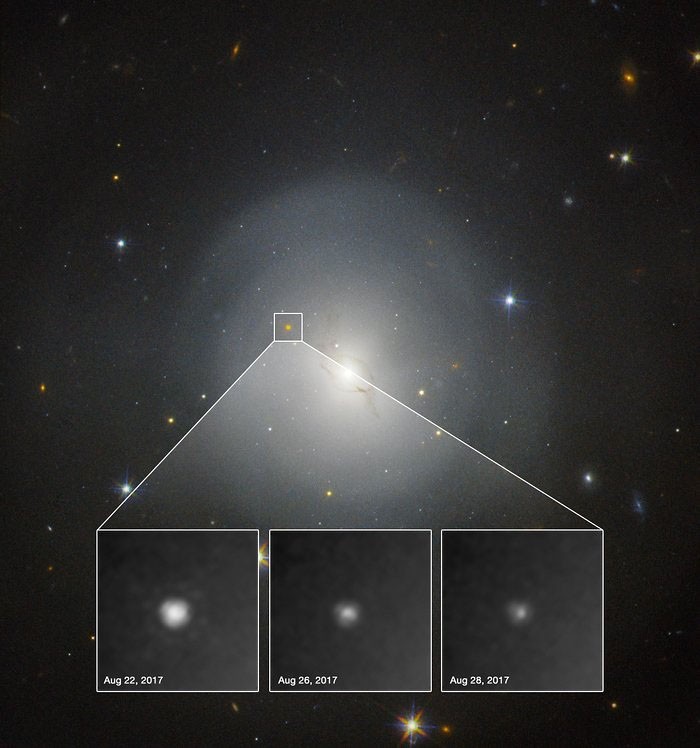
When two neutron stars collide, they forge gold, platinum, and other heavy elements in a brief flash called a kilonova. The light fades within days. No single professional observatory can watch the entire sky on that timeline. NASA's Kilonova Catcher project solves this coverage problem by networking amateur astronomers worldwide into a rapid-response observation grid.
Extraction Map
The mechanism is straightforward: gravitational wave detectors like LIGO or space telescopes flag an event, and the network's 150-plus registered volunteers across several continents point their own camera-equipped telescopes at the coordinates. They track the fading light, feeding data back to professional astronomers in real time through NASA's General Coordinates Network. The project has already generated more than 64 official reports through that system. This is genuine distributed science, not a PR exercise. Volunteers have been credited as named authors on peer-reviewed research papers. The network contributed to NASA's Lunar Impact Flash! project during the Artemis II mission, recording meteoroid strikes on the Moon. The infrastructure is being prepared to handle the flood of alerts expected from NASA's Nancy Grace Roman Space Telescope. The project is co-led by Cristina Andrade at the Minnesota Institute for Astrophysics and Dr. Damien Turpin at the French Alternative Energies and Atomic Energy Commission (CEA). Andrade's framing is notable: "We need more people to realize they are capable of great feats of science, regardless of their background." Turpin credits amateur astronomers directly: "This science could not be done without their contributions." The barrier to entry is a telescope with a camera — not trivial, but not institutional either. Registration is open at kilonovacatcher.in2p3.fr. The model exploits a fundamental asymmetry: professional observatories have precision but limited sky coverage; amateurs collectively have coverage but limited precision. Combined, they create something neither could achieve alone. The generative economics here are worth noting. The project creates new observational capability at near-zero marginal cost to NASA. Volunteers contribute equipment, time, and expertise they already possess. The value flows both directions: amateurs get authorship credit and direct participation in frontier science; professionals get geographic and temporal coverage they cannot afford to build. The Roman Space Telescope integration is the signal to watch. Thousands of new transient alerts will stress-test whether a 150-person volunteer network can scale to meet demand. The project's current success rests on a manageable alert cadence. The next phase will reveal whether this model is a proof of concept or a durable infrastructure.
Worth reading?
ESSENTIAL
Score
80
/100
Generative. Creates new sky-coverage capability that didn't exist before by networking dispersed amateur resources into a coordinated scientific instrument at near-zero marginal cost.
What Is GRIN?
GRIN stands for Generativity, Resilience, Innovation efficiency, and Novelty openness. These four dimensions capture the essential characteristics of any memetic intelligence — whether a nation, a corporation, a religion, or a movement.
About GRINGenerativity
4/5
Resilience
3/5
Efficiency
4/5
Novelty
4/5
Extractive
0/5
Inverted
Does this create new capability or just redistribute existing value?
Pure capability creation. No existing observatory can watch the whole sky; this network fills a coverage gap that money alone can't close, generating 64+ official reports and peer-reviewed co-authorships.
Verified Facts (7)
More than 150 registered members on several continents
More than 64 official reports shared through NASA's General Coordinates Network
Volunteers' observations have been credited for their contributions by being named authors in peer-reviewed scientific research papers
On Aug. 17, 2017, LIGO and Virgo both detected gravitational waves from the collision between two neutron stars
Kilonova Catcher volunteers joined NASA's lunar Impact Flash! project campaign during the Artemis II mission
Co-led by Cristina Andrade at the Minnesota Institute for Astrophysics and Dr. Damien Turpin at the French Alternative Energies and Atomic Energy Commission (CEA)
Network is getting ready to help follow up thousands of new alerts from NASA's Nancy Grace Roman Space Telescope
More latest news
Read all