Get it
BPS Digital AVATAR Challenge
on CrowdPlat
TOTAL PRIZES
$150K
LUNAR FLYBY
10 days
CHIP RETURN
Apr 10 '26
SUBMISSION DUE
Feb 12 '27
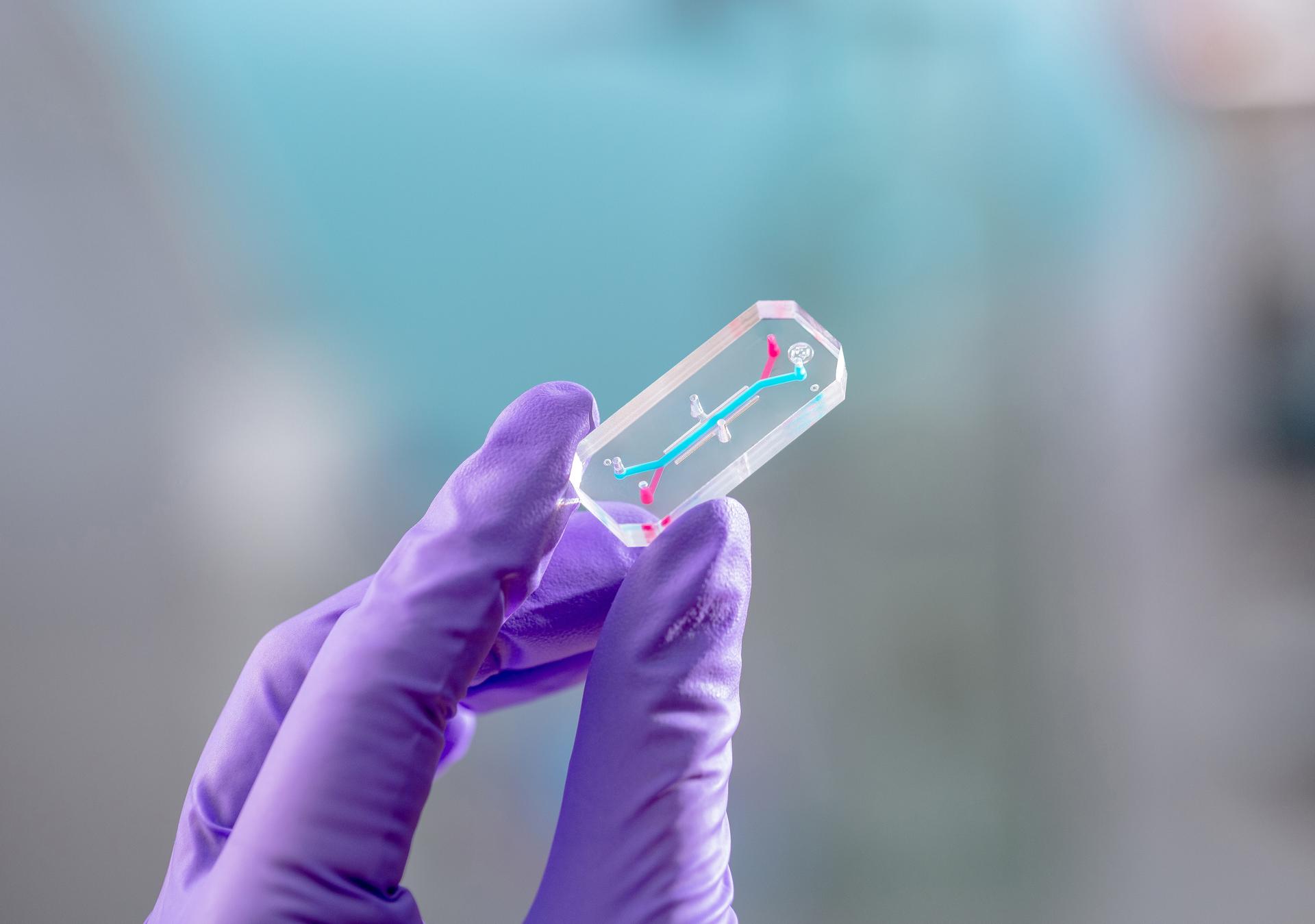
NASA's Biological and Physical Sciences Division is turning the organ-on-a-chip devices that flew aboard Artemis II into the substrate for a public computational challenge. The AVATAR investigation — A Virtual Astronaut Tissue Analog Response — constructed bone marrow chips from the actual cells of Artemis II crew members, sent them on the 10-day lunar flyby, and recovered them on April 10, 2026. Now the agency wants outside researchers to build digital twin models capable of predicting how those chips — and by extension, those specific astronauts — respond to spaceflight stressors.
Extraction Map
The BPS Digital AVATAR Challenge offers $150,000 in total prizes and opens for registration on November 16, 2026, with a submission deadline of February 12, 2027. Proposals must demonstrate computational frameworks that process diverse multi-modal datasets — environmental, physiological, and multi-omics inputs — and generate personalized predictions of immune and hematopoietic response. The requirement is explicit: models must distinguish individual-specific effects from effects common across the crew, and must show a pathway to continuous updating as new empirical data become available. The underlying logic is straightforward and consequential. As NASA prepares for missions well beyond the Moon's neighborhood, the medical kit aboard a spacecraft cannot be one-size-fits-all. Radiation exposure, microgravity effects, elevated CO₂, and low magnetic fields hit different bodies differently. A digital twin framework — if it works — would let mission planners simulate a specific astronaut's likely biological response before departure and adjust countermeasures accordingly. The AVATAR experiment itself is the first demonstration of an Artemis astronaut analog using organ-on-a-chip technology to generate personalized biological insights. That is a genuine milestone: not a mouse model, not a population average, but crew-member-specific tissue exposed to the actual deep-space environment and returned for analysis. The challenge now is whether computational biology can build models precise enough to be medically actionable from that data. The $150,000 prize pool is modest by federal challenge standards, which signals this is an early-stage capability pull rather than a procurement vehicle. NASA is essentially crowdsourcing the first draft of a framework it expects to refine iteratively over many missions. The requirement for continuous model updating reflects the agency's understanding that a static model is not a digital twin — it is a snapshot. The broader bet here is on personalized space medicine as a prerequisite for sustained human presence beyond low Earth orbit. If the digital twin approach proves viable for bone marrow and immune response, the architecture extends naturally to other organ systems — cardiovascular, musculoskeletal, neurological. The organ-chip platform already exists; the computational layer is the bottleneck. There is a dual-use dimension worth noting. Computational frameworks that can model individual human tissue response to radiation and other stressors have obvious applications in oncology, immunology, and pharmaceutical development on Earth. NASA frames this explicitly: AVATAR could lead to impacts in healthcare for both astronauts and citizens. The question is whether a $150K challenge attracts the caliber of computational biology talent needed to deliver on that ambition.
Worth reading?
RECOMMENDED
Score
76
/100
Generative. NASA is converting unique empirical data from a crewed deep-space mission into an open challenge that invites broad participation, builds new computational capability, and targets dual-use outcomes in space medicine and terrestrial healthcare.
What Is GRIN?
GRIN stands for Generativity, Resilience, Innovation efficiency, and Novelty openness. These four dimensions capture the essential characteristics of any memetic intelligence — whether a nation, a corporation, a religion, or a movement.
About GRINGenerativity
4/5
Resilience
4/5
Efficiency
3/5
Novelty
4/5
Extractive
1/5
Inverted
Does this create new capability or just redistribute existing value?
High generativity. First crew-specific organ-chip data from deep space, now open to external researchers to build digital twin frameworks with direct applications in personalized medicine on Earth and in space.
Verified Facts (8)
AVATAR stands for A Virtual Astronaut Tissue Analog Response
Organ-on-a-chip devices constructed from cells of actual crew members returned from a 10-day lunar flyby on April 10, 2026
AVATAR is the first demonstration of an Artemis astronaut analog using an organ-on-a-chip model
Award: $150,000 in total prizes
Registration Open Date: November 16, 2026
Submission Deadline: February 12, 2027
Spaceflight stressors include microgravity, ionizing radiation, low magnetic fields, and elevated CO₂
Models must distinguish individual-specific effects from effects common across the crew
More latest news
Read all