Get tickets
Life in 2075 Challenge
on CrowdPlat
TOTAL PRIZES
$20K
TARGET YEAR
2075
CHALLENGE TOPICS
4
SUBMISSION WINDOW
~66 DAYS
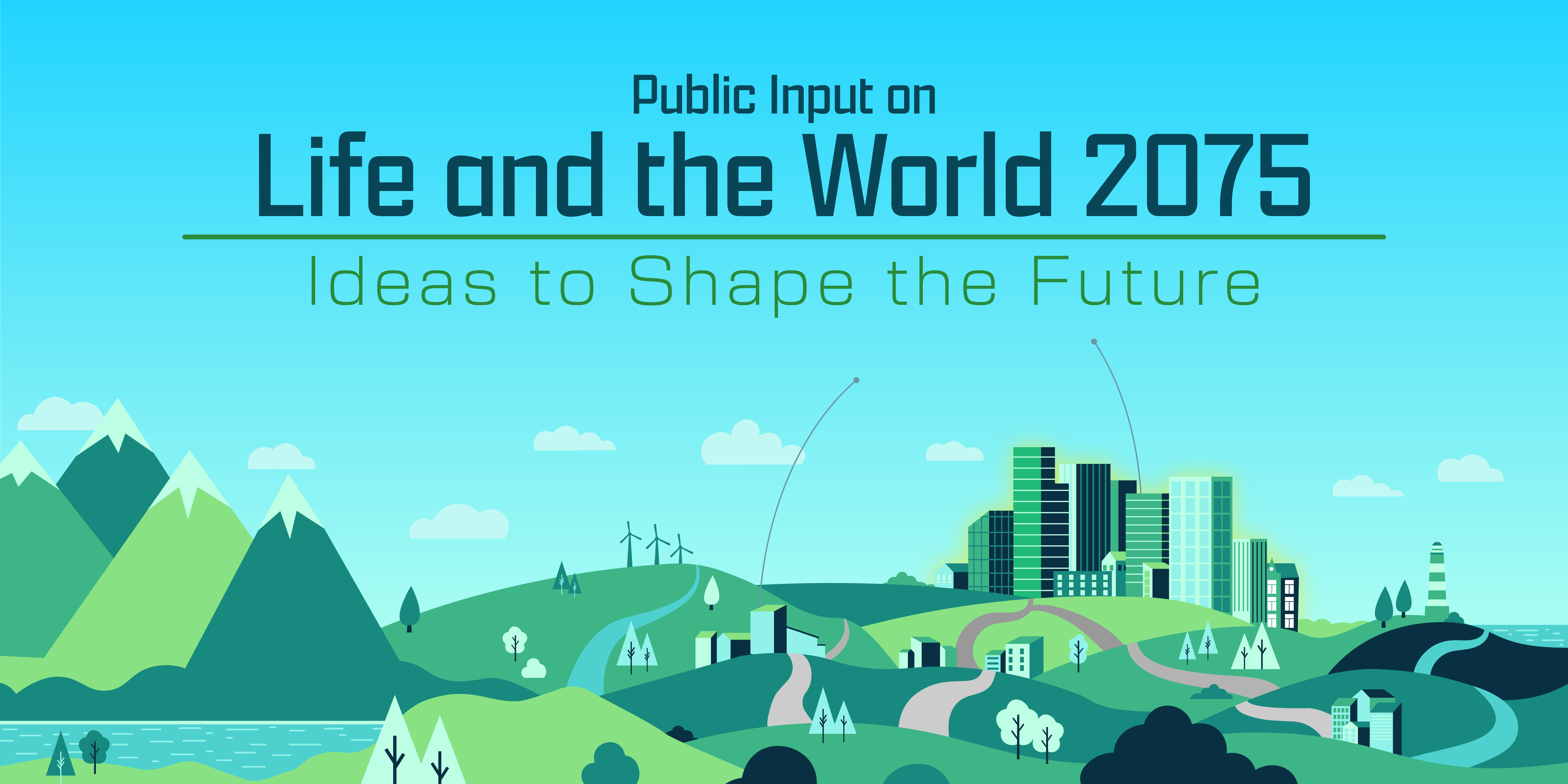
NASA's Transformational Tools and Technologies project has launched a public challenge asking people to imagine how the world will look in 2075. The challenge, hosted on the CrowdPlat platform, opens for registration on November 13, 2026 and closes January 18, 2027. Total prize money: $20,000.
Extraction Map
The prompt is broad to the point of shapelessness. Submissions should explore how future aviation or aerospace systems could improve efficiency, manage resources, reduce costs, strengthen trust, connect communities, improve access to services, and support national priorities. That is not a research question — it is a wish list. The explicit instruction that ideas should be "conceptual rather than technical" tells you everything about the expected output: brainstorming, not engineering. Public engagement challenges of this kind serve a real but limited purpose. They generate PR, signal institutional openness, and occasionally surface an unexpected framing from outside the agency's professional bubble. What they do not do is produce actionable roadmaps. NASA's own strategic planning is done by career engineers, program managers, and contracted think tanks with security clearances and billion-dollar budgets. A $20,000 crowdsourcing exercise sits several orders of magnitude below that threshold. The prize structure itself is telling. Twenty thousand dollars split across four topics and multiple winners means individual awards likely land in the low single-digit thousands — less than a conference travel grant. This is not compensation for serious intellectual labor; it is a token acknowledgment of participation. The value proposition for entrants is reputational, not financial. There is a soft generativity argument here: opening the aperture to non-expert perspectives can occasionally break groupthink. NASA's own history includes moments where outsider thinking proved valuable. But the challenge design — no technical depth required, no mechanism for integrating winning ideas into actual programs, no feedback loop — suggests this is closer to a public engagement exercise than a genuine knowledge-sourcing operation. The 2075 time horizon is simultaneously the challenge's most interesting and most suspect feature. Fifty-year forecasting is notoriously unreliable, which makes it safe territory for institutions: no one will be around to grade the homework. It allows NASA to appear forward-looking without committing to anything falsifiable. The real question — what specific technology investments should NASA make in the next 5-10 years — is conspicuously absent from the prompt. As a civic engagement gesture, this is harmless and mildly positive. As a tool for actually shaping aerospace policy or technology development, it is negligible. The gap between the grandeur of the question and the modesty of the resources tells you which one NASA itself believes it is.
Worth reading?
OPTIONAL
Score
48
/100
Mildly generative in principle — public input can surface novel framings — but the tiny budget, non-technical scope, and absent integration pathway make this primarily a low-cost engagement exercise rather than a genuine knowledge-generation tool.
What Is GRIN?
GRIN stands for Generativity, Resilience, Innovation efficiency, and Novelty openness. These four dimensions capture the essential characteristics of any memetic intelligence — whether a nation, a corporation, a religion, or a movement.
About GRINGenerativity
2/5
Resilience
1/5
Efficiency
2/5
Novelty
3/5
Extractive
1/5
Inverted
Does this create new capability or just redistribute existing value?
Marginal generativity. Opens a channel for outside perspectives, but no mechanism to integrate ideas into programs. Conceptual-only submissions cap the ceiling on actionable output.
Verified Facts (6)
NASA's Transformational Tools and Technologies (TTT) is gathering public perspectives on life today and how the world may change by 2075
Award: $20,000 in total prizes
Registration Open Date: November 13, 2026
Submission Deadline: January 18, 2027
Ideas should be conceptual rather than technical
Four challenge topics
More latest news
Read all