DAYS ISOLATED
378
CHAPEA MISSION
2
HABITAT SIZE
1,700 ft²
EXIT DATE
Oct 31
Four volunteers walked out of a 3D-printed simulated Mars habitat at Johnson Space Center on October 31, 2026, after 378 consecutive days of isolation. The CHAPEA Mission 2 crew had entered the 1,700-square-foot facility in October 2025, living under conditions designed to approximate the psychological and operational constraints of a deep-space mission — communication delays, limited resources, simulated extravehicular activities, and no option to leave.
Extraction Map
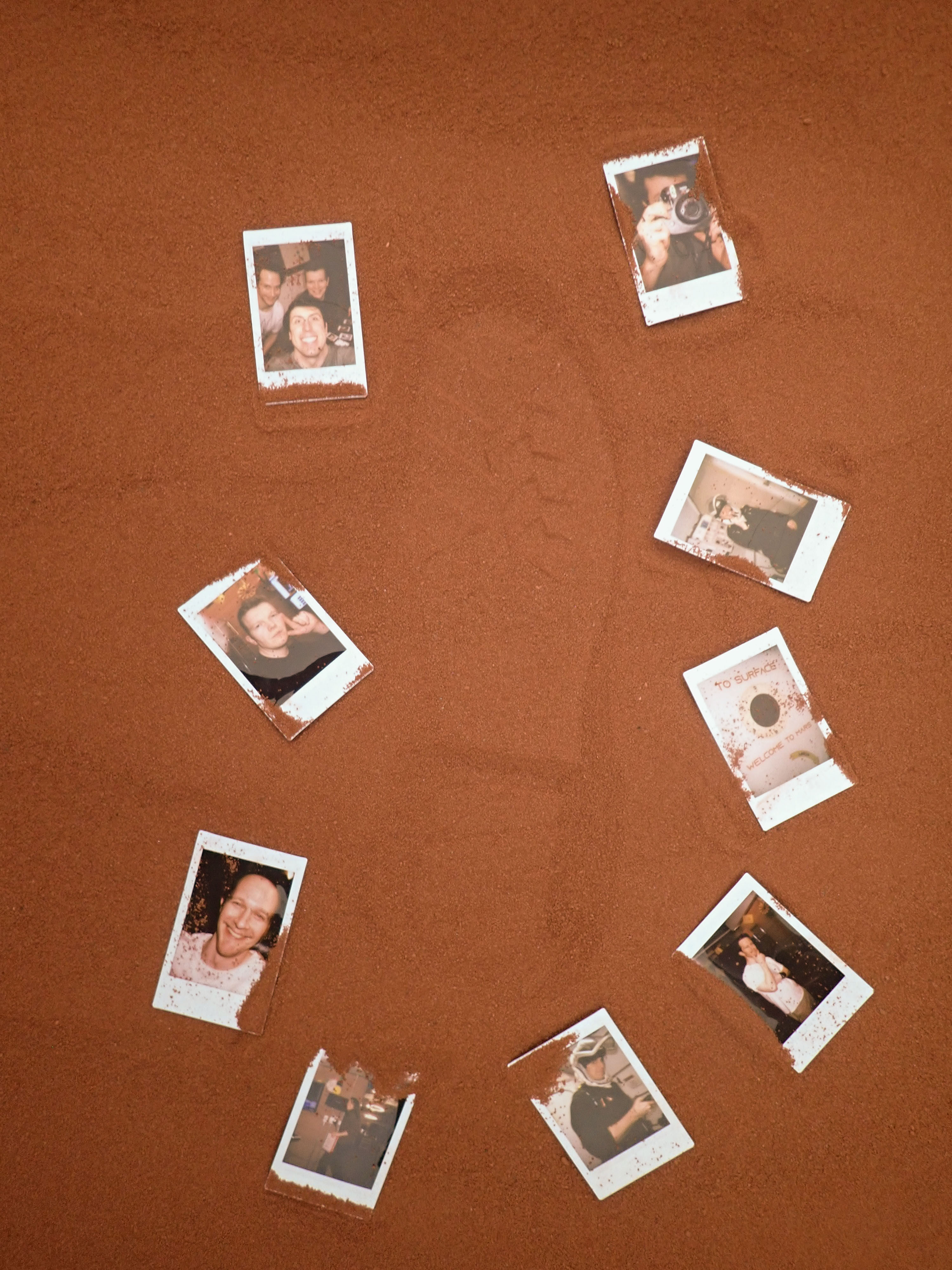
The program's purpose is blunt: NASA needs human performance baselines before it commits crews to multi-year missions beyond low Earth orbit. Artemis lunar missions and the planned Moon Base will subject astronauts to isolation, confinement, and resource scarcity at scales the ISS never tested. CHAPEA is the cheapest way to collect that data before hardware is built. The simulation included periodic exits into a simulated Martian landscape outside the habitat, where the crew conducted mock EVAs. On August 31, 2026, the crew arranged personal photos around a boot print in the simulated Martian sand — a staged but telling gesture about the psychological weight of the work. These moments are data points too: how crews maintain morale and identity under prolonged confinement matters as much as cardiovascular metrics. The health and performance dataset from Mission 2 joins Mission 1's data (completed in 2024) to build a longitudinal picture of human degradation and adaptation under confinement. NASA has stated the findings will directly inform countermeasure development — exercise protocols, scheduling structures, crew composition guidelines, psychological support tools — for missions where abort-to-Earth is not an option. The cost-to-insight ratio here is favorable. Ground-based analogs are orders of magnitude cheaper than orbital experiments, and they isolate variables that space stations cannot (gravity is held constant, so any behavioral or physiological changes are attributable to confinement and operational stress alone). The tradeoff is fidelity: no radiation, no microgravity, no genuine existential risk. CHAPEA sits in a long lineage of isolation studies — from Antarctica overwintering crews to Russia's Mars-500 experiment — but NASA's version is explicitly designed to feed forward into hardware and mission design decisions, not just publish papers. The question is whether institutional follow-through matches the data collection. Analog programs have a history of generating findings that get filed rather than implemented. If NASA actually integrates CHAPEA data into Artemis crew support systems, this is genuine capability-building at low cost. If the data sits in a repository while mission design proceeds on engineering timelines alone, it becomes an expensive photo opportunity.
Worth reading?
RECOMMENDED
Score
68
/100
Generative — low-cost ground simulation producing human-factors data that cannot be obtained any other way before committing crews to deep-space missions.
What Is GRIN?
GRIN stands for Generativity, Resilience, Innovation efficiency, and Novelty openness. These four dimensions capture the essential characteristics of any memetic intelligence — whether a nation, a corporation, a religion, or a movement.
About GRINGenerativity
4/5
Resilience
3/5
Efficiency
4/5
Novelty
2/5
Extractive
1/5
Inverted
Does this create new capability or just redistribute existing value?
Real capability-building. 378-day isolation baselines for Artemis crew health don't exist without programs like this. The data is unique and mission-relevant, not duplicative.
Verified Facts (5)
CHAPEA Mission 2 crew exited after 378 days of isolation
Crew exited on Saturday, October 31
Habitat located at NASA's Johnson Space Center in Houston
Photos arranged around a boot print in simulated Martian sand on August 31, 2026
Data collected to help NASA develop methods to counter human spaceflight risks for Artemis and Moon Base missions
More latest news
Read all